Imagine bustling city streets, vibrant with energy. Amidst the cacophony of honking cars and the hum of urban life, a young inventor boldly strides onto the stage of a popular business pitch show, poised to revolutionize motorcycle safety. This is the remarkable story of Ben Gulak, a visionary whose journey exemplifies how passion fused with innovation can tackle pressing challenges in transportation. As he presented his groundbreaking invention on Dragon’s Den, the intrigue surrounding his venture sparked both curiosity and deeper contemplation about motorcycle safety in today’s ever-evolving world.
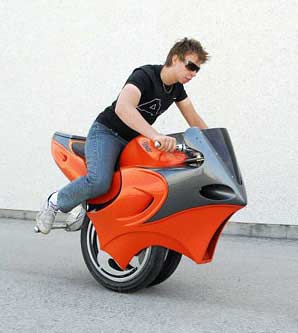
Ben Gulak, a Canadian inventor hailing from a family of engineers, always held an affinity for technology and creative problem-solving. This proclivity burgeoned during his teenage years, culminating in the inception of a revolutionary vehicle: the “Dabbin.” This unique invention set out to address a disconcerting issue prevalent in the motorcycle industry—safety. Motorcycles, while offering an exhilarating sense of freedom, can also present an array of dangers for their riders. What if a more stable, safer design could mitigate these risks while retaining the thrill of the ride? Gulak’s Dabbin was a potential answer to this very question.
When Gulak first took the stage, the anticipation in the air was palpable. The assemblage of seasoned investors, each with their own stringent criteria for investment, sat poised for skepticism. However, Gulak was equipped with more than just a polished pitch; he carried a vision that transcended beyond engineering, delving into the realm of safer urban exploration. His presentation encompassed the aesthetic appeal of his invention, integrating sleek design with robust safety features. What makes a motorcycle different from a traditional motor vehicle, and how can this design evocation change the way we think about safety on two wheels?
One of the most intriguing aspects of Gulak’s approach was his meticulous attention to detail in addressing fundamental safety concerns. The Dabbin came with enhanced features such as a wider wheelbase and an innovative construction which improved stability. In an industry rife with accidents and injuries, how crucial is it for an inventor to intertwine creativity with practicality? As he highlighted the engineering mechanisms that allowed for stability during turns and stops, it became evident that this was not merely a novelty but a legitimate innovation aimed at saving lives.
However, the road to acceptance on such a platform as Dragon’s Den is fraught with challenges. The investors posed queries not only about the functionality of the Dabbin but also its market viability. Would consumers embrace this futuristic motorcycle amidst a culture steeped in tradition? The apprehension stemmed from a natural bias towards conventional motorcycle designs. Despite the existence of an array of safety features, would a shift in public perception thwart Gulak’s mission? His response delineated a comprehensive strategy that entailed extensive market research, educational campaigns, and a commitment to changing the narrative around motorcycle safety.
In the realm of innovation, acceptance frequently trails behind inception. As the conversation intensified, Gulak asserted that the education surrounding motorcycle safety must evolve alongside technological advancements. He envisioned collaborations with safety organizations, motorcycling clubs, and even government entities to facilitate a holistic understanding of how the Dabbin could inherently enhance safety. The proposition stood not only to transform the industry but also to cultivate a new culture of conscientious riding.
The investors, though initially skeptical, began to recognize the burgeoning potential of Gulak’s vision. Would this young inventor’s passion and drive be enough to cut through the noise of industry stalwarts? During this captivating exchange, the discourse revealed a broader challenge faced by disruptors in the field of technology: how to gain traction in a market resistant to change. The juxtaposition of innovation against tradition is a perennial struggle, yet Gulak’s determination illuminated a pathway for others who aspire to challenge the status quo.
Ultimately, despite the rigorous scrutiny and challenges presented during his pitch, Gulak walked away from Dragon’s Den not merely with investment but with validation. The interaction catalyzed a dialogue centered around the quintessential question: how can innovation reconcile with tradition to promote safety without sacrificing the joy of the ride? The implications reach beyond motorcycles; they resonate throughout all sectors where age-old conventions meet modern advancements.
In retrospect, Ben Gulak’s venture on Dragon’s Den epitomizes the intersection of youthful innovation with the pressing need for change in motorcycle safety. It is a testament to the power of an idea poised to alter perceptions and foster conscientious riding culture. As he continues to refine the Dabbin, the resultant conversation stimulates broader reflections on how emerging technologies can harmonize with established practices to create a safer environment for motorcyclists everywhere.
This narrative challenges us to reconsider our approach to safety in transportation. Each innovation carries the weight of responsibility—to integrate safety seamlessly into the thrill of the ride. With young inventors like Ben Gulak at the helm, the future of motorcycle safety appears not only promising but also exhilarating. As we anticipate the next generation of transportation solutions, one question remains: how will we harness innovation to prioritize safety in all forms of mobility? The answer may lie in the hands of those bold enough to tread new paths amidst the winding roads of tradition and innovation.