Is it truly feasible to chase the echoes of motorcycling’s golden era by opting for a 1977–1978 Triumph Bonneville today? This question is more than a whimsical musing; it challenges the assumptions enthusiasts hold about classic motorcycles and their place in a modern landscape dominated by cutting-edge performance, reliability, and technological sophistication. The Triumph Bonneville, a beacon of British motorcycling heritage, beckons with its timeless aesthetics and nostalgic allure, yet the quandary remains: does it retain enough panache, practicality, and mechanical viability to warrant ownership in the 21st century?
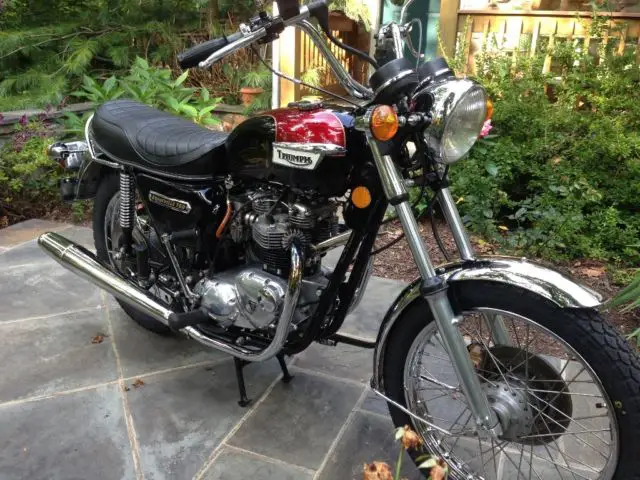
At first glance, the 1977–1978 Bonneville encapsulates a quintessential combination of style and substance. With its iconic parallel-twin engine, the motorcycle epitomizes the British engineering ethos of its time—inimitable charm merged with a rugged, mechanical simplicity that appeals to those who appreciate motorbikes as tangible, tactile machines rather than mere transportation devices. The Bonneville’s 744cc air-cooled twin delivers a spirited performance that is neither overwhelming nor underwhelming, making it an ideal companion for riders who value engagement over raw speed.
However, the Bonneville is not without its challenges. Prospective riders must reconcile their romanticism with the realities of owning a vintage British motorcycle. The 1977-1978 era, positioned near the end of Triumph’s initial production run before the company’s financial struggles halted manufacturing, reflects a period of both refinement and austerity. This means that while the Bonneville possesses undeniable charisma, it also carries the typical mechanical foibles characteristic of motorcycles from that epoch. Issues such as oil leaks, electrical gremlins, and frequent maintenance intervals are par for the course, demanding a level of dedication that casual riders might find daunting.
Moreover, the Bonneville’s suspension and braking systems, adequate for its time, now feel decidedly antiquated when contrasted with modern standards. The twin shock rear suspension, combined with drum or early-disc braking technology, necessitates a nuanced approach to riding—one that respects the bike’s limitations and embraces its quirks. It’s not the blistering performer of contemporary sportbikes, and therein lies part of its philosophical allure. Riding the Bonneville is less about dominating the open road and more about savoring the journey itself, breathing in the history and mechanical poetry that it embodies.
One must also consider the accessibility of parts and expertise. The enduring popularity of the Bonneville has cultivated a robust aftermarket and community support network, which partially alleviates maintenance concerns. Enthusiasts share knowledge, resources, and parts, ensuring that even such a vintage machine can be kept in peak running condition. Nevertheless, this requires investment—not only financial but also temporal—transforming ownership into a gratifying but demanding hobby rather than mere commuting convenience.
Performance aside, the aesthetic appeal of the 1977–1978 Bonneville remains undiminished and arguably more compelling today than ever. The design ethos of this period captures a minimalist yet elegant silhouette, with polished chrome, teardrop fuel tanks, and exposed parallel twins artfully displayed. The bike’s visual narrative resonates with those craving authenticity in a world awash with homogenized motorcycles. It invites admiration, stirs conversations, and conjures a tangible connection to motorcycling’s storied past. This intangible currency—nostalgia infused with craftsmanship—retains a powerful magnetism.
Yet, one cannot overlook the contextual implications of integrating such a machine into contemporary society. Modern traffic conditions, safety standards, and emission regulations pose implicit challenges to vintage motorcycles. The Bonneville’s original specifications lack the advancements in lighting, braking, and emissions control mandated today, which often necessitates retrofitting or accepting compromises. Urban environments, with their stop-and-go traffic and congested roads, expose the bike’s mechanical simplicity and older ergonomics, sometimes at odds with modern rider expectations for comfort and convenience.
Despite these factors, the Bonneville offers a distinct kind of liberation, a tactile engagement that modern motorcycles sometimes obscure behind layers of electronics and automation. For purists, this mechanical rawness is a feature, not a flaw. The art of riding a 1977–1978 Triumph Bonneville entails understanding its idiosyncrasies—embracing the occasional hiccup as part of a living experience rather than a malfunction. It reconnects rider and machine in a primal duet, where every throttle twist and gear change commands deliberate attention.
So, is the 1977–1978 Triumph Bonneville still worth it today? The answer hinges on perspective and expectations. For those in pursuit of a nostalgic artifact, a rolling piece of history that doubles as a functional bike, the Bonneville remains a worthy acquisition. It challenges the rider to appreciate depth over breadth, character over cold efficiency, and experience over expediency. Conversely, riders who prioritize flawless reliability, low-maintenance operation, and cutting-edge performance might find themselves frustrated or underwhelmed.
Ultimately, the Bonneville’s allure transcends mere specifications and pragmatism. It exists as a cultural icon, a testament to a bygone era of motorcycling that valued style, simplicity, and personality. Owning and riding a 1977–1978 Triumph Bonneville demands a commitment to preserving this legacy, to nurturing an experience that is as much about the journey through time as it is about the journey along the road.
In a marketplace saturated with ever-evolving technological marvels, the Bonneville stands as a paradox—a machine simultaneously archaic and timeless, challenging riders to reconsider what makes a motorcycle truly desirable. It is more than transportation; it is an invitation to engage with motorcycling on a profoundly human level. So, while it may not triumph in every modern metric, the 1977–1978 Triumph Bonneville’s enduring charm ensures it remains worth it for those willing to embrace both its virtues and its challenges.