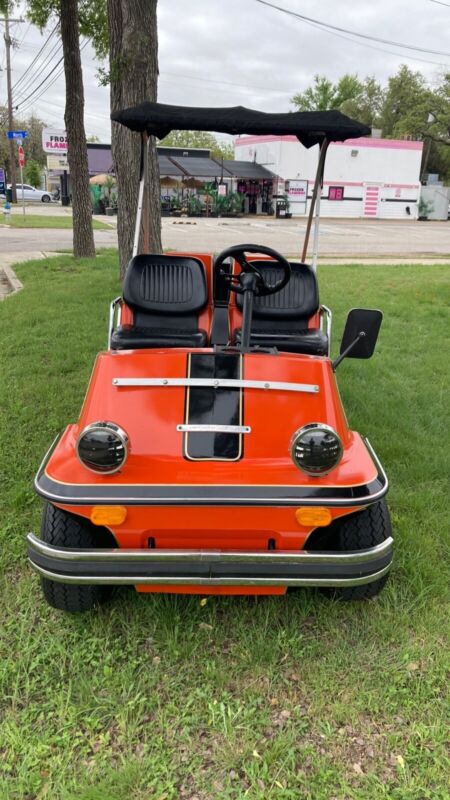
When one conjures images of Harley-Davidson, the immediate vision is of roaring motorcycles cruising along highways, the unmistakable rumble echoing freedom and rebellion. But what if the legendary brand that epitomizes the road warrior’s spirit ventured into territories completely uncharted? Imagine a Harley-Davidson golf cart—yes, a golf cart—a rather unexpected oddity that challenges the core perceptions of this iconic make. Could such a contraption exist? And if so, what stories does it tell? The 1980 Harley-Davidson gas engine golf cart emerges not just as a curiosity, but as a compelling fusion of heritage, utility, and eccentricity.
At first blush, the notion of Harley-Davidson attaching its engineering prowess to a golf cart seems almost heretical. The brand’s DNA pulses with raw power, ruggedness, and a quintessentially rebellious attitude. How, then, does that ethos translate to a vehicle designed for gliding delicately across manicured greens rather than conquered asphalt and winding mountain paths? This juxtaposition presents a playful conundrum: can a Harley-Davidson golf cart uphold the spirit of its larger, louder siblings? Or does it capitulate to the mundanity of its intended purpose?
The year 1980 is significant in understanding this unique phenomenon. At that time, Harley-Davidson was navigating a complex phase, facing fierce competition and striving to innovate in an evolving market. While motorcycles remained its core products, diversification appeared necessary to broaden appeal and adapt to shifting consumer interests. The incorporation of Harley-Davidson gas engines into golf carts represented both an audacious experiment and a subtle marketing gambit, leveraging brand loyalty among owners and enthusiasts.
Structurally and mechanically, the 1980 Harley-Davidson gas engine golf cart was a curious hybrid. Beneath its compact and utilitarian frame lay an engine not conventionally associated with golf carts of the era. Traditional golf carts typically ran on electric motors or modest gas engines designed purely for slow, efficient movement. In stark contrast, a Harley-Davidson engine—though slightly detuned—imbued this golf cart with a performance edge that was rare if not unprecedented. Such an upgrade meant the usual creeping pace of a golf cart could be temporarily abandoned in favor of a more spirited, albeit controlled, drive. Imagine the whispers and widened eyes on the course as this golf cart rumbled past, carrying traces of Harley’s hardcore legacy.
Beyond mechanics, the aesthetics of the cart deserved attention. Harley-Davidson’s design cues resonated even here. Rugged yet refined, the body featured subtle embellishments mirroring the brand’s unmistakable lineage. Chrome details, classic color schemes, and logo placements transformed this ordinary vehicle into a statement piece, blurring the lines between leisure equipment and collector’s item. It wasn’t just a tool for transporting golf bags but a conversation starter, a rolling testament to unorthodox creativity.
But why pursue such a blend of high-performance motorcycle powertrain and low-velocity golf cart? The answer partly lies in the culture of enthusiasts and the era’s spirit of experimentation. Golf carts, traditionally viewed through the lens of functionality, gradually morphed into accessories signaling lifestyle choices. By integrating the gravitas of Harley-Davidson’s engineering, the golf cart evolved beyond mere utility to become an expression of personality and passion. It invited owners to challenge norms and inject a bit of rebellious fun into otherwise serene golf courses.
This curious contraption also invites reflection on innovation’s unpredictable pathways. What begins as an oddity can morph into a collector’s gem, treasured precisely because it stands apart. The 1980s witnessed many such experiments across automotive industries, where boundaries were tested and product definitions stretched. The Harley-Davidson golf cart serves as a reminder that creativity often flourishes at the edges, yielding fascinating hybrids that actors within conventional wisdom might dismiss out of hand.
From a practical standpoint, owning such a golf cart still posed intriguing questions. Would it prove reliable on the greens? How would maintenance compare to both standard golf carts and motorcycles? While the Harley engine may promise superior performance, it simultaneously introduces complexities—fuel consumption, mechanical intricacies, and parts availability—that differ markedly from typical models. Enthusiasts attracted to its uniqueness must balance passion with pragmatism, navigating challenges inherent in melding disparate vehicle categories.
Moreover, the 1980 Harley-Davidson golf cart opens dialogue about identity and brand evolution. Can a company steeped in tradition successfully branch out without alienating core followers? Historically, Harley-Davidson has oscillated between reverence for heritage and embracing innovation. This golf cart experiment epitomizes that tension, showcasing a willingness to surprise without relinquishing the brand’s essence. It commands respect for its boldness and provokes curiosity about what other ventures might reveal similar unexpected synergies.
Today, such a golf cart is not merely a transportation tool but a snapshot of a specific moment—when craftsmanship, marketing ingenuity, and cultural shifts coalesced. Its rarity adds to its allure, attracting collectors who appreciate not only the mechanical novelty but the narrative embedded within its chassis. Owning a 1980 Harley-Davidson golf cart means possessing a piece of paradox: a slow-moving embodiment of speed and freedom, a silent yet evocative anomaly that sparks questions and admiration alike.
Ultimately, the tale of the 1980 Harley-Davidson gas engine golf cart challenges assumptions about what constitutes a “true” Harley. It raises playful, almost mischievous inquiries—can the spirit of a rebel thrive in such an unassuming frame? The answer, perhaps, lies in recognizing that innovation often wears unexpected guises. The golf cart, modest in appearance yet fueled by Harley’s character, defies categorization and invites us all to reconsider the boundaries of identity, utility, and creative expression.