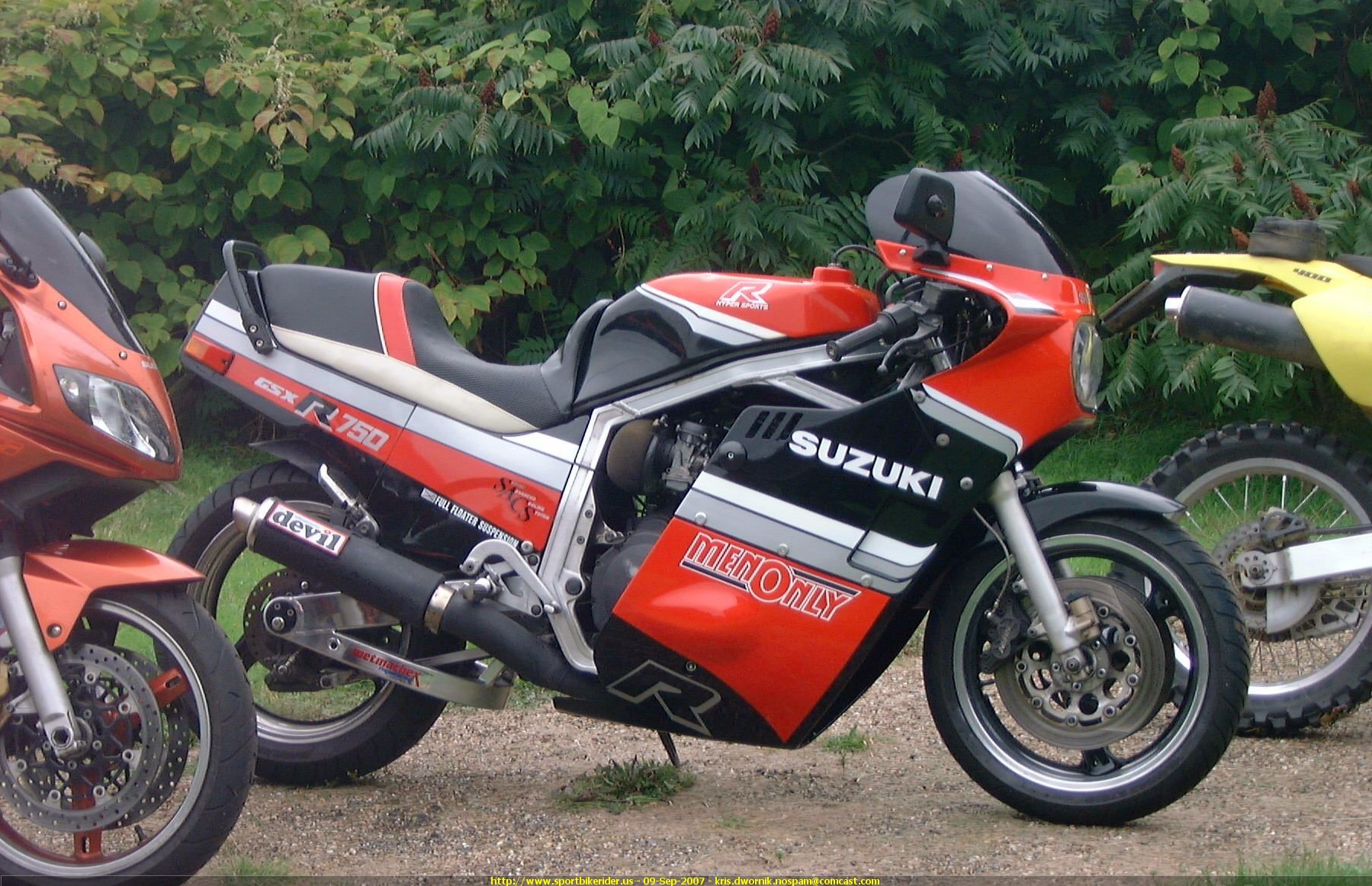
In the pantheon of motorcycle history, certain machines stand as seminal points—a fusion of innovation, daring engineering, and cultural impact. The 1985 Suzuki GSX-R750 is unequivocally one such motorcycle. More than just a superbike, it was a herald of transformation, an emblematic shift that recalibrated what enthusiasts and manufacturers anticipated from high-performance motorcycles. This machine did not merely push boundaries; it redefined them, provocatively altering the trajectory of superbike evolution.
To appreciate the revolution introduced by the 1985 GSX-R750, one must understand the context preceding its debut. In the early 1980s, superbikes were largely massive, heavy machines with brute power that compromised handling and agility. They often exhibited a lagging balance between power-to-weight ratio and chassis dynamics. These motorcycles were formidable in straight-line speed, but their cumbersome nature restricted their true potential on winding roads and racetracks. Yamaha, Honda, and Kawasaki had introduced powerful motorcycles, but none had cracked the elusive code of harmonizing lightweight construction with immense power. This pervasive inertia in design philosophy created a looming question—could a motorcycle truly be both fierce and nimble?
The 1985 Suzuki GSX-R750 answered this with a resounding affirmative. It emerged from Suzuki’s visionary ambition to craft a bike that combined race-derived engineering with street sensibility, creating an experience never before attainable. The result was a remarkable amalgam of groundbreaking technologies and meticulous attention to detail that altered riders’ expectations forever.
What made the GSX-R750 revolutionary was its uncompromising focus on lightweight construction. Suzuki embraced aluminum extensively—a material then considered avant-garde for motorcycle frames and components. Where competitors clung to steel frames, the GSX-R750’s aluminum frame sliced through excess weight, weighing in significantly lighter than any contemporaneous superbike. This paragon of engineering reduced inertia, granting riders unprecedented agility and razor-sharp handling. The cascade of benefits was immediately palpable: quicker cornering, increased responsiveness, and an experience that tapered weight and power into a singular cohesive force.
This bike’s powertrain was no less impressive. At the heart of the GSX-R750 rested a potent 750cc four-cylinder engine, laboriously tuned to deliver a staggering blend of mid-to-high range torque and exhilarative top-end power. However, this wasn’t merely brute force; Suzuki’s engineers deployed a sophisticated balance of liquid cooling, advanced carburetion, and precise ignition timing to render the power delivery smooth and controllable, yet explosively spirited. The engine performance conspired harmoniously with the lightweight frame, producing a machine that did not just accelerate—it leapt, with an urgency and fidelity that sharpened the rider’s senses and demand for mastery.
Equally transformative were the aerodynamics and ergonomics of the GSX-R750. It sported a sleek, minimalist fairing that was both functional and stylistically prescient. Beyond its aesthetic allure, the fairing reduced wind resistance and helped stabilize the bike at speed. The seating posture and control placements struck an elegant balance between aggressive sport positioning and rider comfort—enabling prolonged periods of spirited riding without undue fatigue. The meticulous layout not only hinted at track-derived intentions but also considered the real-world usability, making it a supreme companion both on the circuit and on winding back roads.
The suspension and braking systems on the GSX-R750 further illustrated Suzuki’s deep commitment to uncompromised performance. Featuring upgraded telescopic front forks and a mono-shock rear suspension, the chassis exhibited remarkable composure over varied terrain and under hard braking conditions. The disc brakes were state-of-the-art for their time and offered confident stopping power that instilled trust in even the most aggressive riders. This cohesive synergy of components fostered an unshakable sense of control and precision—corner after corner, twist after twist.
This motorcycle was not merely an engineering triumph; it was a cultural zeitgeist. Riding a GSX-R750 in the mid-1980s was akin to wielding a talisman of future possibilities. It inspired a generation to dream bigger, to demand more from their machines, and fundamentally altered the narrative around superbike performance. Numerous privateers and racers lapped tracks around the world on this bike, exploiting its balance of speed and dexterity to carve victories that seemed improbable on heavier, older designs.
Moreover, the GSX-R750 instilled an ethos that permeated Suzuki’s subsequent designs and profoundly influenced competitors. It pioneered an entire segment: the lightweight, high-performance sportbike—a concept that didn’t just survive but thrived, spurring rapid iterative advancements across the motorcycle industry. This paradigm shift seeded what is now standard practice: the marriage of aluminum frame technology, aerodynamic efficiency, and race-bred performance to create bikes that challenge the very limits of physics.
Decades later, its legacy endures not just in design blueprints but in the very ethos of sport riding. Collectors prize the original GSX-R750 as a living artifact—both a flashpoint of nostalgia and a symbol of mechanical elegance meeting audacious innovation. For new riders, it remains a beckoning siren of what it means to ride not just fast, but with artful precision and intentional engineering finesse.
In retrospect, the 1985 Suzuki GSX-R750 was much more than a motorcycle; it was an actionable manifesto against complacency in superbike development. It promised a future where power need not be bludgeoning, where agility could coexist with speed, and where technological progression could be harnessed to democratize high-performance riding. This motorcycle changed everything—the way bikes were built, ridden, and imagined.
In essence, the GSX-R750’s debut was a catalytic event, a seismic shift that beckoned the riding world to look beyond conventional limits and challenged every competitor to innovate or concede. It was a machine that whispered of possibilities and shouted of performance, a superbike that didn’t just participate in history but authored it. The reverberations of its impact continue to captivate enthusiasts and shape the very fabric of sportbike design, forever altering the landscape of motorcycling.