What makes a motorcycle legend? Is it sheer power, timeless design, or the thunderous roar that commands attention on the open road? The 1986 Honda Magna 700 & V65 models, often hailed as muscle cruiser icons, invite us to explore these very questions. These motorcycles don’t just ride—they roar with personality, offering an intoxicating blend of brute performance and elegant cruising capability that has mesmerized enthusiasts for decades.
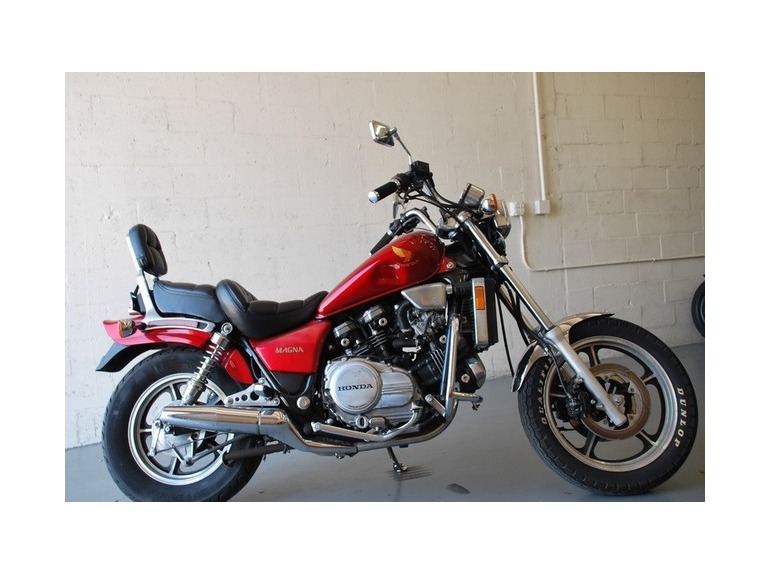
At first glance, the 1986 Honda Magna 700 strikes a perfect balance between formidable power and refined aesthetics. Its styling embraces the muscular cruiser ethos, featuring bold lines and a hulking presence that hints at the mechanical marvel beneath. The Magna 700 beckons riders who crave more than just transportation; it’s a declaration of intent on two wheels. Meanwhile, the V65, often referred to as the Magna V65 or VF1100C, ups the ante with a larger displacement and more aggressive tuning. It’s no mere evolution but a statement of dominance in the cruiser segment.
Exploring the engine architecture reveals Honda’s masterstroke—using the venerable V4 engine layout, a configuration more commonly associated with sportbikes. But in these cruisers, the engine isn’t merely functional; it’s an orchestral instrument producing a uniquely rich and distinctive sound. The 700 Magna is powered by a liquid-cooled, DOHC 698cc V4 engine designed to deliver quick throttle response and robust midrange torque. This combination makes it surprisingly agile despite its bulk. The V65 model cranks displacement up to an imposing 1098cc, pairing its larger engine with double overhead cams and hydraulic valve adjustment, ensuring reliability alongside impressive performance.
Performance-wise, the 1986 Magna 700 offers a spirited ride with enough grunt to dominate metropolitan streets and twisty backroads alike. It’s no lightweight cruiser; instead, it asserts itself with 86 horsepower—a figure that was notably formidable for bikes of that era. The V65, by contrast, boasts over 120 horsepower, truly earning its muscle cruiser moniker. Both bikes come equipped with a five-speed transmission that complements their powerplants, allowing the rider to exploit the engine’s sweet spot efficiently across varied riding conditions.
The challenge, however, lies in the Maestro’s balancing act—melding cruiser comfort with sportbike performance. How do these Hondas negotiate this dichotomy without compromising either soul? The engineers’ success shows in the Magna’s chassis and suspension geometry. The steel tubular frame provides a sturdy backbone, while the suspension setup—a telescopic fork upfront and twin shock absorbers rear—delivers a compliance that tames rough pavements without dulling rider feedback. The riding position further enhances this duality: relatively upright for comfort, yet aggressive enough to invite spirited control.
But performance is only part of the legacy. The 1986 Magna models are embodiments of a specific era in motorcycling history when the boundaries between cruiser and sportbike blurred. This was a time when Honda sought to claim muscle cruiser territory by infusing sportbike engineering into a cruiser framework. The market response was fervent, as these bikes offered riders the visceral excitement of a sportbike married with the cruising comfort often absent in pure sports models.
The aesthetic language of the Magna family captures this spirit beautifully. Chrome-plated exhaust pipes curve generously along the bike’s flanks, gleaming under daylight, while the stubby front fender and broad rear tire signal strength and confidence. The V65’s slightly more aggressive stance and beefier frame allude to its enhanced capabilities. Fuel capacity and instrument cluster design further emphasize functionality married with classic charm—the cluster featuring analog dials housed in vintage-inspired casings for that unmistakable retro flair.
Riders often praise the Magna’s ability to carve through both urban jungles and open highways with equal aplomb. Its torque-rich V4 engine offers real-world usability, making stop-and-go traffic less tedious while allowing for brisk, thrilling accelerations whenever the road clears. Handling characteristics are responsive and communicative, rejecting the mushiness sometimes characteristic of cruisers. Instead, these bikes remain alert and ready, rewarding riders with a confidence-building feedback loop.
Yet, owning a 1986 Honda Magna 700 or V65 today carries its own set of considerations. Finding parts and maintaining the intricate V4 engine demands dedication and some mechanical savvy. Enthusiasts will need to grapple with sourcing components like the specialized camshafts, unique carburetors, or even the distinctive exhaust system. But for many, this is part of the allure—maintaining and preserving a living piece of motorcycle history.
Moreover, these machines evoke a nostalgia that transcends mere transportation. They represent freedom, rebellion, and a raw connection between man and machine. The muscular silhouette combined with the engine’s unique howl echoes through decades, sparking conversations around campfires and community rallies alike.
Ultimately, the 1986 Honda Magna 700 & V65 models stand as testaments to Honda’s vision of what a muscle cruiser should embody. They challenge preconceived notions of cruiser performance and style, offering a nuanced ride experience that is at once playful and powerful. So, the question remains—are you ready to experience the thrilling enigma of a muscle cruiser that dares to blend sportbike vigor with cruiser soul? Riding a Magna isn’t just a journey—it’s an invitation to become part of a legacy that still commands respect and admiration.