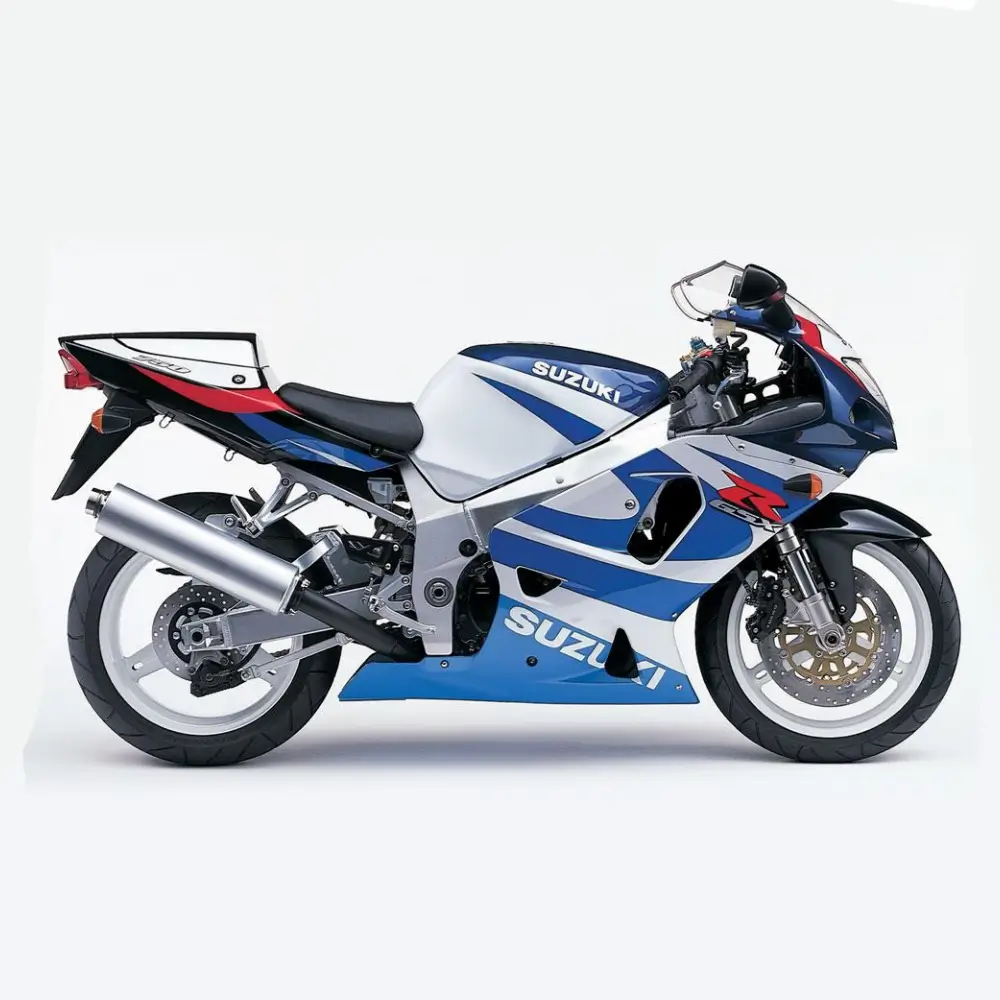
In the pantheon of sportbikes, the 2000 Suzuki GSX-R600 and GSX-R750 occupy a realm that can only be described as a duel between precision and power—a dance of engineering prowess where every curve and contour sings the hymn of speed. To the untrained eye, these two machines might appear as siblings cloaked in similar fairings, yet beneath the glossy exoskeletons lies a narrative woven from distinct philosophies. The question lingers like a challenging gust of wind on an open road: which one truly prevails in the relentless quest for supremacy?
Imagine the 2000 Suzuki GSX-R600 as a finely tuned scalpel—light, nimble, and exacting. It is designed to slip through the tightest corners with the agility of a mountain cat stalking its terrain. Its engine, a 599cc four-cylinder masterpiece, hums with a precision that rewards a rider who wrangles with finesse rather than brute strength. The bike’s lightweight chassis and sharp handling make it a veritable extension of the rider’s will. Every flick of the wrist translates into a decisive response, making it especially beloved among those who prioritize agility over sheer force.
Conversely, the 2000 Suzuki GSX-R750 is akin to a seasoned bison charging across the plains—muscular, potent, and unyielding. With a larger 750cc displacement, it bridges the gap between middleweight grace and heavyweight muscle. Its engine resonates with a throaty ferocity, delivering a torque-rich midrange that the 600 cannot match. This makes the GSX-R750 not just a turn-machine but a beast capable of holding its own on straights and undulating terrains alike. For riders who crave a balance of raw power and impressive handling, the 750 represents a compelling middle ground.

Examining the chassis architecture of both reveals Suzuki’s commitment to blending agility and stability. The GSX-R600’s frame is painstakingly light, a testament to Suzuki’s “Total Effective Control Technology” (TECT), which revolves around crafting a sharp yet stable motorcycle. The 750 employs a similar framework but adds subtle reinforcements to accommodate its more robust engine, ensuring durability without compromising nimbleness. Suspension on both models utilizes fully adjustable components, empowering riders to tailor their experience with surgical precision.
Stylistically, both bikes embody the Suzuki ethos of the late ’90s and early 2000s—aesthetic minimalism coupled with functional aerodynamics. The fairing shapes are aerodynamic sculptures, designed not solely for beauty but to wrestle wind resistance into submission. The GSX-R600’s more compact bodywork encourages a lighter overall weight, pushing it’s dry mass down to approximately 363 pounds. The 750, a few pounds heavier at around 374, retains sleekness but with a subtle hint of muscularity that hints at greater internal combustion prowess.
The engines, however, are where their personalities truly diverge. The GSX-R600’s 599cc inline-four is a high-revving marvel, spinning eagerly to its redline at 14,000 rpm, rewarding riders willing to keep it singing at high RPMs. This characteristic suits track enthusiasts who relish cornering and precision throttle control. Meanwhile, the GSX-R750’s 750cc heart beats with fat, accessible midrange torque, peaking at around 11,000 rpm. This difference means the 750 is not just about high-end scream but also offers punchy acceleration out of slower corners—a trait revered in both street and mixed-use scenarios.
Another axis of differentiation lies in the braking systems. Both motorcycles employ dual-disc front brakes with four-piston calipers, delivering formidable stopping power. Yet, the 750’s braking system is calibrated to tame its greater momentum, often translating to enhanced rider confidence during spirited rides or sudden deceleration demands. The synergy between brake feel and suspension tuning results in a cockpit where control is king, regardless of the model chosen.
Ergonomics, though subtly divergent, play a subtle but significant role. The GSX-R600’s seating and handlebar arrangement lean toward an aggressive posture optimized for track efficiency, demanding attentiveness and physical engagement. Alternatively, the GSX-R750 balances this with a slightly more forgiving rider triangle, granting a modicum of comfort during extended rides without sacrificing sporty intent—a crucial consideration for riders pondering long haul excursions or mixed urban usage.
Fuel economy and maintenance considerations also deserve mention. The GSX-R600, with its smaller displacement and lighter weight, typically yields slightly better fuel efficiency, an attractive feature for budget-conscious riders or those frequently venturing on longer rides. Both models, however, are known for Suzuki’s hallmark reliability when maintained properly. Routine servicing—including timely oil changes, chain adjustments, and valve clearance inspections—ensures these steeds remain dependable companions on the tarmac.
When exploring the intangible, the so-called “soul” of these machines emerges. The GSX-R600 is purebred precision—an orchestra of mechanical and electronic harmony that invites a symbiotic relationship between man and machine. It is the bike of the aesthete who sees riding as an art, a choreography of lean angles and apexes conquered with calculated grace. The GSX-R750, meanwhile, appeals to the pragmatist with a love for brute force wrapped in sophistication. It is the warrior’s weapon on open roads, a machine that promises thrills without demanding the unwavering commitment required by its smaller sibling.
Choosing between the 2000 Suzuki GSX-R600 and GSX-R750 can thus be seen as a choice between two distinct approaches to the sportbike ethos. One offers the exhilaration of high-revving mastery and laser-sharp handling. The other delivers a more muscular, versatile ride that excels in a broader array of conditions. Both share Suzuki’s commitment to performance and innovation but cater to different facets of the rider’s desire.
Ultimately, the 2000 Suzuki GSX-R600 and GSX-R750 are not mere motorcycles; they are embodiments of dichotomous ideals—precision versus power, swiftness versus strength, delicate orchestration versus commanding presence. Each has a unique appeal that transcends mere specifications. The victor in this contest depends largely on the rider’s temperament and aspirations. Whether one favors the scalpel’s precision or the bison’s might, both machines stand as timeless testaments to Suzuki’s indelible mark on the sportbike landscape.