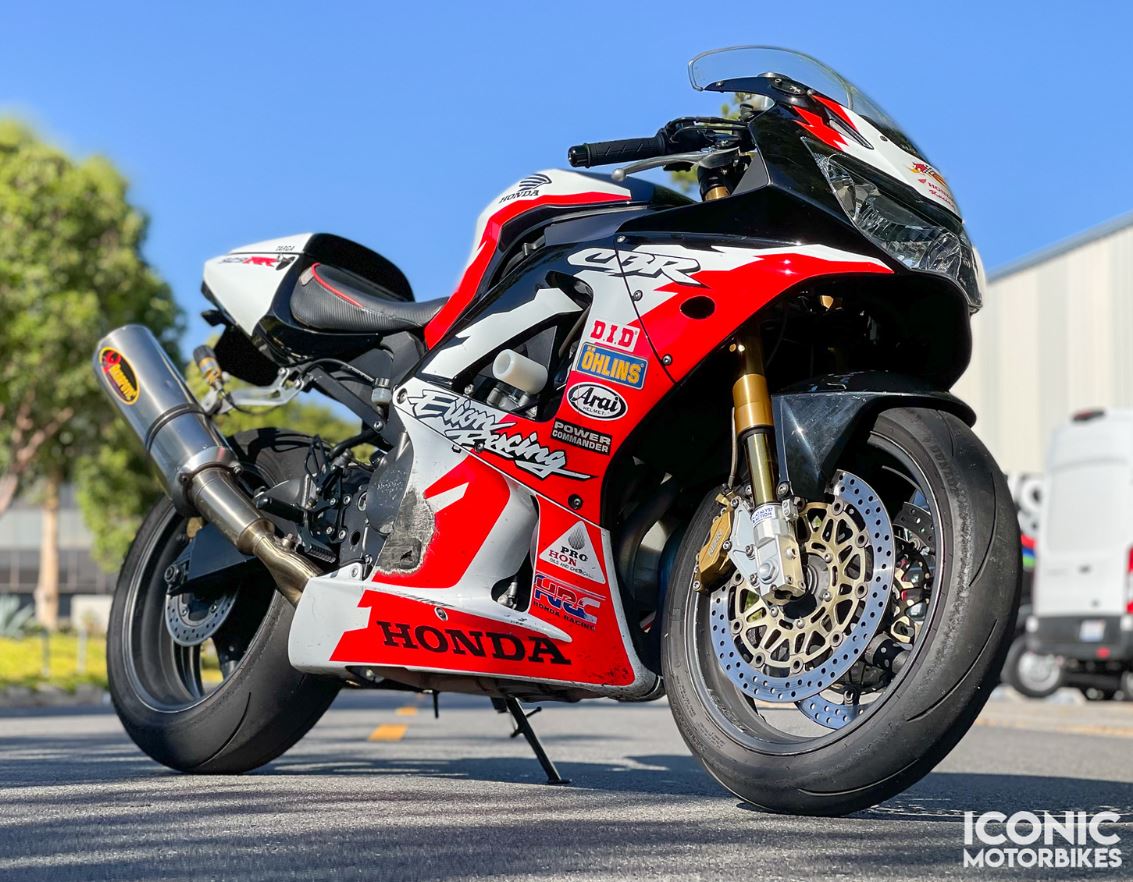
The 2001 Honda CBR929RR is often regarded as a paragon of superbike engineering, representing a period when innovation met raw aesthetic appeal. Enthusiasts and casual observers alike frequently note its captivating presence on the road — a machine that appears both elegant and ferociously powerful. Yet, what underpins this fascination beyond its visual allure? To truly comprehend the enduring magnetism of the CBR929RR, one must delve into the confluence of technology, design philosophy, and the nuanced mechanics that define its stature in the pantheon of superbikes.
At first glance, the CBR929RR’s design language speaks volumes. Its sleek and aerodynamic fairings are not merely for visual impact; they embody a precise engineering intent aimed at minimizing drag and optimizing high-speed stability. This motorcycle carries the DNA of Honda’s relentless pursuit of perfection in superbike dynamics — from the contours sculpted by wind tunnel testing to the meticulously chosen materials that balance weight and durability. The fairings, crafted from high-grade composites, contribute to a substantial reduction in overall weight, enhancing the bike’s agility and responsiveness.
Central to the CBR929RR’s mystique is its powertrain, a sophisticated 929cc inline-four engine that champions both performance and technological refinement. This engine configuration is emblematic of a period when Japanese manufacturers were pushing boundaries to extract maximum horsepower while maintaining reliability. The highly oversquare engine geometry — featuring a bore of 75mm and a stroke of 53.6mm — allows for high revving capabilities without sacrificing torque delivery. This balance is critical, as the CBR929RR eschews the characteristic “peaky” nature of many superbikes in favor of a more tractable yet exhilarating power curve.

What truly differentiates the 2001 CBR929RR from its contemporaries is Honda’s implementation of advanced fuel injection and ignition systems. At a time when carburetors were still prevalent, Honda’s use of computerized fuel injection heralded a new era of precision tuning, resulting in a more efficient combustion process, smoother throttle response, and improved emissions compliance. Together with a digital ignition system, this ensures that every combustion cycle is optimized for power and efficiency, a technology-driven edge that continues to resonate with modern riders.
Beyond the powertrain, the chassis architecture reveals the CBR929RR as a quintessential example of superbike balance and handling finesse. The aluminum twin-spar frame provides a lightweight yet rigid platform, essential for high-speed cornering and rider confidence. The geometry of the frame, with its carefully calibrated rake and trail measurements, allows for nimble handling without compromising high-speed stability — a duality that many superbikes struggle to achieve. When coupled with advanced suspension components, including fully adjustable Showa forks and rear shock absorbers, the bike handles undulations and aggressive maneuvers with laudable composure.
Equally remarkable is the braking system, which integrates dual 320mm discs at the front mated with high-performance multi-piston calipers. This setup underscores Honda’s commitment to safety and performance—qualities imperative when channeling the immense power of the CBR929RR. The braking response is both predictable and powerful, allowing riders to confidently manage deceleration during aggressive riding or emergent situations. The synergy between the braking system and chassis design cements the 2001 CBR929RR as a motorcycle equally comfortable slicing through tight bends or braking hard into corners.
The cultural fascination with the 2001 Honda CBR929RR also derives from its position as a transitional model bridging the era between the legendary CBR900RR Fireblade and the later, more electronically demanding superbikes. It occupies a unique niche where mechanical purity still held sway over electronic intervention, offering riders a raw and connected riding experience. The absence of intrusive rider aids like traction control and ABS fosters a direct relationship between man and machine, which many aficionados consider a hallmark of true motorcycling artistry.
Moreover, the CBR929RR’s aesthetics reflect a meticulous attention to ergonomic design. The sportbike’s seat and clip-on handlebars are deliberately positioned to provide an aggressive yet sustainable posture, facilitating both spirited riding and endurance. This harmonious union of form and function lends itself to an immersive experience where the rider becomes one with the machine, accentuating sensory feedback and control precision.
The all-encompassing appeal of the 2001 Honda CBR929RR is further heightened by its racing heritage. Honda’s Erion Racing team notably campaigned the CBR929RR in various superbike championships, demonstrating the platform’s competitive potential. Success on the track invariably filtered back to the production model, reinforcing its reputation for performance and enhancing its desirability. Collectors and enthusiasts often remark that the racing pedigree imbues the motorcycle with an intangible aura — a sense of heritage mingled with technological prowess.
In conclusion, the 2001 Honda CBR929RR is more than just a superbike; it is a carefully orchestrated synthesis of innovation, design, and rider engagement. Its iconic status is attributable not only to its striking aesthetics but to the intricate engineering details that elevate it above mere transportation. This motorcycle embodies a rarefied combination of accessible power, advanced technology for its time, and authentic mechanical feedback. For riders and enthusiasts alike, it symbolizes a pinnacle moment in superbike evolution — a machine that continues to captivate through its blend of precision, performance, and purposeful design.