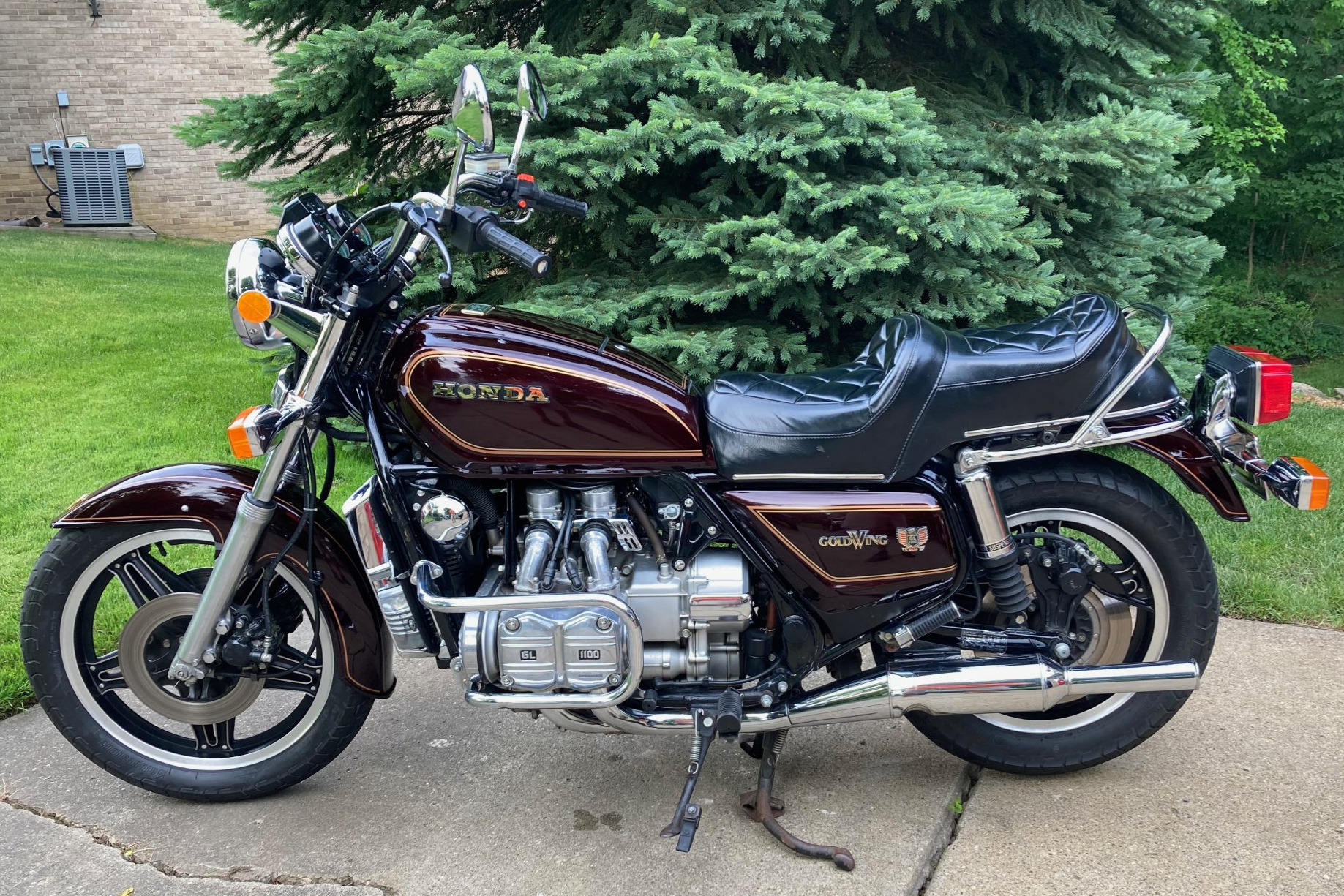
When one contemplates the 1981 Honda GL1100 Goldwing, a fascinating question inevitably arises: can a motorcycle truly excel as both a bastion of comfort and a paragon of power? This seeming paradox sets the stage for an intriguing debate, beckoning riders and enthusiasts alike to inspect the delicate equilibrium between two pillars that define the essence of the Goldwing legacy. Is it possible for a machine to deliver an opulent cruising experience without sacrificing the vibrant dynamism many crave? Or does one attribute inevitably overshadow the other in this 1981 masterpiece?
The GL1100 Goldwing stands as a quintessential emblem of its era—a time when touring motorcycles were undergoing transformative evolution. Introduced during an age when riders increasingly sought refuge from the rigors of the road, Honda’s GL1100 embodied a promise: seamless comfort fused ingeniously with robust mechanical prowess. Beneath the sculpted fairings and the sprawling saddle lies a sophisticated engineering marvel, meticulously calibrated to challenge conventions.
At the heart of the GL1100’s identity is its engine—a 1085cc, flat-four powerhouse, designed with an artisanal blend of reliability and vigor. Unlike sport bikes that chase outright speed, the Goldwing’s powerplant exudes a steady, effortless thrust. It’s not just about accelerating; it’s about a smooth, unwavering delivery of torque that caresses the rider, promising unencumbered passage across expanses of highway. The liquid-cooled engine, complemented by a five-speed transmission, ensures responsiveness in every throttle twist, inviting riders into a gripping dialogue between man and machine.
Yet, power without comfort is but a fleeting thrill. The GL1100 Goldwing counters this with an impeccably engineered chassis and thoughtful ergonomics. The plush seat, expansive and inviting, is akin to a throne, transforming long hours on the saddle into moments of sublime ease. The suspension system, daringly refined for its time, absorbs the caprices of the road with a grace that borders on aristocratic. Whether navigating urban labyrinths or gliding through pastoral landscapes, the Goldwing cushions its occupants against fatigue, carving out an oasis amidst the perennial chaos.
However, beneath this harmonious veneer lies a subtle tension. Performance enthusiasts might quibble with the GL1100’s modest horsepower figures in comparison to the lightning-quick acceleration of sport bikes. Some may argue that the Goldwing’s heavy frame and expansive profile render it less nimble, constricting its ability to deliver a thrilling, adrenaline-charged experience. Conversely, die-hard touring aficionados might find the relentless quest for raw power intrusive, threatening the serenity that the motorcycle so famously guarantees.
This dialectic extends beyond mere specifications into the realm of rider psychology. For some, a motorcycle’s soul is etched in the cadence of its engine, the visceral surge felt with every twist of the wrist. For others, it is the whisper of wind replaced by the tranquility of ergonomic comfort, the sanctuary of thoughtful design that transforms miles into meditative journeys. The 1981 GL1100 Goldwing, in straddling these sensibilities, refuses to conform to simplistic categorization. Instead, it posits that power and comfort need not be adversaries but rather co-conspirators in the art of motorcycling.
Technological innovations of the early 1980s play a crucial role in shaping this duality. The GL1100 introduced features that were avant-garde for its time — think hydraulic valve lifters ensuring quiet operation and reduced maintenance, coupled with an advanced electrical system powering auxiliary comforts like a stereo and lighting that bordered on the luxurious. These enhancements might seem peripheral when viewed through the prism of raw horsepower statistics, but they substantively amplify the rider’s experience, extending the notion of power beyond simplistic metrics.
Consider also the Goldwing’s aerodynamic silhouette. While perhaps not as aggressive as sport motorcycles, it is meticulously sculpted to reduce fatigue caused by wind drag. This design not only enhances comfort but indirectly supports the power debate — by enabling sustained higher speeds with reduced rider strain, the GL1100 offers a compelling case for power wielded with elegance. It challenges the notion that performance is exclusively about brute force, urging observers to recalibrate their expectations.
Beyond the machine itself, the GL1100’s cultural and historical context enriches this conversation. In a period marked by a burgeoning appreciation for long-distance touring, the Goldwing offered an alternative narrative to the rawness of earlier motorcycling eras. It catered to riders seeking a synthesis of escape and sophistication. The Goldwing was no longer just a bike; it became a companion for exploration, a refuge from the cacophony of modern existence, merging utility with indulgence.
Yet, the playful question remains: if one had to choose between the visceral thrill of unbridled power and the caress of sumptuous comfort, where would the GL1100 truly fall? For many, its genius lies precisely in refusing to pigeonhole itself. It acknowledges that the rider’s journey is multifaceted — sometimes craving exhilaration, sometimes yearning for tranquility. This motorcycle extends an invitation to embrace complexity, to appreciate that power need not roar if it can also purr with gentle assurance.
The legacy of the 1981 Honda GL1100 Goldwing persists because it transcends mere mechanical function and enters the territory of experience and emotion. Power and comfort, often portrayed as dichotomous, are instead woven into a nuanced tapestry, each enhancing the other. It reminds us that engineering, at its finest, is an exercise in balance and creativity.
Ultimately, the debate of comfort versus power is less about supremacy and more about harmony. The GL1100 Goldwing is a testament to the idea that a motorcycle can be a sanctuary and a symphony—where every mile traveled is a dialog between strength and solace. For those embarking on this journey, the real challenge lies not in choosing between comfort and power, but in embracing the sophisticated dance that Honda so artfully choreographed four decades ago.