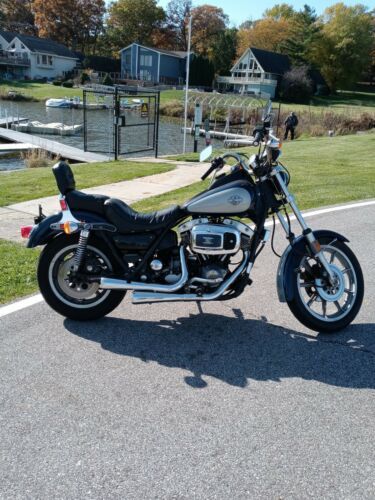
In the annals of motorcycle history, few machines have heralded a revolution as profound as the 1983 Harley-Davidson FXR. While Harley-Davidson’s legacy is built on robust engines and timeless styling, it was the innovative frame of the FXR that truly redefined the riding experience and marked a pivotal turning point for the brand. This is not merely a story about a motorcycle; it is a narrative that challenges conventional notions of engineering and craftsmanship, promising to transform the way enthusiasts perceive the symbiotic relationship between a motorcycle’s chassis and its performance.
At first glance, the 1983 FXR may not scream novelty. It retains the quintessential Harley-Davidson aesthetic—classic lines, chrome embellishments, and a commanding presence. However, beneath this familiar visage lies a frame designed with precision that transcended industry norms. The FXR frame was engineered using double-cradle tubular steel, a departure from the traditional backbone frames Harley had employed previously. This subtle yet monumental shift had profound implications for ride quality, handling, and durability.
To appreciate the magnitude of the FXR’s frame innovation, one must consider the typical challenges Harley riders faced before its introduction. Motorcycles, especially those built for American roads, historically wrestled with the balance between rigidity and comfort. Frames that were too stiff could transmit every imperfection of the asphalt directly to the rider, creating fatigue and discomfort. Conversely, frames that emphasized cushioning often compromised handling precision, leading to a sense of instability or imprecision in cornering. The 1983 FXR’s frame was designed to delicately negotiate this complex engineering dichotomy.

The genius of the FXR’s frame resides in its unique approach to rigidity and vibration management. Harley-Davidson utilized large-diameter tubing connected through robust welds and gussets that fortified the chassis against torsional flex. This resulted in an exceptionally stiff construction that enhanced the motorcycle’s stability at high speeds. Yet, rather than transferring harsh vibrations to the rider, the frame’s geometry and material choice absorbed and dispersed energy intelligently. This balance fostered a confident riding experience—one where precision met comfort in harmonious synergy.
One cannot discuss the FXR without touching upon its influence on rider confidence and handling dynamics. Predecessor Harley frames occasionally induced a phenomenon colloquially known as “frame flex,” where the chassis would subtly twist under stress, especially during aggressive maneuvers or uneven terrains. This not only impacted handling but also eroded rider trust in the motorcycle’s responsiveness. The FXR frame effectively quashed this issue. The torsional stiffness created a responsive platform that translated rider inputs with accuracy and immediacy, transforming cornering into an intuitive experience.
Moreover, the FXR’s frame contributed significantly to weight distribution and balance—two elements critical to the reciprocation of stability and agility. By optimizing the geometry, engineers managed to lower the center of gravity without sacrificing ground clearance. This enhanced the motorcycle’s handling characteristics, enabling riders to navigate winding roads with a newfound sense of daring precision. The frame didn’t just support the mechanical components; it became an active participant in the symphony of motion, anticipation, and control.
Another fascinating aspect of the FXR frame was its adaptability, which hinted at the future modularity potential in motorcycle design. The architecture allowed for easier maintenance and modification—a quality that appealed to custom builders and enthusiasts who valued personalization without compromising structural integrity. This adaptability cemented the FXR’s appeal beyond Stock form, fostering a culture of creative expression within Harley’s community that persists to this day.
The legacy of the 1983 FXR frame extends far beyond its immediate performance benefits. It was a conceptual shift that asked the motorcycle world to reconsider what a frame could represent. No longer was the chassis a passive scaffold; it was elevated to an active role, a linchpin in the machine’s dynamic identity. This reframing of the chassis concept paved the way for subsequent advancements in motorcycle engineering, influencing not only Harley-Davidson’s lineup but also the broader landscape of cruiser and sport-cruiser segments.
Furthermore, the FXR frame’s impact reflected a larger ethos of innovation within the Harley-Davidson brand during a time when the company faced intense competition from foreign manufacturers. While others focused primarily on engine displacement and electronic sophistication, Harley chose to innovate in a seemingly fundamental aspect—the frame. This decision embodied a deep understanding that performance and rider experience hinge on the often-overlooked relationship between frame and function.
In retrospect, the 1983 Harley FXR frame emerged as a quiet yet revolutionary force. It exemplified how thoughtful engineering could elevate a motorcycle beyond the sum of its parts. The rider’s connection to the machine became more tangible, more visceral. Roads that once seemed daunting became invitations to explore with confidence and poise. The FXR promised a new paradigm, one where craftsmanship, science, and design converged to create something truly transformative.
As the years have unfolded, the reverberations of the FXR’s engineering marvel continue to be felt. Modern Harley-Davidson models still draw inspiration from the frameworks first laid down by this iconic design. For motorcycle aficionados and casual riders alike, the FXR frame stands as a testament to the power of innovation grounded in tradition—a reminder that the future of riding is often forged through reimagining the foundations that support it.
Ultimately, the 1983 Harley-Davidson FXR is more than a motorcycle; it is a symbol of change, a beacon of progress nestled within the echoes of a storied legacy. Its frame changed everything—not by spectacle or fanfare, but through an enduring shift in perspective that forever altered the art and science of motorcycling.