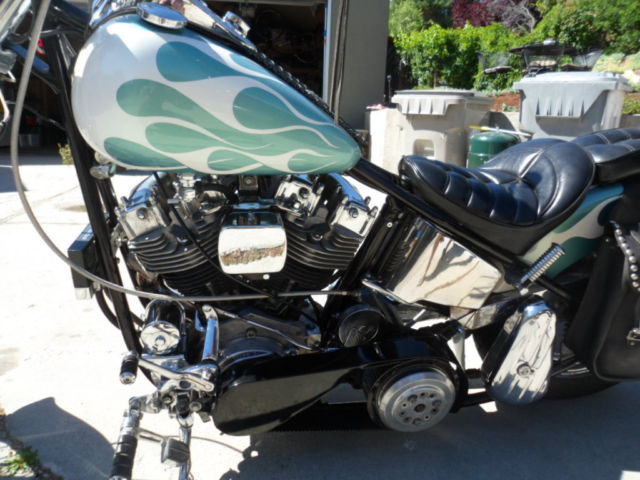
The 1983 Harley Shovelhead custom motorcycle evokes a complex spectrum of reactions among enthusiasts and collectors. Often admired as a visceral embodiment of raw muscle and mechanical artistry, it nonetheless invites debate about its practical reliability and long-term viability. This iconic machine stands at the intersection of romantic nostalgia and pragmatic scrutiny, making it as much a cultural artifact as a mode of transportation.
To begin, the Shovelhead engine holds a distinctive place in Harley-Davidson lore. Produced from 1966 to 1984, this V-twin engine is renowned for its characteristic “potato-potato” rumble—a sound that has become synonymous with classic American motorcycling. The 1983 iteration of the Shovelhead stands as one of the final embodiments of a design philosophy that prioritized raw mechanical simplicity and a visceral riding experience over modern technological sophistication. There’s an unfiltered honesty to this machine: metal on metal, every clatter and throb a reminder of its combustion-born heart.
Many riders regard the 1983 Shovelhead Customs as the quintessential expression of rugged individuality. Its stark aesthetics—a synthesis of chrome, exposed mechanics, and fat tires—speak to a subculture that venerates a rebellious spirit and an untamed form of freedom. The heft and heft alone command respect; this bike demands interaction, not just observation. To pilot a Shovelhead is to engage in a dialogue with history, feeling the engine’s pulse beneath your fingertips as you coax performance from its time-worn architecture.

However, behind this alluring veneer lies a more contentious reality. The Shovelhead, for all its charisma, is notorious for certain mechanical idiosyncrasies. Its design, revolutionary in the 1960s, had begun to show its limitations by the early 1980s. Heat management issues, oil leaks, and a propensity for requiring frequent maintenance have long been points of criticism. The air-cooled engine, while evocative in sound and feel, can tax the patience of those unaccustomed to constant mechanical attention. The outdated electrical systems and carbureted fuel delivery present further challenges in a world increasingly dominated by fuel injection and computerized engine management.
These operational quirks contribute to the dual perception of the 1983 Harley Shovelhead as both a raw muscle icon and a risky buy. While its robust frame and timeless design instill confidence, the maintenance demands can quickly turn enthusiasm into frustration. Ownership is a commitment not just to a machine, but to an ongoing ritual of upkeep and, often, parts scavenging. This reality contrasts sharply with contemporary motorcycles engineered for turnkey reliability.
Yet, the deeper fascination with the Shovelhead extends beyond these practical concerns. For many, owning—or even merely appreciating—a 1983 Shovelhead is an act of homage to a bygone era of motorcycling where rider skill, tactile feedback, and mechanical intuition were paramount. The bike’s imperfections are inseparable from its charm; its temperamental nature underscores the intimate bond between rider and machine. This notion taps into a broader cultural yearning for authenticity and craftsmanship in an age of digitized precision and disposable design.
The custom nature of many 1983 Shovelhead models adds another layer of complexity and allure. Each bike carries its own narrative, shaped by the modifications, paintwork, and personal touches applied over decades. Customization is not merely aesthetic but a functional necessity, addressing individual wear and evolving rider preferences. This bespoke quality imbues the motorcycle with a unique identity, elevating it from mere transport to rolling sculpture.
Furthermore, the 1983 Shovelhead often represents a poignant crossroad in Harley-Davidson’s corporate history. The early 1980s were turbulent times for the company, marked by competition from Japanese manufacturers and internal struggles. Choosing a Shovelhead vintage model, therefore, resonates with enthusiasts seeking to embody resilience and countercultural values against the backdrop of inevitable industrial evolution. It’s a potent symbol—a machine holding steadfast to tradition amid encroaching modernity.
Assessing whether the 1983 Harley Shovelhead Custom is a raw muscle marvel or a risky acquisition ultimately depends on perspective. For the mechanically adept and historically minded, it offers an opportunity to own a living piece of motorcycling heritage—an honest machine that demands respect and rewards dedication. For those pursuing hassle-free transport or cutting-edge performance, the Shovelhead’s archaic systems and maintenance regimen may prove prohibitive.
In terms of investment, values can fluctuate considerably. Pristine examples, particularly those with authentic customizations and well-documented histories, have witnessed appreciable appreciation among collectors. Yet, this market remains niche, vulnerable to shifts in enthusiast interest and the availability of service expertise. The risks associated with mechanical obsolescence and part scarcity underscore the importance of rigorous vetting before purchase.
Ultimately, the 1983 Harley Shovelhead Custom embodies a multifaceted allure. It is a visceral testament to an era when motorcycling was as much about the emotional journey as the destination. Its raw muscle is not just in horsepower or torque figures but in the emotional and sensory impact it imparts to those willing to embrace its foibles. For many, the reward lies not in safe, sanitized reliability, but in the authentic, sometimes unforgiving, communion between man and machine.