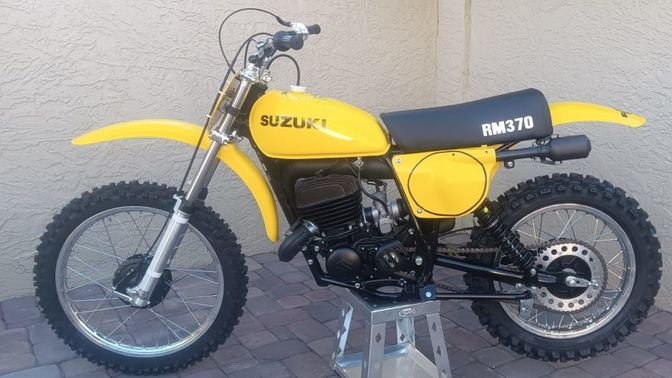
Few motorcycles encapsulate the raw spirit and unyielding prowess of 1970s motocross quite like the 1976 Suzuki RM250. Often relegated to the annals of history, this machine refuses to be merely a relic of the past. It remains a vivid testament to engineering ingenuity and racing tenacity, promising a profound shift in perspective for anyone fortunate enough to witness its capabilities firsthand. Beyond its classic contours and hallmark aesthetics lies a bike that still rips with fervor and audacity, challenging contemporary standards and sparking curiosity about the zenith of two-stroke off-road performance.
The mid-70s were a crucible of innovation for motocross machines. Suzuki’s RM250 was conceived at a time when manufacturers were fiercely experimenting with balance—melding power, weight, and handling to create a true competitive edge in off-road racing. The 1976 iteration was no exception; it embodied a keen understanding of the demands faced by riders maneuvering treacherous, unyielding terrain. What made the RM250 stand apart was not just raw horsepower or lightweight frame construction but the synergy between components designed for precision and resilience.
Peeling back the layers of the RM250 reveals a 246cc, two-stroke powerhouse at its heart. This engine was a prodigy of its time—meticulously balanced to offer an exhilarating surge of power without compromising control. Known for delivering a broad torque curve, it sidestepped the pitfalls typical of early two-strokes, such as abrupt powerbands that left riders guessing. The refined engine characteristics fueled spirited acceleration, ensuring that the RM250 could catapult out of tight corners and soar across jump-strewn tracks with astonishing agility. Its twin-valve cylinder head allowed for responsive throttle modulation, turning the bike into an extension of a rider’s instinct rather than a mere machine.

Complementing the propulsive engine was a chassis born out of an ethos prioritizing nimbleness and stability. The frame, constructed from lightweight steel tubing, provided a harmonious balance between rigidity and flex. This nuanced interplay absorbed the irregularities of dirt, rocks, and ruts without sacrificing the rigidity necessary for precise handling. The suspension system was progressive, featuring telescopic forks upfront and a swinging arm rear suspension that satiated the need for both comfort and control. These components worked in concert to tame the often merciless terrain of motocross tracks, allowing riders to maintain unwavering focus on racing lines and momentum.
But the RM250 was more than technical specifications; it embraced a tactile experience that few motorcycles could replicate. The ergonomics were thoughtfully designed, with a lowered seat height and narrow profile enabling riders to shift their weight seamlessly and maintain perfect balance. The throttle response was immediate yet predictable, inviting aggressive acceleration without the trepidation of unpredictable surges. Every twist, every jump, every landing was mediated by a synergy between man and machine that spoke volumes of Suzuki’s dedication to rider-centric design. This was not a mere dirt bike. It was an extension of will and skill, facilitating an almost symbiotic relationship between rider and track.
Even in the context of contemporary motorcycles, which boast multifaceted electronics and cutting-edge materials, the 1976 RM250 continues to captivate enthusiasts and vintage racers alike. Its raw, mechanical purity serves as a counterpoint to today’s often sanitized riding experiences. For purists, it offers an opportunity to engage with the essence of motocross—unfiltered, direct, and unpretentious. Every gear shift, every clutch engagement demands respect and rewards precision. Such characteristics draw curious riders who yearn to understand how motocross champions once contended with nature and competition alike, armed only with mechanical aptitude and guts.
The RM250’s enduring appeal also lies in its aesthetic charm. The moniker “classic” is underscored by angular lines and a vibrant racing livery that embodies the spirit and style of the 1970s motocross scene. The fairing, the tank shape, and the minimalist, weight-conscious design motifs are emblematic of an era when form intimately followed function, yet never diminished the visual impact. It’s a bike that turns heads not merely through nostalgia but because its design vocabulary remains compelling and relevant. This convergence of form and performance invites enthusiasts to take a closer look, to decipher the stories camouflaged within its time-worn frame.
Racing history further enriches the RM250’s legacy. It stood as a formidable contender in national and international motocross circuits, securing Suzuki’s reputation and influencing the evolution of motocross bike engineering. The lessons learned from the RM250’s competition days echo through subsequent generations of off-road motorcycles. Its success was not accidental but the result of relentless refinement and an understanding that racing demanded both innovation and dogged resilience.
Exploring the 1976 RM250 today offers more than a nostalgic journey—it presents a challenge to preconceived notions of performance and durability. It invites a reevaluation of what constitutes modernity and excellence in motocross machinery. The bike’s capacity to “still rip” is a testament to timeless design principles and the diligent craftsmanship of a bygone era. In an age dominated by digital dashboards and electronic aids, this classic Suzuki’s reliance on raw, mechanical truth is a refreshing revelation, a provocative reminder of where motocross once was and, intrinsically, where its soul resides.
To embrace the 1976 Suzuki RM250 is to embrace a narrative of persistence and innovation wrapped in two wheels and a fire-breathing engine. It’s a journey back to motocross’s formative years, where every ride was a forging of character and every race a test of mettle. For vintage bike aficionados and new devotees alike, the RM250 promises a tactile connection to the sport’s rich heritage, as well as the thrilling immediacy of a machine built to extract every ounce of exhilaration from dirt and sky. A true classic that not only echoes the past but continues to roar into the present, daring those who encounter it to rethink the very essence of what makes a motocross bike truly unforgettable.