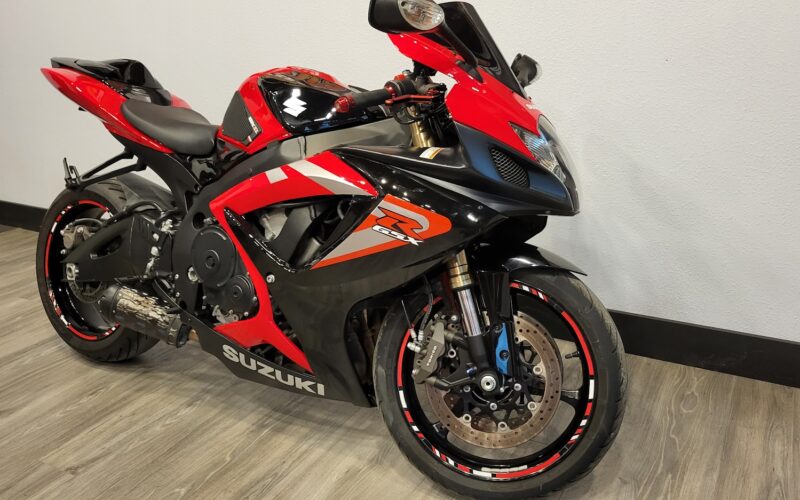
In the ever-evolving landscape of sportbikes, the 2007 Suzuki GSX-R600 occupies a niche akin to a masterfully crafted timepiece—an amalgamation of precision engineering and relentless pursuit of speed that continues to captivate enthusiasts decades after its debut. Like a finely tuned predator stalking its territory, this motorcycle combines power, agility, and an aerodynamic design that whispers promises of adrenaline-infused escapades. But as the calendar advances into 2026, the question inevitably arises: Does this iconic middleweight sportbike still hold its ground amidst contemporary marvels? To untangle this query, a meticulous exploration of the 2007 GSX-R600’s specifications, weight, power, and its enduring allure is requisite.
The heart of the 2007 Suzuki GSX-R600 is a liquid-cooled, 599cc, inline-four engine—a mechanical symphony finely orchestrated to deliver a harmonious blend of exhilarating acceleration and high-revving exuberance. Designed with precision valves and a DOHC (double overhead camshaft) layout, this powerplant churns out an impressive peak horsepower of approximately 104 hp at 13,500 rpm. This is not merely a number on paper but an embodiment of Suzuki’s commitment to balancing raw power with nimble control. The engine response is razor sharp, with a torque curve that invites spirited throttle manipulation rather than brute force, making it a motorcycle that rewards skill and finesse.
Weight, often the unsung hero in the performance narrative, plays a vital role in the GSX-R600’s aura of precision. At a dry weight of roughly 362 pounds, this machine is featherlight in comparison to many contemporaries, offering an almost ethereal essence on the road. This relatively svelte figure enhances its agility, allowing riders to carve through corners with surgical accuracy, a sensation that feels less like wrestling a wild beast and more like partnering with a trusted dance companion. The low center of gravity, derived from strategic mass distribution, further refines its handling, making it an excellent conduit for translating rider input into immediate, confident action.

Complementing the nimble chassis is the GSX-R600’s sophisticated suspension setup, consisting of a KYB inverted fork at the front and a link-type swingarm with preload adjustable rear shocks. This arrangement meticulously tames road imperfections while maintaining feedback and stability—a crucial interplay for those who seek the razor edge between performance and comfort. The braking system, featuring dual 310mm front discs with Tokico 4-piston calipers and a 220mm rear disc, delivers robust stopping power, instilling a sense of control that is paramount when navigating both asphalt circuits and urban streets alike.
But spec sheets only tell part of the story. The GSX-R600’s visual and tactile appeal propels it beyond mere mechanics. Its aerodynamic bodywork—sculpted to slice through air with minimal resistance—evokes the image of a predator in stealth mode, poised to unleash its fury. The sharp lines and purposeful stance speak of a motorcycle designed for aggressive riding, yet tempered with a balance that invites everyday accessibility. The ergonomics strike a fine balance, offering a crouched riding position that emphasizes control without plunging riders into discomfort during prolonged journeys.
How does the 2007 GSX-R600 fare in the context of 2026’s motorcycling milieu? The landscape has undeniably shifted. Advances in electronics, such as sophisticated traction control, multiple riding modes, and ABS enhancements, have become standard expectations. In this arena, the 2007 machine, being devoid of many electronic aids, relies entirely on rider acumen—making it less forgiving but perhaps more rewarding for those who savor undiluted mechanical interaction. The absence of electronic crutches positions the bike as a purist’s instrument, evoking nostalgia and a raw, unfiltered connection between human and machine.
Performance-wise, contemporary 600cc sportbikes tend to flirt with similar power outputs but often eclipse the 2007 GSX-R600 with ultra-light materials, sharper electronics, and refined chassis technologies. Yet, it’s essential to view the GSX-R600 not purely through the lens of comparative data but through the prism of its inherent character. Its lively engine note, tactile feedback, and unmistakable Suzuki racing pedigree create an intangible magnetism that newer models sometimes lack. This is a motorcycle that invites engagement, offering an analog response in an increasingly digital domain.
Economically, the GSX-R600 remains an alluring prospect. With its robust build quality and enduring parts availability, maintenance is manageable, making it a viable option for riders who desire spirited performance without the premium cost of brand-new machines. Moreover, its presence in the used market is often buoyed by a passionate community of enthusiasts who recognize the model’s historical significance and dynamic capabilities.
In summation, the 2007 Suzuki GSX-R600 in 2026 can be likened to a classic novel that continues to captivate readers despite the emergence of contemporary thrillers. It embodies a fusion of lightweight agility and potent power that remains relevant, especially for those who value mechanical purity and riding precision over digital enhancements. While it may not boast the electronic sophistication of modern counterparts, its essence as a rider-focused, responsive sportbike remains resonant. For the aspiring track warrior or street enthusiast seeking an engaging, tactile experience, the GSX-R600 is indeed worth contemplating—a testament to engineering that transcends its era and continues to inspire a raw hunting instinct on two wheels.