Are the 2008 Harley Fat Bob and Rocker C truly the coolest cruisers on the road, or is their reputation simply a reflection of nostalgic fervor? These two models, hailing from an iconic American brand synonymous with freedom and rebellion, offer more than just a means of transportation—they embody a lifestyle, a statement. Yet, when placed under the microscope of modern motorcycling standards and fierce competition, do they still hold their throne? The challenge lies in dissecting their craftsmanship, performance, and allure to determine whether their legendary status is deserved or merely inherited.
The 2008 Harley Fat Bob, a descendant of the Dyna family, is a motorcycle that commands attention the moment it rolls into view. It’s burly, unmistakably muscular, with a wide front end and beefy tires creating an imposing stance. Yet, beyond its brawny exterior lies a machine meticulously engineered to deliver a ride that’s as exhilarating as it is comfortable. The Fat Bob was Harley’s answer to riders craving a no-nonsense cruiser that could carve through city streets and highways alike without sacrificing the visceral thrill of a throaty V-twin engine.
At the core of the Fat Bob is Harley-Davidson’s Twin Cam 96B engine, displacing 96 cubic inches—a powerhouse that delivers torque in waves rather than bursts. This engine doesn’t just push power; it projects character. The pulse, the growl, the unmistakable Harley rumble is a soundtrack for those who understand that a motorcycle is as much an emotional escape as it is a mechanical device. The Fat Bob’s suspension setup, with its adjustable rear shocks and beefy front fork, offers a smooth yet responsive ride, mitigating road imperfections while maintaining feedback that connects rider and machine seamlessly.
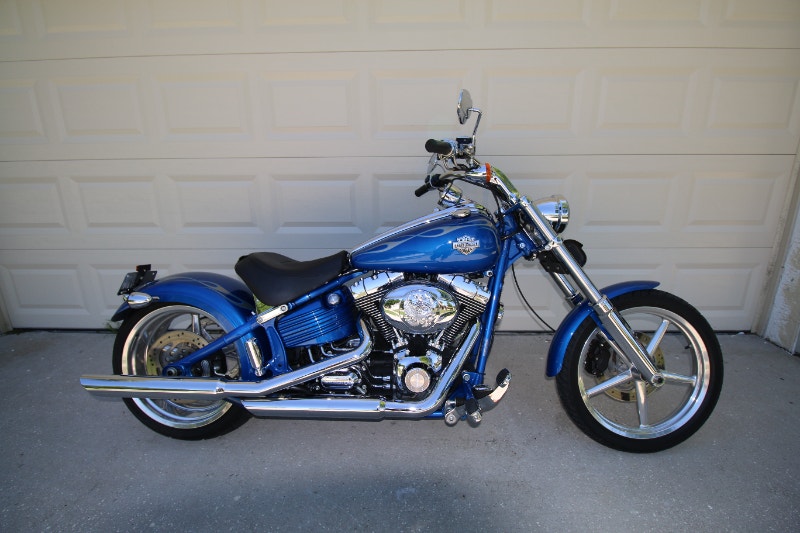
Contrastingly, the 2008 Harley Rocker C, part of the Softail lineage, melds cruiser tradition with a touch of rebellious minimalism. Sporting a stretched-out frame and a narrow profile, the Rocker C is less about bulk and more about streamlined sophistication. It radiates a custom aesthetic straight from a garage adorned with wrenches and leather, yet comes factory-equipped with respectable performance-oriented components. The “C” in its name stands for “Comfort,” making it an intriguing blend of laid-back cruiser style and the potential for spirited rides.
The Rocker C’s heartbeat is also powered by the Twin Cam engine, yet its Softail architecture distinguishes it with hidden rear suspension, offering the rigid-look classic Harley riders covet, paired with contemporary ride comfort. This combination invites a different rider profile—someone who prizes style but also demands a motorcycle that can handle spirited canyon carving or an extended weekend jaunt in supreme comfort. Its sculpted fuel tank, mini-ape handlebars, and minimalist fenders create an aggressive yet understated silhouette that stands apart in a crowd of bulky cruisers.
But amidst discussions of power, design, and heritage, one must consider the ever-evolving standards of motorcycle technology and rider expectations. What makes a cruiser “cool” today? Is it raw power, modern amenities, heritage, or a combination? The 2008 Fat Bob and Rocker C, vehicles firmly rooted in Harley-Davidson’s storied past, flirt with these benchmarks while facing the onslaught of innovation from competitors and the changing tastes of motorcyclists worldwide.
The Fat Bob leans heavily into the audacity of its design—bold, brash, and unrelenting. For some, this makes it irresistibly cool; for others, it appears somewhat outdated, lacking in the digital sophistication found in newer models. There’s an undeniable primal allure in its mechanical simplicity and rugged charm. It’s a bike meant to be felt, heard, and experienced rather than decoded through tech apps or digital dashboards. Meanwhile, the Rocker C’s more refined silhouette and hidden suspension hint at a willingness to embrace subtle modernity, yet it doesn’t stray far from the cruiser archetype.
Delving deeper, each model’s ergonomics tells a story of intent. The Fat Bob’s forward controls and broad seat cater to riders who want to sprawl comfortably but still maintain control and presence. Its high-mounted headlight and broad handlebars create a commanding cockpit, enhancing rider confidence during long highway stretches or short city blasts. The Rocker C, by contrast, leans toward a more aggressive posture, inviting the rider to engage dynamically with the road. Its narrower tank and lower seat provide an agile feel, attracting those who prefer a nimble cruiser with a sporty undercurrent.
However, beyond the physical aspects, the cultural impact and rider community that orbit these models amplify their cool factor. Harley-Davidson is more than a manufacturer; it’s a symbol infused with Americana, rebellion, and individualism. Both the Fat Bob and Rocker C cultivate identities within that mythology. Riding one offers membership in a fraternity that values tradition, brotherhood, and the open road’s infinite possibilities. But therein lies the challenge. As new generations emerge, craving eco-consciousness, connectivity, and cutting-edge tech, can these 2008 stalwarts sustain their relevancy?
Moreover, the 2008 Fat Bob and Rocker C pose an implicit challenge to their riders: embrace the past, or seek the future? They invite enthusiasts to appreciate raw, mechanical honesty over sleek digital interfaces. Ownership becomes an exercise in cherishing craftsmanship and indulging in a visceral sensory connection—the smell of fuel, the roar of the engine, the tactile feedback from the road. Yet, this insistence on analog authenticity may alienate those whose concept of cool integrates adaptability and green technology.
To many, the coolest cruiser is not a matter of specs alone but the emotions it evokes and the identity it cultivates. The Fat Bob’s brute force and palpable presence tap into our primal desires for freedom and domination of the asphalt wilderness. The Rocker C entices with its blend of custom flair and riding finesse, promising a quiet confidence that gleams in the dusk light. Both are canvases for personalization, allowing owners to modify and infuse their personality into machines that already whisper stories of legends.
In summary, the 2008 Harley Fat Bob and Rocker C present an intriguing juxtaposition of power, style, and heritage. They challenge riders to reconsider what it means to be cool in a landscape teeming with high-tech, high-performance options. These cruisers demand appreciation for their unapologetic authenticity and the freedom they represent. Whether they stand as the coolest cruisers on the road today depends largely on one’s perspective and values—whether cool is defined by raw character, evolving sophistication, or the ever-elusive spirit of the open road. Ultimately, these Harley models are more than motorcycles; they are enduring symbols of a time-honored culture seeking relevance in an accelerated world.