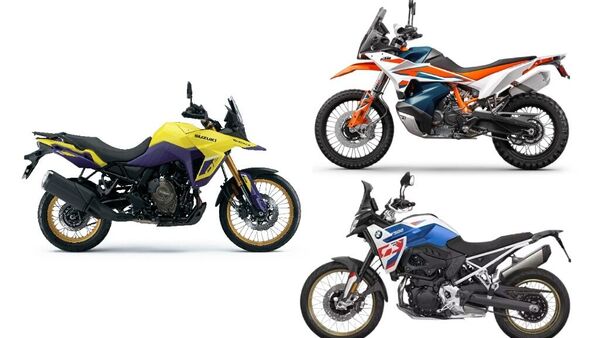
The adventure motorcycle segment in 2012 was a battleground where versatility, endurance, and engineering prowess converged, presenting riders with an array of formidable contenders. Among these, the Triumph Tiger 800, Suzuki V-Strom 650, and Kawasaki KLR650 stood out as archetypes of dual-sport excellence, each promising to redefine the concept of on- and off-road exploration. While at first glance, these machines might seem merely tools for traversing terrain, a closer inspection reveals a nuanced dialogue between tradition, innovation, and rider aspiration.
The Triumph Tiger 800 emerged as a sophisticated synthesis of power and agility. Armed with an inline three-cylinder 799cc engine, it struck an alluring balance between torque-rich delivery and spirited acceleration. Its chassis, meticulously crafted for nimble handling, invited riders to flirt with curves on asphalt while maintaining composure on gravel trails. The Tiger’s advanced electronics package—complete with selectable riding modes, switchable traction control, and ABS—foreshadowed a paradigm shift in adventure riding; technology was no longer a luxury but an essential ally in the quest for riding mastery. This machine whispered promises not merely of conquering roads but of mastering them with finesse and confidence.
In contrast, the Suzuki V-Strom 650 carved its niche as a pragmatic yet reliable workhorse. Powered by a 645cc V-twin, the V-Strom distinguished itself through smooth, linear power delivery that catered equally to novice adventurers and seasoned riders seeking endurance. The ergonomics of the V-Strom reflected an attentiveness to comfort over long hauls—taller windscreen for wind protection, a plush saddle, and a balanced weight distribution. While it lacked some of the sophisticated electronic wizardry of its Tiger counterpart, its unpretentious nature and robust build quality made it a preferred choice for those who valued dependability and day-to-day versatility over flash. It was the embodiment of grounded adventure, offering a steady hand in unpredictable landscapes.

Then there was the Kawasaki KLR650, a legend etched in the chronicles of dual-sport history. With its air-cooled 651cc single-cylinder engine and rugged simplicity, the KLR was the quintessential no-frills adventure bike. It might not have dazzled with electronic aids, but its rugged chassis and ability to endure abuse earned it devotees among the off-road purists. The KLR’s suspension was long-travel, forgiving dirt paths and rugged terrain without faltering. It was less about technology and more about raw endurance and mechanical honesty. There was a profound allure in its straightforwardness—this was a motorcycle that demanded respect, rewarding the rider who was willing to engage with wilderness on its own terms.
When juxtaposed, these three models illuminate distinct philosophies within the adventure bike arena. The Tiger 800 was the modernist’s dream, leveraging technological sophistication to expand the envelope of rideability. The V-Strom 650 represented balanced pragmatism; an all-rounder that could excel in varied environments without fanfare. Meanwhile, the KLR650 epitomized rugged minimalism, marrying durability with simplicity to withstand the rigors of untamed trails.
One cannot discuss the 2012 adventure battle without examining the nuanced ergonomics and rider experience provided by each motorcycle. Triumph’s Tiger offered an upright yet sporty riding position, prioritizing control and agility. Its modular instrumentation combined information density with clarity, promoting an intuitive interface. Conversely, the V-Strom’s seating geometry tilted towards comfort, inviting long-distance sojourns without undue fatigue. Kawasaki’s KLR, though spartan, maintained a commanding seat height and a firm posture that bolstered rider confidence during extended off-road excursions.
Performance metrics further delineate their roles. The Tiger 800, with approximately 95 horsepower, decisively outpaced its rivals in outright acceleration, thrilling riders who sought excitement in curves and highways alike. The V-Strom’s horsepower hovered around a competent 70, sufficient for highway cruising and spirited tours, with an emphasis on manageable power output and fuel efficiency. The KLR650, producing closer to 40 horsepower, relied less on sheer output and more on tractable torque and durability, a testament to its barebones ethos.
Off-road capability also revealed divergent strengths. The KLR’s long-travel suspension and rugged frame gave it an undeniable edge on rough trails, rocky ascents, and unpaved byways. Triumph’s Tiger, equipped with sophisticated electronics, allowed riders to venture into dirt, though it remained more at home on mixed surfaces rather than extreme terrain. Suzuki’s V-Strom, with its adaptable but less aggressive geometry, sat comfortably as a reliable traveler on gravel roads and mild off-piste adventures.
Another pivotal consideration was maintenance and reliability—areas where the V-Strom and KLR held distinct advantages. Both motorcycles were praised for ease of service and robust dependability, critical traits for long-distance travel where mechanical issues could jeopardize entire expeditions. The Tiger, while technologically advanced, necessitated more attentive servicing, reflecting its complexity and high-performance components.
The 2012 adventure landscape was not merely about raw specifications; it was an ecosystem where personal values, riding styles, and desired experiences coalesced. For the rider yearning for a bold synthesis of tech and performance, the Tiger 800 promised to revolutionize the way adventures unfolded. The V-Strom 650 offered a middle path—safe, reliable, and capable—ideal for those prioritizing consistency and comfort. Meanwhile, the KLR650 beckoned the purist, the wanderer undeterred by modern distractions, seeking the profound satisfaction that comes from mechanical simplicity and tactile engagement with the earth.
Each model, in its unique way, invited riders to reconsider what adventure truly meant. Was it the thrill of taming curves and conquering highways? The reassurance of a faithful companion on interminable miles? Or the rugged communion with untamed nature, unmarred by electronic intermediaries? The answer was not fixed but rather a reflection of rider identity—a kaleidoscope of preferences and dreams embedded within the industry’s offerings.
In the end, the 2012 duel among the Tiger 800, V-Strom 650, and KLR650 was not simply a contest of specs or sales. It was a narrative of aspiration, engineering vision, and the undying human urge to explore beyond known horizons. These motorcycles challenged convention, shifting paradigms, and kindling imaginations. They remain emblematic of an era when adventure motorcycling evolved from mere transportation to an odyssey of possibility—where every mile paved the way for transformation.