In the realm of precision engineering, where every micron matters and tolerances are razor-thin, the battle between high lifters and OCC (Over-Constrained Components) isn’t just a technical debate—it’s a philosophical divide. One side champions the elegance of minimalism, where components dance within their constraints like well-rehearsed performers. The other embraces the audacity of excess, where every surface, every interface, is pushed to its absolute limit. This isn’t merely about function; it’s about intent. Are we building machines that hum with efficiency, or are we crafting mechanical symphonies where every note is a calculated risk? The answer lies in the clash of these two philosophies, each promising a different kind of revolution.
The Philosophy of Precision: Why High Lifters Rule the High-Stakes Game
High lifters—those meticulously engineered components designed to operate within tight, almost obsessive tolerances—are the unsung heroes of industries where failure isn’t an option. Think aerospace, medical devices, or semiconductor manufacturing, where a single misalignment can cascade into catastrophic consequences. These components don’t just meet specifications; they define them. Their surfaces are lapped to near-molecular smoothness, their geometries calculated to the thousandth of a degree. The promise? Zero tolerance for deviation.
But here’s the paradox: precision isn’t just about accuracy—it’s about control. High lifters thrive in environments where variables are meticulously managed. Lubrication is optimized, thermal expansion is accounted for, and every micro-vibration is dampened. The result? A machine that doesn’t just work—it performs. Yet, this perfection comes at a cost. The tighter the tolerance, the more unforgiving the system becomes. A speck of dust, a thermal fluctuation, or even a misaligned bolt can unravel the entire operation. High lifters demand perfection not just in design, but in execution. They are the purists of the mechanical world, where compromise is a dirty word.

The Rebellion of Over-Constrained Components: When Chaos Becomes Control
Enter OCC—Over-Constrained Components—a philosophy that thrives on the edge of controlled chaos. Where high lifters seek to eliminate variables, OCC components embrace them. The idea? If you can’t control every factor, make the system robust enough to absorb the unpredictability. This isn’t sloppiness; it’s strategic redundancy. OCC components are designed to operate under a deluge of forces, tolerating misalignments, thermal shifts, and even manufacturing imperfections without skipping a beat.
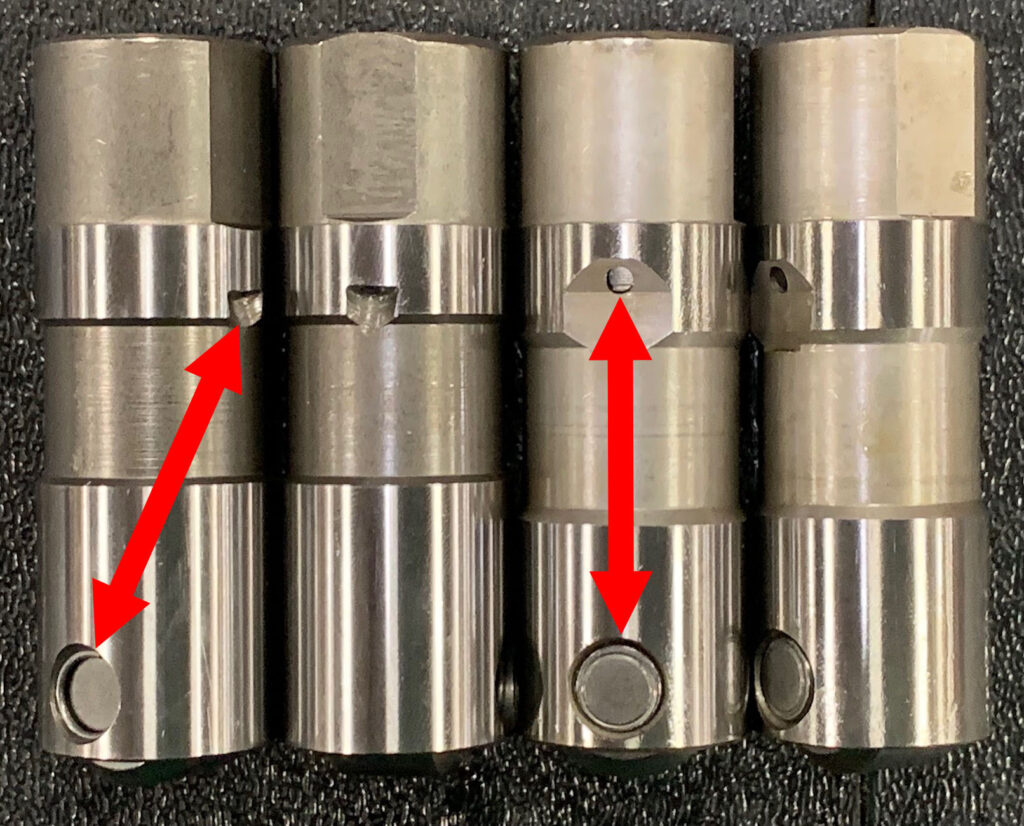
Consider the humble engine lifter. In a high-performance engine, every component is fine-tuned to extract maximum efficiency. But what if the lifter isn’t perfectly aligned? What if the camshaft’s lobes are slightly off? An OCC approach doesn’t panic—it adapts. The lifter’s geometry is designed to self-correct, to distribute loads unevenly but effectively. The result? A system that doesn’t just survive imperfections—it leverages them. This is the antithesis of high lifters: where precision is rigid, OCC is fluid. Where high lifters demand perfection, OCC thrives on resilience.
The trade-off? OCC components often sacrifice peak efficiency for reliability. They’re the mechanical equivalent of a Swiss Army knife—versatile, but not as razor-sharp as a dedicated tool. Yet, in industries where downtime is more costly than inefficiency, OCC is the unsung savior. It’s the difference between a machine that works flawlessly in a sterile lab and one that keeps humming in the real world, where chaos is inevitable.

The Manufacturing Divide: CNC vs. Casting—Where the Rubber Meets the Road
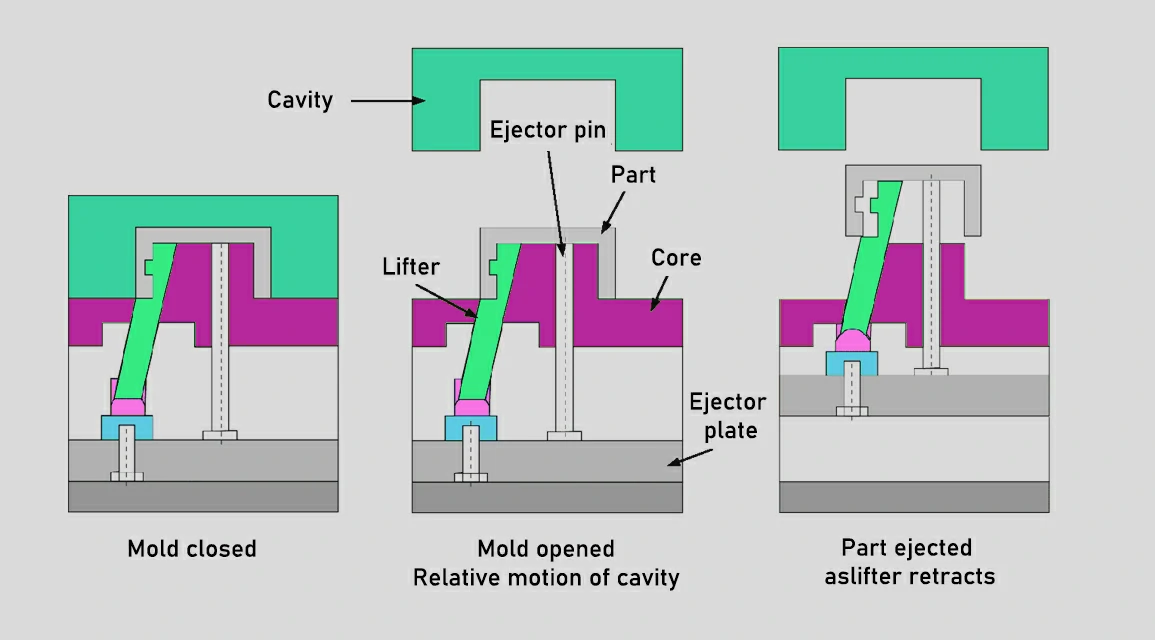
The battle between high lifters and OCC isn’t just theoretical—it’s manufactured. High lifters are the darlings of CNC machining, where every cut is a calculated incision into raw material. The process is slow, expensive, and unforgiving, but the payoff is unparalleled precision. Each component is a masterpiece of subtractive manufacturing, where material is removed to reveal the ideal form.
OCC components, on the other hand, often emerge from casting or additive processes. Here, material is added or shaped in bulk, with less emphasis on perfection and more on adaptability. The result? Components that may not be as geometrically pristine but are far more forgiving in real-world conditions. It’s the difference between a bespoke suit and a well-tailored off-the-rack garment—one is custom-fit, the other is ready for anything.
This manufacturing divide extends beyond the workshop. High lifters demand a supply chain that can deliver ultra-pure materials and pristine environments. OCC components, meanwhile, can be produced with less stringent conditions, making them more accessible and scalable. The question isn’t just about performance—it’s about accessibility. Can you afford the luxury of perfection, or do you need the rugged reliability of adaptability?
The Performance Paradox: Efficiency vs. Longevity
At the heart of this debate lies a fundamental question: What is performance? For high lifters, performance is measured in efficiency, speed, and repeatability. These components are built to push boundaries, to extract every ounce of potential from a system. They are the race cars of the mechanical world—designed for the track, not the road. But this comes at a cost: wear and tear. The tighter the tolerances, the more stress is concentrated in specific areas, leading to accelerated degradation over time.
OCC components, by contrast, prioritize longevity. They’re built to last, to absorb punishment without breaking. This isn’t to say they’re indestructible—no component is—but they’re designed with the understanding that perfection is a fleeting ideal. In industries where machines operate 24/7, where maintenance windows are scarce, OCC’s resilience is a godsend. It’s the difference between a sprinter and a marathon runner: one is built for bursts of speed, the other for endurance.
Yet, the performance paradox runs deeper. High lifters may excel in controlled environments, but OCC components often outperform them in the wild. Consider the automotive industry: high-performance engines use precision lifters for maximum power, but the average consumer car relies on OCC components for reliability. The former is a statement; the latter is a necessity. This isn’t just about engineering—it’s about philosophy.
The Future: A Hybrid Approach or an Unbridgeable Divide?
As industries evolve, so too does the debate between high lifters and OCC. Some visionaries are exploring hybrid approaches, where precision components are paired with adaptive systems to create the best of both worlds. Imagine a machine where critical interfaces are held to exacting standards, but the overall system is designed to self-correct and self-heal. This isn’t science fiction—it’s the next frontier of mechanical engineering.
Yet, the divide remains. High lifters represent the pinnacle of human ingenuity, where every variable is accounted for and controlled. OCC embodies the resilience of nature, where imperfection is not just tolerated but leveraged. The question isn’t which is better—it’s which is right for the job. Are you building a machine for the lab or the real world? For speed or endurance? For perfection or adaptability?
The answer may lie not in choosing a side, but in understanding that both philosophies have their place. The future of engineering isn’t about anointing a single victor—it’s about recognizing that sometimes, the most extraordinary machines are those that can do it all.