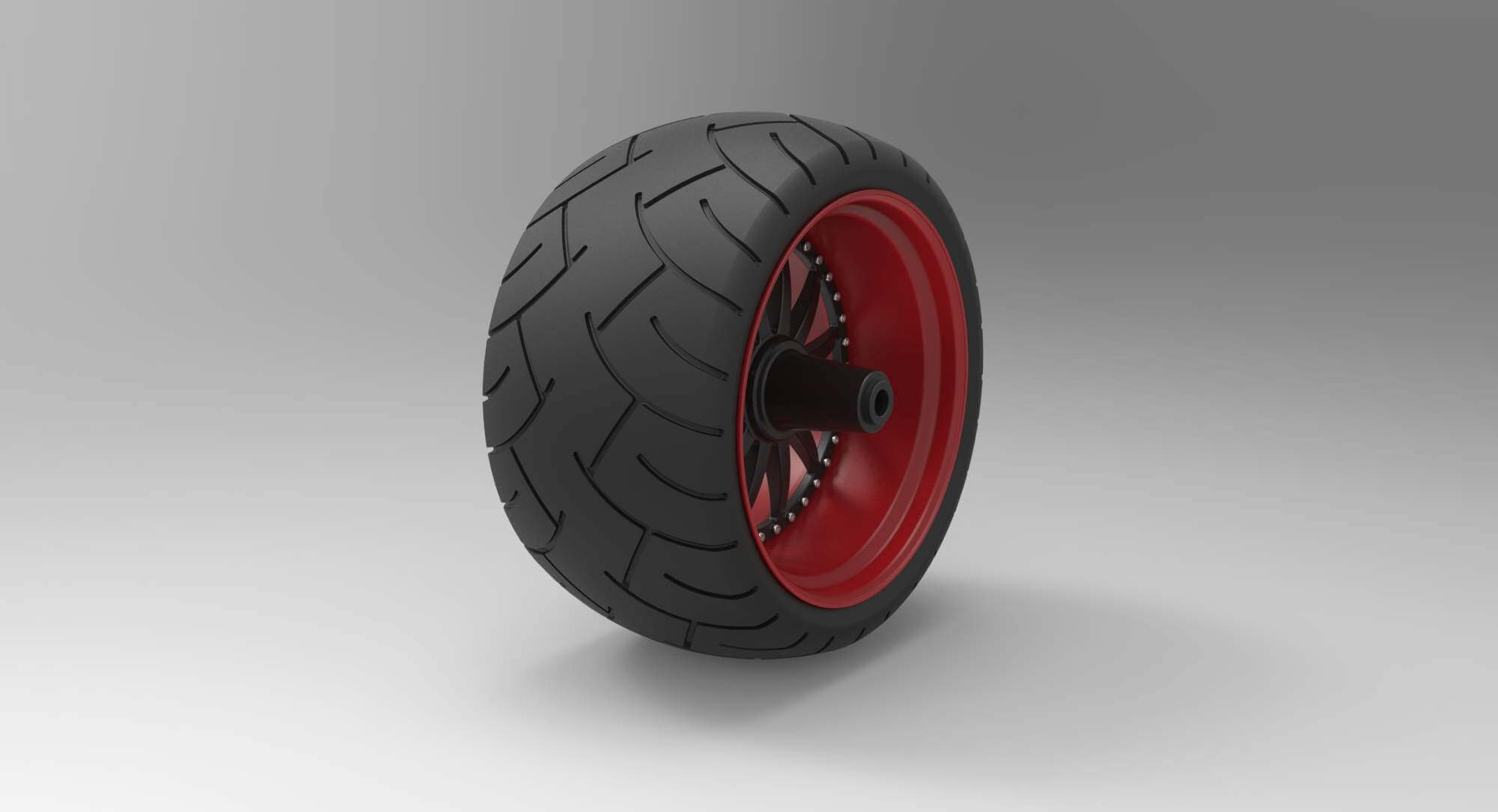
There’s a moment, deep in the heart of a chopper’s soul, when the rear wheel isn’t just a rolling component—it’s a statement. It’s the pulse of the machine, the heartbeat that syncs with the rider’s rhythm, the visual punctuation that transforms a bike from mere steel into a rolling work of art. But here’s the twist: not all rear wheels are created equal. The choice between a 16-inch rear wheel and an 18-inch rear wheel isn’t just about aesthetics or tire availability—it’s about redefining the entire riding experience. This isn’t a debate about inches. It’s a rebellion against convention. It’s a question of whether you want your chopper to whisper or roar, to glide or dig, to be a shadow in the night or a beacon under the sun. Buckle up. We’re about to shift perspectives.
The Geometry of Rebellion: Why Wheel Size Matters More Than You Think
At first glance, the difference between a 16-inch and an 18-inch rear wheel seems trivial—just two inches, right? But in the world of choppers, those two inches are the difference between a bike that leans into the curves like a dancer and one that stands tall like a sentinel. The wheel size directly influences the bike’s rake and trail, two critical factors that dictate stability and handling. A 16-inch wheel, with its shorter radius, typically results in a steeper rake angle, making the bike more agile and responsive. It’s the choice for riders who crave that raw, unfiltered connection to the road, where every turn feels like a conversation between rider and machine. On the other hand, an 18-inch wheel stretches the rake, lending the chopper a more laid-back, cruising demeanor. It’s the difference between a sprinter and a marathon runner—one built for bursts of speed, the other for endurance.
But here’s where it gets interesting. The wheel size also affects the bike’s center of gravity. A lower center of gravity, achieved with a 16-inch wheel, makes the chopper feel more planted, more secure. It’s the choice for riders who push their bikes to the limit, who carve corners with the precision of a surgeon. Meanwhile, an 18-inch wheel raises the center of gravity slightly, giving the bike a loftier, more commanding presence. It’s the choice for riders who want to dominate the road, who see their chopper as an extension of their own power and presence.

The Aesthetic Divide: Form Follows Function, But Style Dictates the Soul
Let’s talk about the elephant in the room—or rather, the wheel in the room. The visual impact of a chopper’s rear wheel is undeniable. A 16-inch wheel, with its compact silhouette, exudes a raw, almost industrial charm. It’s the choice for riders who embrace the minimalist ethos, who see beauty in simplicity and power in restraint. The shorter wheelbase and the tucked-in stance give the bike a lean, hungry look, as if it’s always ready to pounce. It’s the wheel of choice for bobbers and street trackers, where every line is sharp, every angle deliberate.
Contrast that with the 18-inch wheel, a statement of boldness and confidence. The larger diameter elongates the bike’s profile, creating a sense of motion even when it’s stationary. It’s the wheel of choice for custom builders who want to make a statement, who see their chopper as a rolling sculpture. The extra height adds a touch of drama, a hint of rebellion. It’s the wheel that turns heads, that makes passersby pause and take notice. It’s the difference between a whisper and a shout, between subtlety and spectacle.
But aesthetics aren’t just about looks—they’re about identity. The wheel size you choose says something about who you are as a rider. A 16-inch wheel might appeal to the purist, the rider who values tradition and authenticity. An 18-inch wheel, on the other hand, speaks to the innovator, the rider who isn’t afraid to break the mold. It’s a choice that transcends mere preference; it’s a declaration of intent.
The Ride Experience: Where Comfort Meets Control
Now, let’s talk about the ride. Because no matter how beautiful a chopper is, if it doesn’t handle well, it’s just a pretty face. The 16-inch wheel offers a ride that’s intimate, almost visceral. The shorter wheelbase and the lower center of gravity make the bike feel more connected to the road. It’s a ride that rewards precision, where every input from the rider is met with immediate feedback. It’s the choice for riders who want to feel every nuance of the road, who crave that tactile connection to the machine.
But intimacy isn’t for everyone. For riders who prioritize comfort and stability, the 18-inch wheel is a game-changer. The larger diameter smooths out imperfections in the road, absorbing bumps and vibrations with ease. It’s a ride that’s forgiving, that lets you cruise for hours without fatigue. It’s the choice for long-distance riders, for those who see their chopper as a companion on the open road. The extra height also gives the bike a more commanding view of the road ahead, making it easier to spot obstacles and plan your line.
Of course, there’s a trade-off. The larger wheel can feel less responsive in tight turns, and the higher center of gravity might make the bike feel less stable at low speeds. But for riders who value comfort over agility, the trade-off is worth it. It’s about finding the right balance between control and ease, between precision and relaxation.
The Customization Canvas: How Wheel Size Shapes Your Build
For custom builders, the rear wheel isn’t just a component—it’s a canvas. The size you choose dictates the entire direction of your build. A 16-inch wheel opens up a world of possibilities for radical, low-slung designs. It’s the wheel that allows for extreme raked forks, stretched frames, and aggressive styling. It’s the choice for builders who want to push the boundaries of convention, who see their chopper as a blank slate waiting to be transformed.
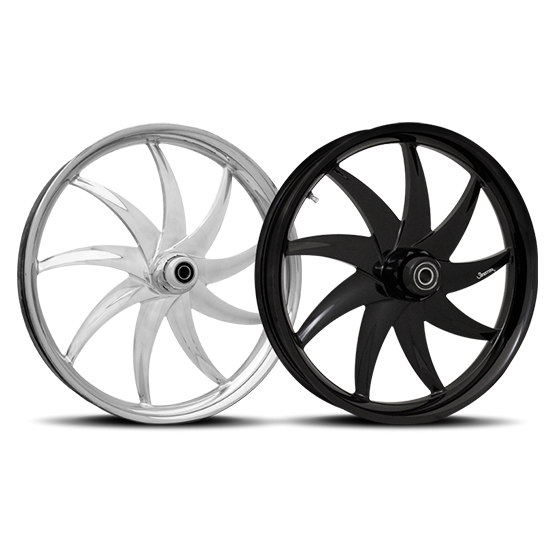
An 18-inch wheel, on the other hand, offers a different kind of freedom. The extra height allows for more dramatic lines, for builds that command attention from every angle. It’s the wheel that pairs well with tall sissy bars, extended fenders, and bold paint jobs. It’s the choice for builders who want to create a chopper that’s as much a work of art as it is a machine. The larger wheel also provides more space for custom rims, giving builders the freedom to experiment with unique designs and finishes.
But customization isn’t just about aesthetics—it’s about function. The wheel size you choose will influence everything from the suspension setup to the final weight distribution. A 16-inch wheel might require a more aggressive suspension setup to compensate for the lower center of gravity, while an 18-inch wheel might call for a softer setup to absorb the extra height. It’s a delicate balance, one that requires careful planning and execution. But for builders who are up for the challenge, the results can be nothing short of spectacular.
The Unspoken Truth: It’s Not Just About the Wheel
Here’s the hard truth: the rear wheel size is just one piece of the puzzle. The real magic happens when all the elements come together—the frame, the forks, the engine, the rider. A 16-inch wheel might be the perfect choice for a stripped-down bobber, but it could feel out of place on a touring chopper. An 18-inch wheel might look stunning on a custom build, but it could make a lightweight chopper feel top-heavy. The key is to see the wheel as part of a larger ecosystem, one that includes every component of the bike.
That’s why it’s so important to think beyond the wheel itself. Consider the tire options available for each size. A 16-inch wheel might limit your tire choices, but it could also lead to a more aggressive, performance-oriented setup. An 18-inch wheel opens up a world of tire options, from fat cruiser tires to high-performance rubber, but it might require compromises in other areas. Think about the riding conditions you’ll face. Will you be cruising the open road or carving through twisty backroads? Will you be carrying a passenger or riding solo? The answers to these questions will help you make the right choice.
And don’t forget about the intangibles—the feel of the bike, the sound of the engine, the way it responds to your inputs. These are the things that make a chopper truly yours. The rear wheel size is just the starting point. The real journey begins when you take it out on the road and let the machine speak to you.
The Final Verdict: Which Wheel Will You Ride Into the Sunset?
So, which is it? Will you embrace the raw, unfiltered agility of a 16-inch wheel, or will you stand tall with the commanding presence of an 18-inch wheel? There’s no right or wrong answer—only the answer that feels right for you. The 16-inch wheel is for the rider who wants to feel every nuance of the road, who craves that intimate connection to the machine. The 18-inch wheel is for the rider who values comfort and stability, who sees their chopper as a companion on the open road.
But here’s the thing: the choice isn’t just about the wheel. It’s about the life you want to live, the roads you want to ride, the legacy you want to leave behind. It’s about the story you want your chopper to tell. So, take your time. Weigh the options. And when you’re ready, make the choice that feels like home. Because in the end, the best chopper isn’t the one with the biggest wheel or the most radical design—it’s the one that feels like an extension of you.
Now, go ride. The road is waiting.