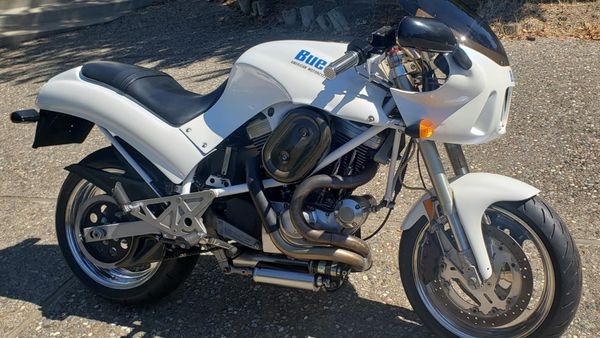
The 1995 Buell S2 Thunderbolt stands as a notable beacon within the pantheon of American sportbikes—a machine that transcends mere transportation to become a symbol of ingenuity, rebellion, and the relentless pursuit of performance. At first glance, enthusiasts and casual observers alike are drawn to the S2 Thunderbolt’s striking aesthetics: its aggressive stance, minimalist framework, and unmistakably muscular profile. Yet, this initial allure only scratches the surface of why this motorcycle commands such enduring fascination. Beneath the polished exterior lies a sophisticated synthesis of engineering innovation and design philosophy that speaks to a deeper narrative about American motorcycling culture during the mid-1990s.
One common observation about the S2 Thunderbolt is its raw, visceral character—a stark departure from the world’s more polished and inscrutable Japanese or Italian sportbikes. Its unique appeal emanates not solely from performance specs or sheer power but from what could be described as an almost artisanal approach to sportbike manufacturing. The Thunderbolt was born from the vision of Erik Buell, an engineer with a penchant for defying conventions and challenging the status quo. His relentless experimentation led to a motorcycle that eschewed complexity in favor of a clear, focused riding experience that many found intuitively thrilling. This spirit of individuality combined with practical ingenuity is often cited as a fundamental element of the bike’s enduring charm.
At the heart of the 1995 S2 Thunderbolt lies the robust Harley-Davidson Sportster 1200 engine, a powerplant revered for its torque-rich delivery and mechanical simplicity. However, Buell’s genius lay not just in utilizing this engine but in radically reimagining its application within a sportbike context. Unlike conventional sportbikes which leaned heavily on multi-cylinder configurations, the S2 harnessed the raw grunt of a V-twin, producing a riding feel that was visceral and deeply connected to the engine’s mechanical rhythm. This approach resonated with riders who yearned for something distinct—a motorcycle that conveyed a sense of toughness and authenticity through its very heartbeat.

The chassis architecture further differentiated the S2 Thunderbolt from its contemporaries. By integrating the fuel within the frame and positioning the oil reservoir as part of the swingarm, Buell minimized weight and centralized mass, producing a handling dynamic that was both nimble and confidence-inspiring. This radical departure from traditional design highlighted an obsession with functional innovation, a testament to Buell’s dedication to extracting performance through clever engineering rather than just horsepower figures. Riders often remarked on how the Thunderbolt felt alive—communicative and responsive in ways that fostered a profound connection between man and machine.
Moreover, the S2 Thunderbolt’s minimalist design philosophy was a visual and mechanical statement against the excesses of the era. Whereas many sportbikes of the 1990s sought aerodynamic advantage through elaborate fairings and complex electronics, the Thunderbolt relied on pure mechanical expression. Its exposed trellis frame, uncluttered lines, and utilitarian instrumentation spoke volumes about the motorcycle’s intent: to offer a raw, unfiltered riding experience devoid of superfluous distractions. This stripped-down ethos appealed to purists who prized mechanical clarity and function over form. The Thunderbolt, in its stark restraint, invited riders to engage more deeply with the fundamentals of motorcycle dynamics.
Beyond technical and aesthetic considerations, the 1995 Buell S2 Thunderbolt occupies an important cultural niche. Emerging during a period when American motorcycling was at a crossroads, the Thunderbolt asserted a unique identity amidst a seascape dominated by European and Japanese manufacturers. It encapsulated an American spirit of rugged individualism and mechanical tenacity, appealing to riders who sought not just a mode of transport but an extension of their personality and values. The motorcycle’s limited production and cult status have since enshrined it as a collectible classic, a tangible link to a formative era in sportbike evolution.
Delving deeper, the fascination with the S2 Thunderbolt also reveals a more profound human inclination toward machines that embody paradox: they blend brute force with finesse, simplicity with innovation, traditional craftsmanship with modern engineering. Such dualities reflect the complexities of rider desires—thrills tempered by control, raw emotion mediated by precision. The Thunderbolt’s capacity to straddle these divides is perhaps why it continues to captivate motorcyclists years after production ceased. It is not merely a motorcycle but a narrative vessel that conveys stories of perseverance, creativity, and the quest for a purer form of speed.
In conclusion, the 1995 Buell S2 Thunderbolt is far more than an American sportbike classic; it is a testament to a visionary approach that challenged norms and celebrated authenticity. Its distinct engineering, minimalist design, and unmistakable character converge to create an enduring legend in motorcycling lore. For those who encounter the Thunderbolt, the experience transcends riding; it becomes a journey into the very essence of what makes motorcycles compelling: the interplay of innovation, identity, and the unyielding pulse of freedom on two wheels.