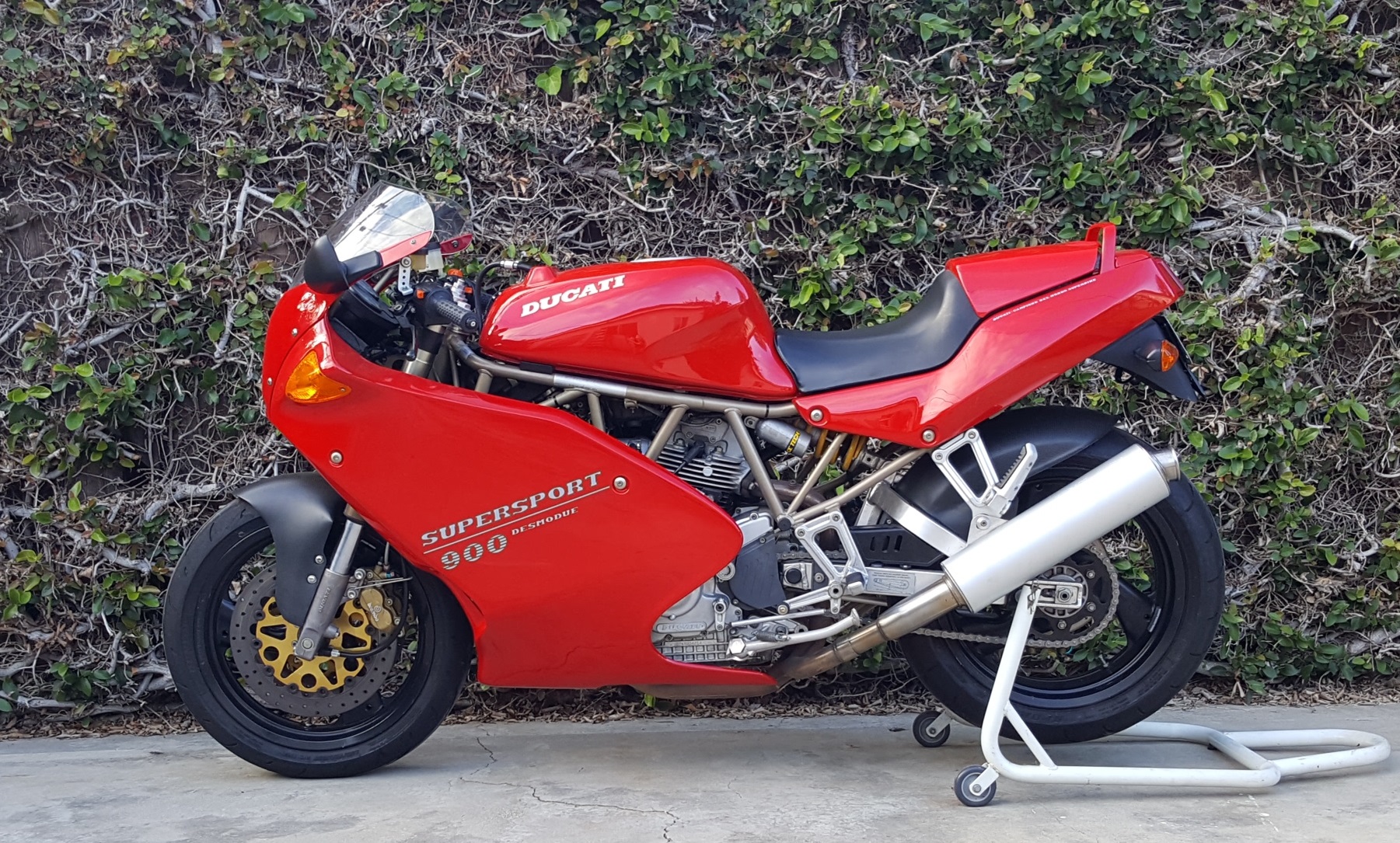
The 1996 Ducati 900SS stands as a quintessential emblem of raw motorcycle performance, merging classic Italian engineering with aggressive design. This model, an incarnation of the storied SuperSport lineage, is a synthesis of power, precision, and a visceral riding experience that encapsulates the essence of sport riding in the 1990s. Renowned for its striking aesthetics and robust engine mechanics, the 900SS continues to captivate enthusiasts seeking a machine that offers more than just transportation—it promises an intimate connection between rider and road.
At a glance, the 1996 Ducati 900SS commands attention with its sleek trellis frame, a hallmark of Ducati’s engineering philosophy. The exposed tubular steel latticework not only enhances structural rigidity but also reduces weight, contributing to nimble handling and acute feedback. This chassis design, married to a low steering head angle, imparts a balance of stability at speed and agility in tight corners. Complementing the frame is a sculpted fuel tank and minimalist bodywork that evokes timeless elegance while encouraging aerodynamic efficiency. The black and red color schemes typical of the 900SS era highlight Ducati’s penchant for vibrant yet purposeful styling cues.
The heart of the 900SS lies in its air-cooled, 904cc L-twin engine, a powerhouse that exemplifies Ducati’s venerated desmodromic valve system. This mechanical marvel eschews conventional valve springs in favor of a cam-driven approach, delivering precise valve timing and reduced mechanical losses. The 90-degree V-twin layout inherently balances primary forces, resulting in smoother operation and an unmistakable exhaust note that aficionados revere. Producing approximately 84 horsepower at 8,000 rpm, the engine offers ample thrust for both spirited commuting and track-day antics alike.
Performance is further bolstered by the Ducati’s six-speed gearbox, renowned for crisp, positive shifts that invite aggressive acceleration and controlled touring. The transmission’s ratios are well calibrated to exploit the torque curve, allowing riders to maintain momentum without constant gear wrangling. From sub-3,000 rpm city crawling to a redline flirtation on the highway, the gearbox proves to be intuitive and rewarding.
Suspension duties are handled by a telescopic front fork and a rear monoshock, both adjustable to fine-tune the ride experience. While modern riders might find these components less sophisticated than contemporary inverted forks or electronic damping, within its era they provide a commendable balance between comfort and control. The suspension setup fosters precise front-end feedback, essential for carving through twisty backroads with confidence. Disc brakes front and rear supply consistent stopping power, though one must temper expectations to align with technological standards of the mid-1990s.
Ergonomically, the 900SS urges a semi-aggressive riding position. Clip-on handlebars sit low and slightly forward, drawing the rider into a forward-leaning posture that enhances wind resistance and handling precision. The rear-set footpegs complement this stance, though they may prove strenuous over extended journeys. This setup underscores Ducati’s focus on sport-riding engagement rather than touring comfort, appealing to those who covet an assertive connection with their machine.
The instrumentation, a blend of analog gauges and modest digital elements, offers essential information at a glance. The tachometer commands the central position, reflecting the bike’s sport-centric orientation, while the speedometer and auxiliary lights serve a utilitarian purpose. Though rudimentary by today’s standards, the dashboard maintains a classic charm, echoing an era when motorcycles embraced simplicity over digital complexity.
Riders who experience the 1996 Ducati 900SS often highlight its characterful throttle response, which demands finesse but rewards with exhilarating acceleration. The linear progression of power delivery, punctuated by moments of potent thrust, invites an engagement that transcends pure speed. This motorcycle is not for the complacent; it demands respect and attentiveness, fostering an elevated connection that challenges and delights in equal measure.
Acoustic enthusiasts will find the Ducati’s exhaust note to be a symphony of mechanical rhythm—deep, throaty, and unmistakably Italian. The burble of the twin cylinders under load and the sharp crackle during downshifts evoke a sensory experience that extends beyond mere sound, slipping into the realm of motorcycling poetry. Such auditory signature elevates the 900SS into a holistic riding instrument.
From a collector’s perspective, the 1996 model retains significant historical and cultural cachet. As Ducati’s SuperSport range evolved, the 900SS represents a bridge between the raw analog machines of the past and the more electronically enhanced models that followed. Its relative mechanical simplicity ensures easier maintenance while preserving an unfiltered riding experience. For enthusiasts embracing vintage sportbikes, the 900SS delivers a canvas for customization and restoration, retaining intrinsic value and appeal.
To summarize, the 1996 Ducati 900SS is an embodiment of raw, unadulterated motorcycle performance that balances power, handling, and rider engagement. It demands a skilled hand, yet rewards with unforgettable dynamism and charm. Every ride on this machine offers a tactile communion with motorcycling heritage, where engineering elegance meets spirited sport riding. In a world increasingly dominated by electronic aids and technology-heavy motorcycles, the 900SS remains a bastion of purist thrills—a reminder that sometimes, the most profound experiences arise from the bare essentials crafted with mastery.