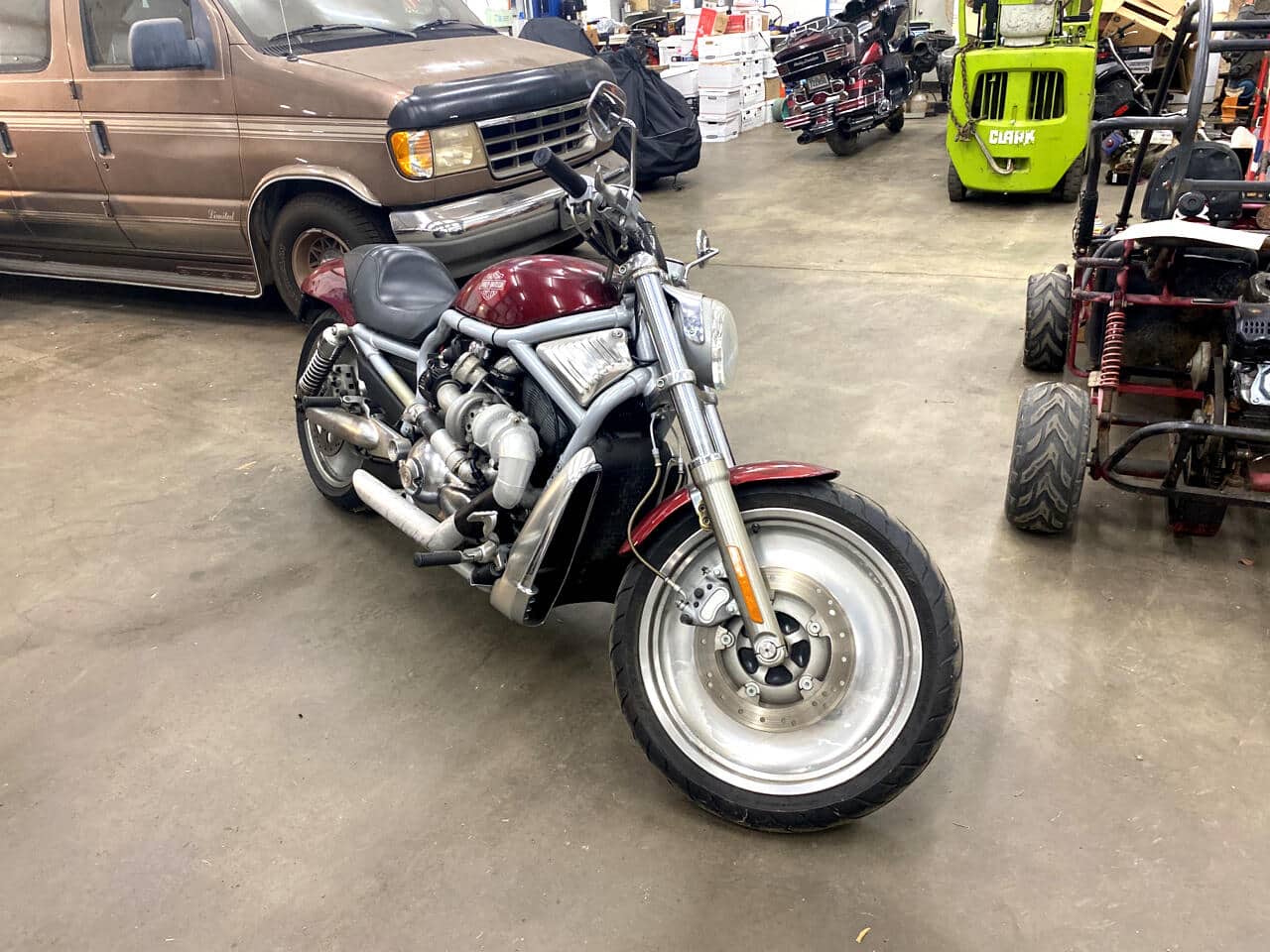
The 2003 Harley-Davidson V-Rod Muscle stands as a landmark in the evolution of motorcycle design and engineering, a fiercely distinctive machine that startled traditionalists and enthusiasts alike. This bike was not merely a new model; it was a bold statement—an audacious reinvention of the classic Harley-Davidson formula infused with aggressive power and modern aesthetics. The V-Rod Muscle didn’t just challenge expectations; it obliterated preconceived notions about what a Harley could be, cultivating a legacy that still resonates within the biking community.
At first glance, the V-Rod Muscle captivates with its raw, sculpted frame and brutal presence. The bike’s low, stretched profile and stripped-down design hint at the brute force lurking beneath. Contrasting with Harley-Davidson’s quintessential vintage styling, this machine boasts a menacing stance, amplified by a fat rear tire and angular components that evoke the spirit of muscle cars rather than traditional cruisers. In essence, the 2003 V-Rod Muscle was a herald of a new era, combining the brawn of American muscle with the sophistication of cutting-edge motorcycle technology.
The heart of the V-Rod Muscle lies in its revolutionary powertrain. Unlike previous Harley models powered by the iconic air-cooled V-twin engines, the V-Rod introduced a liquid-cooled, 60-degree V-twin engine developed in collaboration with Porsche. This powerplant delivered an unprecedented 115 horsepower, a figure that far exceeded the output of most other Harleys of the time. The liquid cooling system not only enhanced sustained high-speed performance but also improved reliability and allowed for more rigorous tuning parameters.
This engine was a marvel of engineering precision. Its dual overhead camshafts and four-valve-per-cylinder configuration marked a significant departure from Harley’s older pushrod designs, borrowing heavily from sportbike technology to offer increased rev ceilings and enhanced throttle response. Riders found themselves piloting a motorcycle capable of explosive acceleration and a top speed that could challenge many sport-oriented machines on the road.
Yet, the V-Rod Muscle was not solely about raw power—it was a balanced fusion of aggressive performance and rider ergonomics. The bike’s chassis was crafted from a tubular steel frame that provided stiffness and lightness critical for controlling such power. The wide-set handlebars and mid-mounted foot controls put the rider in a commanding but comfortable position, emphasizing control without sacrificing the iconic cruiser posture. This setup allowed for agile cornering and spirited rides, deftly bridging the gap between muscle and maneuverability.
Another defining characteristic lies in the V-Rod Muscle’s bold styling cues. The most visual element is the massive 240mm rear tire, an eye-catching statement of domination meant to ensure maximum traction and imposing aesthetics. Blacked-out components, including the exhaust and frame, complement the dark paint schemes that underscore the bike’s aggressive persona. Subtle design details, such as the debossed video-style air intake covers and minimalist instrumentation, contribute to a cohesive look that is both modern and muscular.
Beyond the mechanical and visual allure, the 2003 V-Rod Muscle embraces advanced features that hint at Harley’s intention to marry tradition with innovation. The suspension utilizes adjustable nitrogen-charged rear shocks and high-performance front forks that strike a commendable balance between comfort and sportiness, enabling the motorcycle to absorb urban imperfections while maintaining road-holding confidence. This blend of features ensures the V-Rod Muscle transcends mere aesthetics and raw power, delivering an engaging, refined riding experience.
For many riders, the introduction of the V-Rod Muscle expanded the Harley-Davidson line-up into a new territory—one that appeals to younger riders or those seeking a high-performance cruiser without sacrificing heritage. Its technical sophistication and aggressive design challenged conservative Harley devotees but also attracted a fresh demographic craving innovation without losing the brand’s soul.
To appreciate the V-Rod Muscle fully, one must consider its place within motorcycle culture and market trends of the early 2000s. The period saw a growing appetite for naked and muscle bikes, machines that emphasized hardware and brutality over embellishments and nostalgia. The Muscle’s aggressive geometry and robust engine exemplified this trend, placing Harley in direct competition with Japanese and European manufacturers dominating the muscle bike and sport cruiser segments.
The 2003 Harley-Davidson V-Rod Muscle is more than a motorcycle; it is a cultural icon that challenged and redefined expectations, embodying a rare blend of tradition and modernity. It thrives as a symbol of risk and reimagination, a machine that dared to break boundaries and stunned a community often resistant to change. This muscle bike not only delivered exhilarating performance but also articulated a new vision for Harley-Davidson’s future, one that is muscular, progressive, and unapologetically bold.
In sum, the V-Rod Muscle is a testament to innovation and fearless design within the motorcycling world. It offers readers an exploration into engineering excellence, aesthetic audacity, and cultural significance. For enthusiasts, collectors, and curious riders alike, the Muscle represents a thrilling chapter in Harley-Davidson’s storied history—a bike that shocked fans and propelled American muscle riding into the new millennium with swagger and undeniable force.