The year 1969 marked a pivotal moment in the evolution of motorcycle touring with the introduction of the Harley-Davidson FLH Electra Glide. This model did not merely represent a new motorcycle; it signified the advent of a new era for riders seeking comfort, reliability, and advanced features during long-distance journeys. The Electra Glide was a bold leap forward, integrating innovative technology and refined engineering that would lay the foundation for modern touring motorcycles.
To appreciate the significance of the 1969 Electra Glide, one must understand the touring motorcycle’s unique demands. Unlike sport or cruiser motorcycles, touring bikes are designed to endure extensive travel without compromising rider comfort or operational stability. The Electra Glide was crafted with the express purpose of conquering sprawling highways and varied terrains, all while ensuring a smooth, effortless ride.
At the heart of the 1969 Electra Glide was its robust OHV (overhead valve) V-twin engine, which provided ample torque and dependable performance. While Harley-Davidson had long been a staple for its big twin engines, this iteration emphasized enhanced mechanical reliability and seamless power delivery. This engine configuration was meticulously tuned to offer surging low-end pull, crucial for carrying heavier touring loads and cruising at steady highway speeds.

One of the most groundbreaking features of the Electra Glide was its electric start mechanism—a first for Harley-Davidson touring models. Prior to this, kick-starting often proved cumbersome and demanding, particularly when the engine was cold. The integration of electric start represented a significant engineering feat that dramatically improved convenience, especially on lengthy rides and during stop-and-go traffic. This innovation alone revolutionized rider confidence and ease of use.
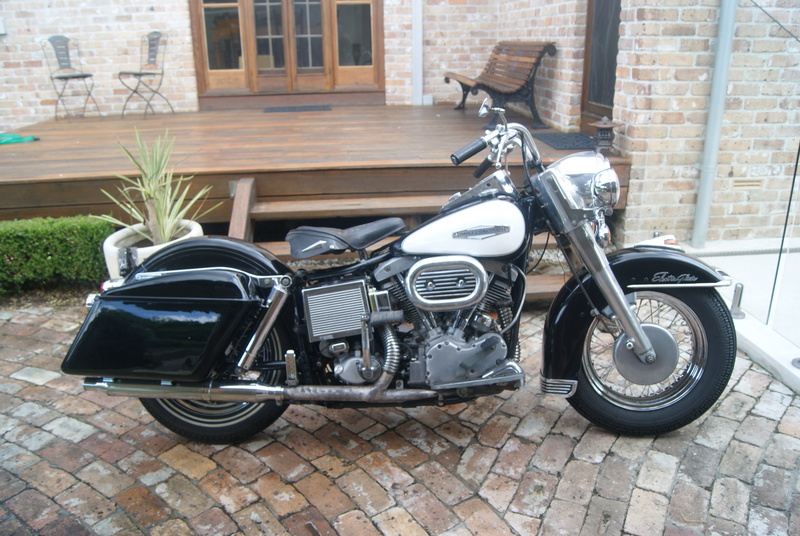
Beyond the powertrain, the Electra Glide boasted a host of architectural elements designed to bolster comfort and utility. The bike’s frame was engineered with enhanced rigidity and suspension travel, incorporating hydraulic telescopic forks and dual shock absorbers at the rear. These components absorbed road imperfections, offering a plush ride that reduced fatigue on extended trips. The substantial front and rear fenders not only shielded against debris and water but also added to the motorcycle’s aesthetic heft and solidity.
A defining aspect of the 1969 Electra Glide’s design was its spacious seating arrangement. Featuring a wide, well-padded solo saddle and an optional passenger pillion equipped with supportive backrests, it catered meticulously to rider and passenger ergonomics. This attention to seating comfort was pivotal for touring motorcycles, as riders would frequently spend hours—and even days—on the saddle at a stretch. The upright riding posture, combined with mid-mounted foot controls, further enhanced posture and reduced strain.
The Electra Glide’s instrumentation panel was another testament to its touring pedigree. Unlike more utilitarian motorcycles, the 1969 model provided riders with an array of gauges and visual cues, including a speedometer, trip odometer, and warning lights for critical systems. This array allowed for precise monitoring of the motorcycle’s performance and condition, elevating rider awareness and safety—a necessity when venturing into remote or unfamiliar territories.
Storage solutions on the Electra Glide were thoughtfully designed to accommodate the rigors of touring travel. Equipped with sturdy saddlebags, the bike provided ample cargo space for essentials such as tools, apparel, and personal items. These storage compartments were seamlessly integrated into the motorcycle’s frame, maintaining an aerodynamic silhouette while ensuring practicality. This balance between form and function was instrumental in appealing to serious touring enthusiasts.
In terms of aesthetics, the 1969 Electra Glide exuded timeless elegance combined with muscular presence. The bike’s extensive use of chrome accents, complemented by smooth paint finishes, bestowed a visual allure that resonated with mid-century design sensibilities. The large front fairing not only contributed to wind protection but also created a distinctive profile that became synonymous with the Electra Glide’s identity.
Another important element distinguishing the Electra Glide was its pioneering approach to rider safety and road handling. The comprehensive braking system, featuring front and rear drum brakes, offered predictable modulation and stopping power—essential for controlling a heavier touring motorcycle loaded with passengers and gear. While hydraulic disc brakes would eventually supplant drums, at the time, this setup represented cutting-edge practice for the brand.
Mechanically and conceptually, the 1969 Electra Glide embodied Harley-Davidson’s commitment to innovation and rider-centric ingenuity. It served as a blueprint for all subsequent touring models, influencing the brand’s design philosophy well into the 21st century. The fusion of mechanical robustness, ergonomic sophistication, and feature-rich design established it as the archetype from which modern touring motorcycles have evolved.
The influence of the Electra Glide can be seen reflected in the evolution of touring bikes across the globe. Modern motorcycles owe much of their structural and functional design to the principles laid down by this model, especially in balancing power with comfort, and integrating technological advancements. From aerodynamic fairings to electronic starts, from luxurious seating to sophisticated instrument clusters, the 1969 Electra Glide anticipated many features now considered standard in touring motorcycles worldwide.
Enthusiasts and collectors today relish the 1969 Electra Glide not merely as a motorcycle but as a historical icon. It encapsulates an era where innovation met tradition in the service of the long road. Riding one offers a visceral connection to a transformative period in motorcycling—a time when manufacturers began recognizing the distinct needs of touring riders and responded with purpose-built machines that married form, function, and finesse.
In summation, the 1969 Harley-Davidson FLH Electra Glide was far more than a new addition to the Harley lineup; it was the genesis of the modern touring motorcycle. Its introduction carved out a niche for dedicated long-distance machines, blending pioneering technology like electric start with rider-focused design. It elevated the touring experience to unprecedented heights and set a standard of excellence that continues to influence motorcycle engineering and design today. For those who appreciate the art of motorcycle touring, the 1969 Electra Glide remains a benchmark of innovation, style, and enduring legacy.