The 1973–1974 Harley FLH Shovelhead stands as a quintessential chapter in the annals of motorcycle history, a machine embodying both the spirit of its era and the relentless pursuit of mechanical excellence. More than a mere motorbike, it promises a shift in perspective—a journey into an epoch where American engineering melded tradition with innovation, birthing a legend that continues to captivate collectors and enthusiasts alike. At first glance, the FLH Shovelhead might seem like just another cruiser, but a closer look reveals an exquisite blend of power, craftsmanship, and a distinctive personality that commands attention on every highway and back road.
Emerging from the shadows of its predecessors, the 1973–1974 FLH models introduced the Shovelhead engine—a pivotal evolution replacing the famed Ironhead. The nomenclature “Shovelhead” derives from the engine’s uniquely shaped rocker covers, resembling the contours of a coal shovel, a poetic metaphor for the raw force housed within its cast-iron carcass. This powerplant was not just a visual gimmick; it represented a quantum leap in performance. With a displacement of 74 cubic inches (approximately 1200cc), it delivered a robust and reliable torque curve that was both exhilarating and manageable. Riders found themselves enchanted by the engine’s throaty growl, a sound that has since become synonymous with Harley-Davidson’s ethos.
The 1973–1974 FLH models were not fabricated in isolation; they were the product of incremental innovations responding to the demands of a changing market and increasing competition from foreign manufacturers. The Shovelhead’s OHV (overhead valve) design provided an improvement in both power output and thermal efficiency compared to the previous engine designs, a subtle yet significant transformation. This engineering advancement ensured the FLH was no slouch on the open road, capable of sustained highway speeds that validated its “Touring” designation.
Yet, beneath its powerful engine lies a complex symphony of design elements that converge to provide a ride experience both commanding and refined. The chassis, with its traditionally rigid frame reinforced by upgraded suspension components, offered a balance between stability and comfort. Harley-Davidson engineers meticulously calibrated the front fork and rear shocks, ensuring the FLH could effortlessly absorb the imperfections of asphalt and gravel alike. This fluidity on the road enhanced rider confidence, transforming every journey into an intimate dialogue between machine and man.
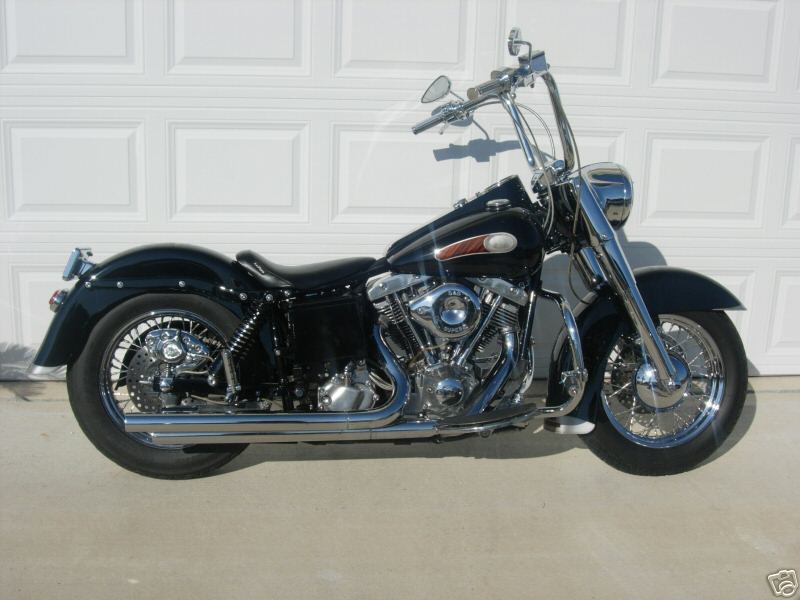
The aesthetic allure of the 1973–1974 FLH Shovelhead is equally captivating. Its classic lines speak to a design philosophy rooted in timelessness rather than transient trends. Chrome accents gleam against the deep gloss paint, and every inch of the bike exudes purposeful craftsmanship. The teardrop fuel tank, emblazoned with the iconic Harley-Davidson bar-and-shield logo, hints at the power contained within. Saddle comfort was not overlooked either; the generously proportioned solo seat invited hours of riding without fatigue, while the wide, swept-back handlebars offered natural ergonomics, reducing rider strain and promoting control.
One cannot discuss the 1973–1974 FLH Shovelhead without acknowledging its role in bridging the gap between Harley-Davidson’s storied past and an uncertain future. This was a machine poised on the cusp of transformation, embodying both the accumulated expertise of decades and the nascent stirrings of modernization that would come in later years. It was the last era where handcrafted elements intermixed with growing mechanization, imbuing each bike with a unique character that mass production would later dilute.
Moreover, the FLH Shovelhead’s significance extends beyond its mechanical and design merits. It represents a cultural icon, a symbol of freedom and rebellion etched into the fabric of American road lore. During the early 1970s, motorcycle culture was evolving rapidly. The FLH Shovelhead was a canvas upon which riders projected their identities—whether as touring nomads, weekend renegades, or bespoke customizers. Its versatility allowed for personalization, sparking a vibrant aftermarket scene that celebrated both aesthetics and performance enhancements. This era planted the seeds of the custom chopper movement, and the Shovelhead engine became a favored platform for creative expression.
Despite its many virtues, the 1973–1974 FLH Shovelhead was not without its idiosyncrasies and challenges. Maintenance demands were considerable, with the air-cooled V-twin requiring regular attention to valve adjustments and careful tuning to keep it purring smoothly. The relatively primitive electrical system by modern standards sometimes faltered, reflecting the technological limits of the time. Yet, these quirks often endeared the bike to its custodians, who relished the intimacy of hands-on maintenance as part of the ownership experience.
What truly distinguishes the 1973–1974 FLH Shovelhead from its contemporaries is its dual nature: it is at once a quintessentially American machine grounded in tradition and a forward-looking marvel that hints at the direction motorcycling was headed. Its engine’s distinctive character, ride dynamics, and enduring aesthetic have lent it an almost mythic status. Enthusiasts today still speak in reverent tones of how the Shovelhead’s rumble resonates not just in the ears, but deeply within the soul, evoking a visceral connection between rider and machine that transcends mere transportation.
In retrospect, the 1973–1974 Harley FLH Shovelhead does more than merely deliver power; it invites a reevaluation of motorcycling’s essence. It challenges assumptions about what a cruiser should be, melding brute strength with nuanced artistry, and demands that every ride be experienced as a sensory exploration rather than a simple commute. Its legacy is a testament to an era when motorcycles were raw canvases of possibility, and the road a vast tapestry waiting to be woven with stories.
To own, ride, or simply admire a 1973–1974 FLH Shovelhead is to engage with a vital piece of motorcycling heritage—a chapter that promises not only the thrill of classic power but also a profound shift in how one perceives speed, control, and the enduring allure of the open road.