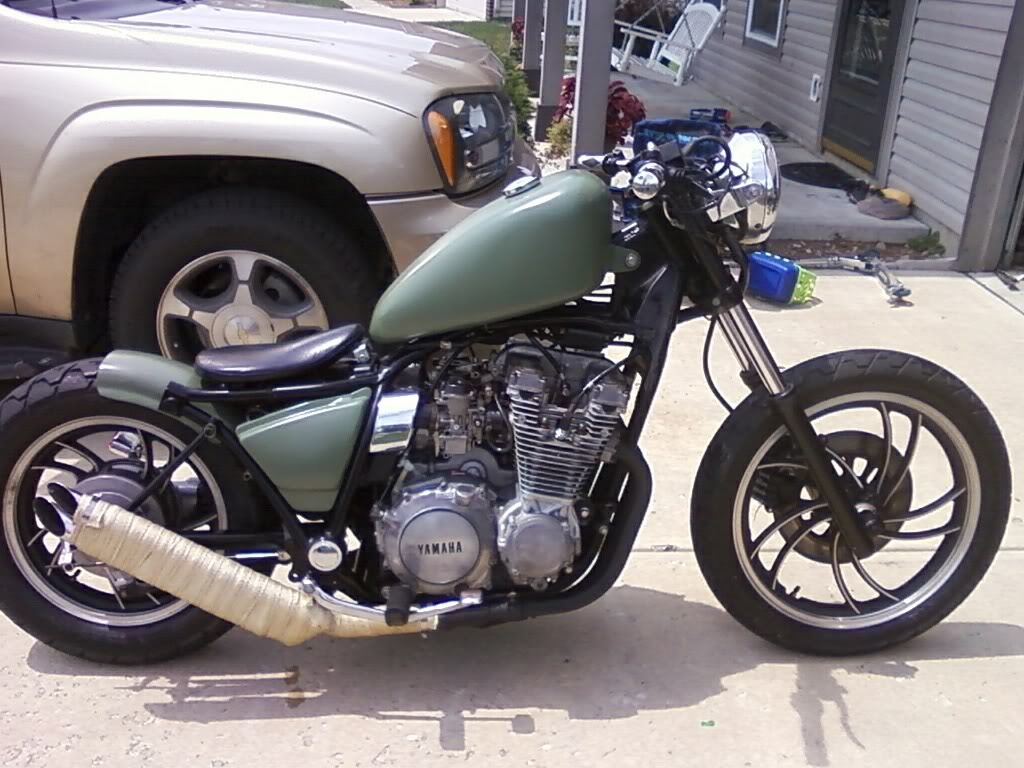
The 1980 Yamaha XJ650 Maxim stands as a testament to an era when motorcycles began to transcend just being machines; they became expressive statements of individuality and freedom on two wheels. While the vast landscape of cruisers often emphasizes legacy models from other celebrated manufacturers, the XJ650 Maxim forces a reconsideration. It challenges the rider’s perception of what a cruiser can embody—melding classic cruiser aesthetics with a hint of sporty agility and Japanese engineering precision.
At first glance, the XJ650 Maxim exudes a timeless charm. Its design doesn’t scream flamboyance but confidently balances subtlety and elegance. The elongated fuel tank and plush seat invite visions of endless highway journeys flooded with late afternoon sun, the soft rumbling of the engine serving as the soundtrack to moments of reflection. Yet, beneath this serene exterior lies an engineering marvel sculpted for both comfort and performance.
The heart of the 1980 Yamaha XJ650 Maxim is its robust 653cc, air-cooled, inline four-cylinder engine. This powerhouse wasn’t merely a mid-size motorbike engine for commuting; it represented Yamaha’s commitment to crafting machines that could command the open road with authority. The liquid-cooled variation of this engine family had already created waves for its durability and smooth power delivery. In this air-cooled format, the XJ650 Maxim deftly combines simplicity with a mechanical sturdiness that long-time riders laud. The engine’s responsive throttle, paired with a five-speed transmission, offers a fluid yet assertive ride that few in its class managed to replicate.
But it’s not just about mechanics. The 1980 XJ650 Maxim introduces a unique blend of cruiser elements with a touch of sportbike handling virtues. Most cruisers commit heavily to relaxed ergonomics, often at the expense of maneuverability. Yamaha’s approach with the XJ650 was different. The slightly forward-set foot controls and broad handlebars do more than provide comfort; they contribute to an engaged and agile riding position, offering precise control without sacrificing the laid-back cruiser vibe. This balance entices riders who crave both the nostalgia of classic cruiser styling and the nimble response enjoyed by sportier machines.
Suspension and braking, often overlooked in discussions about vintage motorcycles, were placed under particular scrutiny during the XJ650 Maxim’s development. A telescopic front fork combined with dual rear shock absorbers rendered a suspension system capable of taming both urban commutes and undulating rural highways. Riders often comment on the bike’s predictable handling and confident posture when cornering—attributes that further separate the Maxim from stereotypical cruiser archetypes. Braking power was delivered via a single front disc brake and a rear drum brake, a combination standard for the era, yet the overall balance instilled confidence seldom expected in a bike of this vintage.
Visual cues are paramount in establishing the XJ650 Maxim’s unmistakable identity. Chrome accents trace the contours of the fenders, exhaust pipes, and engine covers, giving the motorcycle a polished, pristine aura. The dual round headlamps—symmetrical and bold—recall design cues that prioritize function married with nostalgia. Instrumentation is straightforward yet elegant: a pair of circular dials provide essential information without overwhelming the rider, keeping the dashboard clean and purposeful. The minimalist approach to electronic distractions hints at a more primal, unfiltered relationship between rider and machine.
Another compelling aspect lies in the XJ650 Maxim’s versatility. While many cruisers lean into a single style of riding, limiting their appeal, the Maxim proves to be a more adaptable companion. Whether navigating city streets or stretching out for a long-haul ride, the bike maintains composure. Its manageable weight and engineering balance create an allure for newer riders seeking a gateway into cruiser culture as well as for seasoned enthusiasts yearning for a purist’s experience.
Distinctly emblematic of Yamaha’s philosophy in the late 1970s and early 1980s, the XJ650 Maxim illustrates a forward-thinking approach within a traditionally conservative segment. It refuses to be pigeonholed as just another cruiser; instead, it redefines expectations by integrating advanced mechanics, thoughtful ergonomics, and a design language that evokes both energy and comfort. This motorcycle quietly whispers promises of exploration free from compromises.
The cultural context cannot be ignored either. In a period when motorcycle preferences were dramatically diversifying, the XJ650 Maxim emerged during a transitional moment when riders sought machines that honored tradition but embraced innovation. The Maxim occupies a unique niche in the annals of motorcycling history—neither pushing extreme boundaries nor clinging strictly to vintage doctrines. It encourages curiosity about how motorcycles can be simultaneously timeless and ahead of their time.
Collecting and restoring a 1980 Yamaha XJ650 Maxim today offers more than just preservation of a classic; it invites participation in a narrative of balance and refinement. Each chrome gleam, each hum of the inline four-cylinder, every tactile element of the controls reawakens an era’s spirit. Yet, it remains accessible: an embodiment of classic cruiser vibes that forges a connection across generations, inspiring new interpretations of what it means to ride free.
Ultimately, the 1980 Yamaha XJ650 Maxim stands as a poignant reminder that mastery of motorcycle design isn’t solely about extremes or trends—it is about achieving harmony. In its unpretentious lines and versatile disposition, it hints at stories yet told and roads yet traveled. This machine beckons curious riders to look beyond the familiar, promising a shift in perspective where cruiser culture and spirited riding coexist without concession.