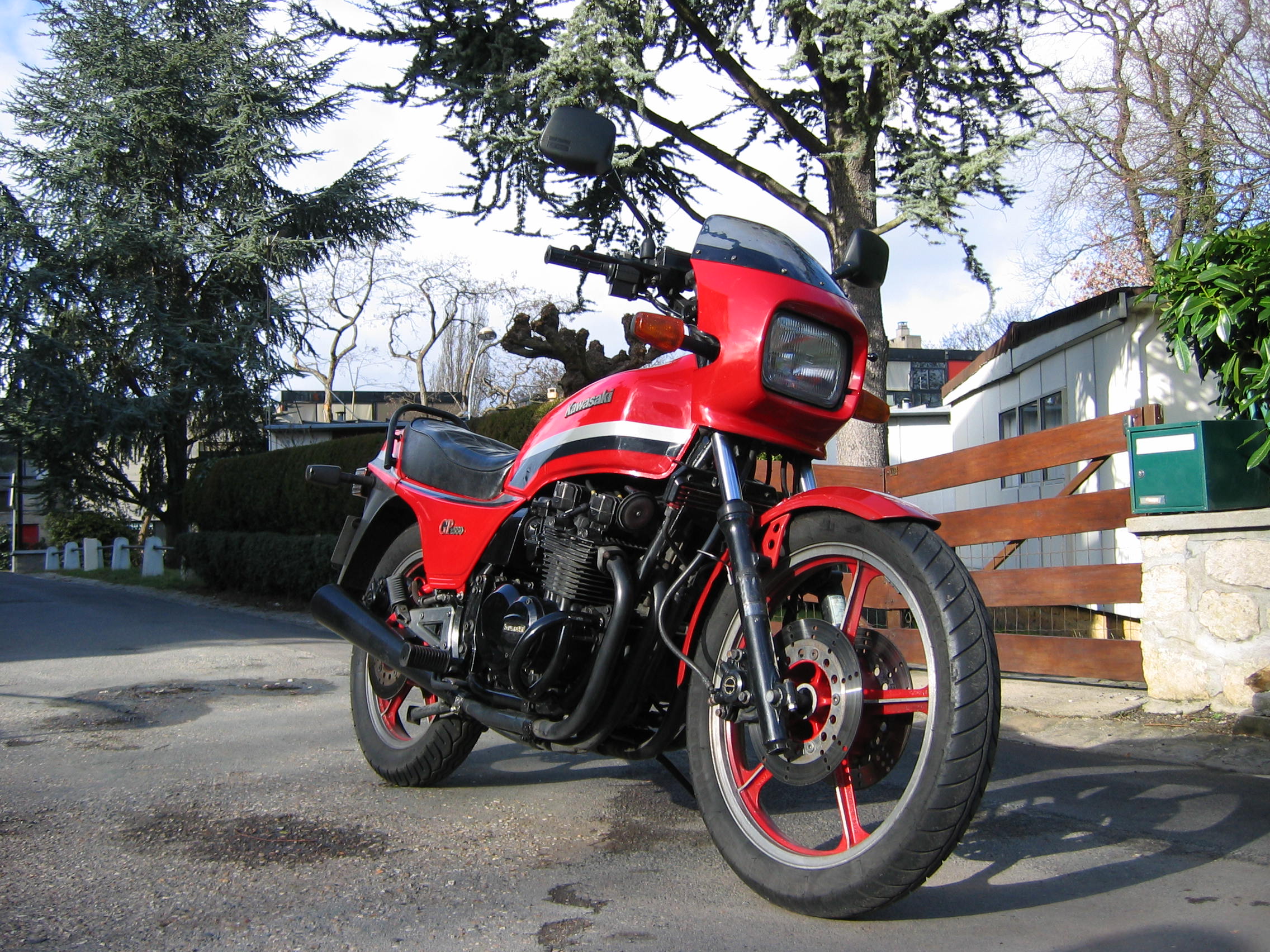
In the evolving landscape of motorcycle engineering, few models have evoked as much admiration and retrospective curiosity as the 1981 Kawasaki GPZ550. Often regarded with a mixture of reverence and intrigue, this machine occupies a unique nexus within the annals of motorcycling history—a testament to innovation and a harbinger of what would later be defined as the modern sportbike. Beneath its aerodynamic silhouette and mechanical bravado lies a story that transcends mere specifications, inviting enthusiasts and historians alike to reconsider what the sportbike was, what it is, and, intriguingly, what it represents.
The early 1980s witnessed a remarkable transformation in motorcycle design philosophy. Prior to that period, motorcycles were frequently segmented into distinct categories: cruisers for comfort and style, dirt bikes for rugged terrain, and standard bikes for general use. However, Kawasaki’s GPZ550 bridged a critical gap, amalgamating performance, agility, and road usability in ways that subtly shifted the paradigm. With its inception in 1981, the GPZ550 introduced a new lexicon of motorcycling—one where form and function converged to meet the demands of a burgeoning community of riders seeking excitement wrapped in precision engineering.
At first glance, the 1981 GPZ550’s design commands attention through its sleek, contoured fairings and aggressive stance. Yet, the allure extends far deeper than aesthetics. The motorcycle utilized Kawasaki’s then-innovative 553cc, inline four-cylinder engine, tuned for a commendable balance between horsepower and rideability. This powerplant was not merely about outright speed but rather the delivery of power in a manageable, predictable manner—a trait that appealed to riders desiring spirited performance without sacrificing control. The emphasis on balanced tuning manifested in an engine that could roar with authority on the open road and yet remain approachable for everyday use.
What magnifies the intrigue surrounding the GPZ550 is how it exemplifies the synthesis of emerging technological advancements with a rider-centric approach. Its lightweight chassis, based on a tubular steel perimeter frame, brought heightened agility that was largely unprecedented in its class. The use of anti-dive front forks and improved suspension components contributed to remarkable handling characteristics, enabling riders to carve through corners with newfound confidence. Herein lies a decisive pivot from more traditional motorcycles that often prized brute force over finesse: the GPZ550 sought harmony between power, weight, and chassis dynamics.
Another fascinating aspect of the 1981 Kawasaki GPZ550 is how it subtly foreshadowed the sportbike ethos that would dominate the decades to come. Today’s sportbikes are recognized for their aggressive ergonomics, aerodynamic treatment, and cutting-edge engineering aimed at maximizing performance on both road and track. The GPZ550, with its forward-leaning riding posture, partial fairing, and advanced suspension setup, can be viewed as a precursor to this evolution. The motorcycle represented a shift towards a more immersive riding experience—encouraging riders to engage actively with the machine and the road beneath them, fostering a dynamic partnership rather than passive transportation.
This dynamic extends beyond the engineering marvel into cultural resonance. The GPZ550 arrived at a time when motorcycling experienced a renaissance in popular culture, igniting a fascination with speed and technology among the youth and seasoned riders alike. It was more than just a motorcycle; it was a symbol of freedom, technological progress, and the pursuit of exhilaration. Many who encountered the GPZ550 found themselves captivated by its ability to deliver a visceral experience without the intimidation factor often associated with larger displacement motorcycles. This inclusivity helped expand the demographic of sportbike riders, seeding a culture that prizes skill, accessibility, and performance in equal measure.
It is also critical to appreciate the GPZ550’s role in Kawasaki’s broader strategy to position itself as a leader in the sportbike market. While competitors were busy capitalizing on outright power and larger engines, Kawasaki took a more nuanced approach. With the GPZ550, engineering precision and balanced design took center stage. This philosophy was instrumental in democratizing sportbike culture, lowering the barrier to entry for newer riders while maintaining the respect of the seasoned aficionado. The exacting attention to ride dynamics created a benchmark that subsequent sportbikes would strive to emulate and improve upon.
Diving deeper into the psychology of fascination with the 1981 GPZ550 reveals a more profound engagement with the idea of technological progress measured against human capability. It embodies the eternal tension between mechanical advancement and rider skill, suggesting a kind of mechanical humility. In an era where electronics and digital aids increasingly dominate motorcycle performance, the GPZ550’s relative mechanical simplicity holds a nostalgic allure. It calls back to a generation where rider input was paramount, and the machine responded directly to human command—a tactile dialogue that many find profoundly satisfying.
In addition, the GPZ550’s maintenance and mechanical accessibility contributed to its enduring legacy. Unlike modern sportbikes laden with electronic complexity, the GPZ550’s engineering simplicity allowed owners to connect intimately with their machines through hands-on maintenance and personalization. This attribute fanned the flames of affection for the bike, reinforcing its status not just as a vehicle but as a cherished companion in the rider’s journey.
Viewed from the perspective of legacy, the 1981 Kawasaki GPZ550 stands not only as a mechanical artifact but as a catalyst that helped shape the sportbike ideology. Its innovations in chassis design, engine tuning, and ergonomics provided a template that would inspire and influence subsequent generations of motorcycles. More than mere historical footnote, it captures the essence of a transformative era—a time when motorcycles began evolving from means of transportation into precision instruments of speed and agility, pushing the boundaries of what two-wheeled machines could achieve.
Ultimately, the fascination with the 1981 Kawasaki GPZ550 transcends its immediate characteristics. It embodies the birth of a modern, performance-oriented mindset in motorcycling, where balance, accessibility, and spirited engagement set the stage for future innovation. Enthusiasts find themselves drawn not only to its tangible qualities but to the evocative narrative it represents—a story of technical ingenuity coupled with an enduring human quest for freedom and mastery on the open road. The motorcycle invites us to consider how incremental advancements and thoughtful design can redefine entire genres, making the GPZ550 a seminal figure in the ongoing saga of motorcycling evolution.