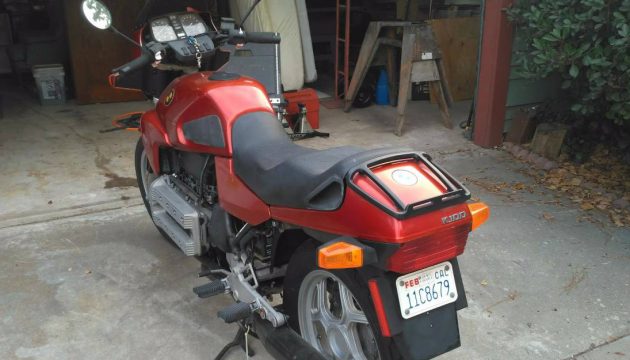
Is it possible that a motorcycle nicknamed “The Flying Brick” could, in fact, revolutionize the world of sport touring? At first blush, the moniker suggests something cumbersome, heavy, or unrefined—far from the sleek, aerodynamic beasts often celebrated on winding roads. Yet, the 1985 BMW K100RS challenged the preconceptions of motorcycle design and functionality, carving an indelible niche within the annals of motorcycling history. Through a perfect amalgamation of engineering innovation and practical design, this machine redefined what it meant to tour long distances with both speed and comfort.
The genesis of the BMW K100 series marked a fundamental departure from the airhead boxer engines that synonymous BMW riders had come to know and love. Instead of the traditional horizontally opposed twin-cylinder powerplants, the K100RS was the first in a line of motorcycles to sport a liquid-cooled, inline-four engine—a two-valve-per-cylinder design that was technically ambitious and mechanically dependable. This engine, baptized with the evocative name “Flying Brick,” primed the K100RS for a level of performance and reliability previously unseen in BMW’s touring lineup.
Measuring displacement at 987 cc, the K100RS’s inline-four pumped out a solid 90 horsepower at 8,000 rpm—a figure that put it in direct competition with many sportier motorcycles of its era. Yet, it was more than just raw power that made the K100RS distinctive; it heralded a kind of technological maturity that was methodically integrated into every element of the motorcycle. The fuel injection system, an uncommon feature for motorcycles at the time, worked seamlessly to ensure smooth throttle response and robust torque across all engine speeds. This technological leap provided riders with an experience that was not only powerful but predictably manageable on long journeys.
One of the most striking visual traits of the K100RS was its angular, almost utilitarian aesthetic—hence the “brick” sobriquet. Unlike contemporary bikes that favored curvaceous, flowing bodywork, the K100RS embraced sharp edges and bold lines. This resulted in a fairing design that wasn’t merely ornamental but served a key functional role, buffering the rider from elements while optimizing aerodynamics. At speeds exceeding 100 mph, the comprehensive full fairing kept wind noise and fatigue to a minimum, turning marathon rides into a measured interplay of rider and machine rather than a battle against the elements.
But what of its handling? Could a “brick” truly dance fluidly through twisty roads? The K100RS was engineered with a robust steel frame and a telelever front suspension system, an innovation that offered a unique blend of stability and compliance. The telelever, which decoupled braking forces from suspension action, drastically reduced front-end dive during hard stops—an ever-present concern for sport-touring riders tackling challenging terrain. Paired with a rear monoshock and well-balanced weight distribution, this setup allowed the K100RS to carve smooth, confident lines in corners. It was a testament to the notion that brute force and refined agility needn’t be mutually exclusive.
Comfort, often relegated to the periphery in sport-oriented motorcycles, received equal attention in the K100RS. Bulky? Yes. But also thoughtfully ergonomic. The rider’s seat delivered an ideal balance of cushioning and support, while the handlebar sweep encouraged an upright yet sporty posture—far friendlier to long hours in the saddle than many sportbikes jabbing wrists into aggressive positions. Passenger accommodations were no afterthought, featuring a thoughtfully raised, ample two-up seat and secure grab handles, ensuring two-up tours could be embarked upon with comparable enthusiasm and ease.
Another emblematic challenge that the 1985 K100RS addressed was its pioneering embrace of aerodynamics. At a time when many touring motorcycles sported piecemeal or minimal fairings, the K100RS arrived with an integrated full fairing that dramatically improved airflow management. The wind-tunnel-designed bodywork not only mitigated rider fatigue but elevated fuel efficiency and high-speed stability. Was the “brick” bulky? Certainly. But it was a cleverly proportioned envelope optimizing the fundamental struggle between form and function.
Maintenance and reliability also entrenched themselves as key virtues in the K100RS’s enduring reputation. BMW’s commitment to precision engineering meant components, from the shaft final drive to the electronic fuel injection, were designed to offer durability with minimal fuss. The shaft drive system, while heavier than chain alternatives, delivered near-maintenance-free reliability—a critical consideration for riders covering thousands of miles annually. This reliability transformed the concept of long-distance motorcycling from a test of mechanical endurance into an affair of pure riding pleasure.
It is worth reflecting on the cultural impact and rider reception of the K100RS. Enthusiasts embraced it as a misunderstood titan—an unpretentious workhorse cloaked in the guise of unconventional styling. To enthusiasts weary of sacrificing speed for comfort, the Flying Brick offered an enticing middle ground. Its brash title belied a soul that appreciated the nuances of spirited riding melded with practical considerations for touring. Consequently, it gathered a devoted following among riders who valued engineering integrity above fleeting fads.
The 1985 BMW K100RS was not merely a motorcycle; it was a statement—a challenge to traditional norms and an invitation to reimagine what a sport-touring motorcycle could be. It laid the groundwork for future BMW innovations, ultimately shaping the lineage that led to today’s advanced sport-tourers with adaptive electronics, aerodynamic finesse, and versatile ergonomics. The “Flying Brick,” therefore, deserves its place not just in museum galleries or collectors’ garages, but in the narrative of motorcycling evolution.
As we look back, the question remains: can the archetype of grace and power truly come in a blocky, angular package? The 1985 BMW K100RS emphatically answers yes. More than four decades later, it stands as a monument to pragmatic brilliance, a motorcycle that encouraged riders to venture farther, faster, and with untold confidence. This unassuming brick flew higher and reshaped touring motorcycles forever.