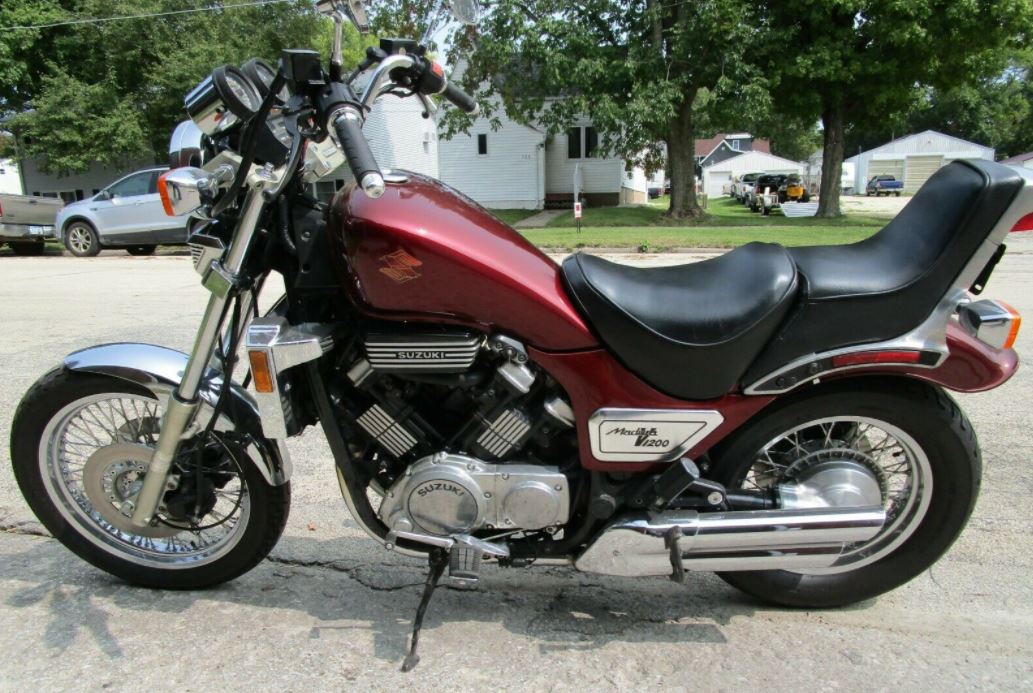
The 1985 Suzuki Madura 1200 is, without question, one of the more enigmatic motorcycles to emerge during the mid-1980s. At first glance, it may strike enthusiasts and casual observers alike as a rather peculiar machine. Its unusual styling, engineering choices, and marketing position set it apart from the more conventional cruisers and sportbikes of its day. Yet, this “weirdness” is precisely why the Madura commands a lingering fascination among collectors, riders, and historians today. Beneath its atypical exterior lies a motorcycle whose idiosyncrasies reveal a deeper, almost avant-garde approach to design and performance that speaks volumes about Suzuki’s ambitions in a competitive market.
The immediate and most recognizable characteristic of the Madura 1200 is its unique aesthetics. Unlike typical cruisers, which often lean heavily into retro or classic American styles, the Madura merged cruiser comfort with modern, somewhat futuristic elements. Its elongated frame and sleek bodywork diverged from the chunkier silhouette typical of Harley-Davidson or Honda’s cruiser offerings. The design is more than just a stylistic experiment; it embodies Suzuki’s attempt to blend the power and reliability of a sportbike engine with a cruiser’s relaxed ergonomics, offering something altogether different in the marketplace. The Madura’s fairing is sculpted with sharp angles and a broad front that nevertheless manages to retain a streamlined appearance. This balancing act between aggressive and elegant was unusual for its time and may explain why it sometimes baffled riders accustomed to clearer categorizations.
Underneath the unconventional styling lies perhaps the Madura’s most compelling feature: its engine. The 1985 version was powered by a robust 1165cc V-four powerplant derived from Suzuki’s sportbike technology—an unusual choice for a cruiser. This engine provided smooth, linear power delivery rather than an abrupt punch, giving the bike the ability to accelerate briskly while still maintaining composure on highways or city roads. The V-four layout is intricate and precise by nature, often reserved for high-performance machines. This granted the Madura technical sophistication rarely seen in cruiser segment motorcycles, which typically opted for simpler V-twins or inline four-cylinder engines. This mechanical nuance not only ensured reliable performance but also enticed aficionados who appreciated engineering refinement over sheer visual flash.
However, the Madura was not just a sum of its components; it embodied a strategic experiment by Suzuki to carve out a niche between starkly different rider preferences. In the mid-80s, the motorcycle landscape was polarized between pure sportbikes with their sharp handling and raw power, and cruisers emphasizing comfort and style. The Madura attempted to meld aspects of both—sporty performance with long-distance comfort—creating a hybrid that challenged traditional taxonomy. This positioning created mixed receptions; some viewed it as neither fish nor fowl, a bike trying to be everything but excelling at nothing. Others, however, recognized its pioneering ethos. By borrowing elements from both worlds, the Madura demonstrated that motorcycle design need not be constrained by genre conventions.
Ergonomically, the Madura showcased thoughtful details that contributed to its distinctive character. The rider position was relaxed yet sporty, featuring forward-set foot controls combined with mid-high handlebars, a configuration that cushioned long rides without sacrificing control or engagement. The seat design balanced comfort with a form-fitting contour, offering ample support during extended trips. Additionally, the larger fuel tank capacity and substantial suspension travel underscored its role as a capable tourer disguised under a sporty guise. These subtleties may be overlooked amidst the bike’s bold presentation, but they hint at Suzuki’s holistic design philosophy. The Madura was meant to be more than a showroom oddity; it was created to perform reliably and comfortably as a motorcycle for real-world use.
The breadth of modern motorcycle culture’s interest in the Madura 1200 stems largely from its “curiosity value.” Unlike iconic motorcycles whose appeal is rooted primarily in mass appeal or illustrious racing heritage, the Madura invites appreciation through its mercurial identity. Collectors often speak of the bike in affectionate tones, marveling at how it evades easy classification. This mystery element generates continuous discourse and nostalgia, factors that sustain the bike’s cultural longevity. It acts as a sort of emblem for a time when manufacturers dared to experiment boldly, even at the risk of alienating mainstream customers.
Additionally, from a mechanical preservation standpoint, the Madura 1200 represents a fascinating case study for enthusiasts of vintage Japanese motorcycles. The intricate V-four engine requires meticulous care, and its relative rarity has made parts and knowledge about maintenance somewhat of a niche speciality. Consequently, ownership or restoration of a Madura is not simply about riding; it becomes a deeper engagement with the mechanics and history embedded within the motorcycle. This process fosters a uniquely rewarding connection between rider, machine, and legacy.
In retrospect, the 1985 Suzuki Madura 1200’s reputation as a “weird” motorcycle is rooted in its deviation from expected norms but tempered by an undeniable charm and forward-thinking design. Rather than remain a curious footnote in motorcycle history, the Madura endures as a testament to creative audacity. It underscores how innovation and risk-taking can result in machines that challenge perceptions and invite long-term admiration. This blend of technical merit and stylistic bravery ensures the Madura holds a distinctive, almost cult-like status within the motorcycling community.
In conclusion, the Suzuki Madura 1200 from 1985 is far from a simple oddity. It is a marriage of engineering finesse, ergonomic insight, and stylistic experimentation that defies easy categorization without compromising utility. The “weirdness,” once a point of contention, now serves as a beacon highlighting Suzuki’s willingness to push boundaries. For those intrigued by motorcycles that transcend tradition, the Madura is nothing short of wonderful—a rare artifact of creative motorcycling that continues to captivate long after its production ceased.