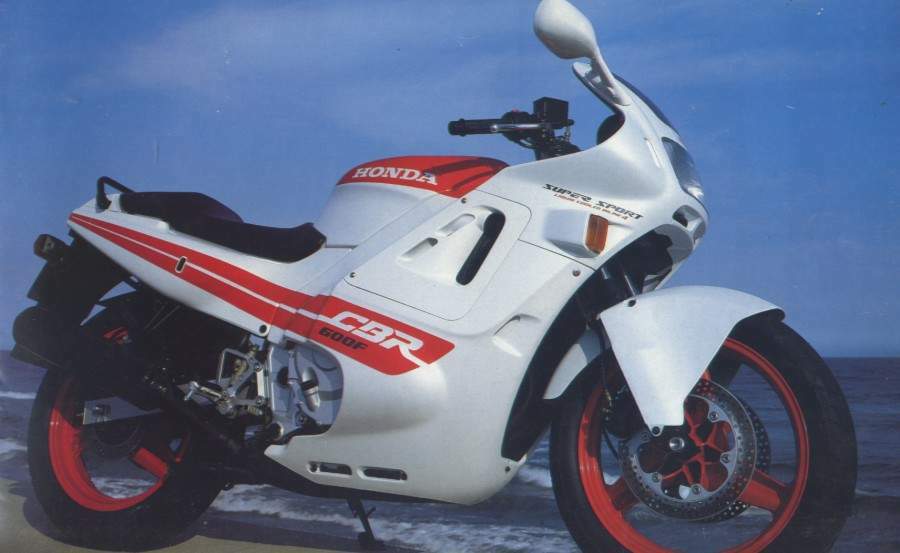
The 1987 Honda Hurricane series, comprising the 600 and 1000 models, arrived as a radical departure from conventional superbikes of its era. These machines did not merely push the envelope—they tore it asunder, redefining the essence of speed and precision in motorcycling. At a time when performance motorcycles were often clunky or unstable at high velocity, the Honda Hurricane ushered in a new chapter that promised a transformative perspective on what sheer velocity could embody.
The Honda Hurricane’s genesis was fueled by an audacious vision—to meld blistering speed with an unprecedented level of rider control. The 600 and 1000 models were far from mere upgrades; they were revolutionary in their architecture and intent. The 1987 iteration brought forward design philosophies and engineering breakthroughs that would ripple throughout the motorcycle industry for decades.
At the core of the Hurricane’s innovation lies its dynamic engine architecture. The 600cc variant featured a liquid-cooled, four-stroke, DOHC inline-four engine, meticulously calibrated to achieve peak power output without sacrificing reliability. Meanwhile, the 1000cc model took this blueprint and amplified its potency, delivering a street-legal powerhouse with a commanding presence. The engines were built to rev aggressively, offering a thrillingly visceral connection to the throttle that both novices and seasoned riders found intoxicating.
Yet, power alone does not suffice to orchestrate a masterpiece of speed. The Honda Hurricane’s true genius manifested in its chassis and suspension engineering. The frame was ingeniously designed using a lightweight perimeter style, balancing rigidity with nimbleness. This frame allowed the bike to slice through corners with laser-like precision, where lesser machines would falter. Coupled with advanced suspension components, the Hurricane delivered an uncanny blend of stability at high speeds and agility through winding roads.
A distinctive feature that set the Hurricane apart was its aerodynamic bodywork, which was cutting-edge for its time. The sleek, futuristic fairings were not merely aesthetic flourishes; they functioned as aerodynamic aids, minimizing drag and channeling airflow to optimize cooling and reduce turbulence. This design ethos foreshadowed trends that would eventually become standard in superbike manufacturing, proving that efficiency and speed could coexist symbiotically.
For motorcyclists of the late 1980s, the Honda Hurricane 600 and 1000 embodied an exhilarating promise—the promise that speed could be harnessed with exquisite control, that power could be wielded with finesse rather than brute force. This shift in perspective altered expectations profoundly. Riders no longer had to choose between raw horsepower and rideability. Instead, Honda invited them to experience an intersection where both converged majestically.
The transformation was not confined to the machines alone. The riding experience introduced by the Hurricane was recalibrating the culture surrounding sportbikes. Enthusiasts found themselves captivated not just by straight-line speed but by the art of corner carving, by the synergy between man and machine on twisting asphalt. The 1987 Honda Hurricanes seemed to whisper a challenge to the racing community: to rethink riding dynamics, to push boundaries thoughtfully.
Moreover, the motorcycles’ instrumentation and ergonomics were thoughtfully engineered to accommodate long rides without fatigue, signaling Honda’s holistic approach to performance. The seating position, though aggressive for sport, remained accessible, inviting a broader range of riders into the fold. Controls were intuitively placed, further enhancing the pilot’s command over the Hurricane’s fierce capabilities. This attention to detail elevated the motorcycle beyond a mere vehicle; it became an extension of the rider’s intent and skill.
Technological advancements extended into the braking system as well. Equipped with dual front disc brakes, the Hurricane delivered formidable stopping power commensurate with its speed. This ensured that riders could confidently push limits while maintaining safety. The synchronization of acceleration and deceleration technologies was an embodiment of engineering harmony rarely seen in that period.
Regardless of whether the 600 or the 1000 model, one constant remained—the startling sense of belonging to something revolutionary. The Honda Hurricane demanded that riders rethink preconceived notions of superbike capabilities. Its presence on the road was a vivid assertion that future motorcycles would not be relegated to incremental improvements but could instead redefine the entire spectrum of motorcycling experience.
Decades later, the legacy of the 1987 Honda Hurricane continues to resonate. Collectors and aficionados alike pay homage to its engineering brilliance, its courageous leap into the unknown. When viewed through the lens of history, the Hurricane was not just a motorcycle; it was a harbinger of evolution, a bold statement that speed was not an end in itself but a catalyst for innovation and liberation.
In sum, the 1987 Honda Hurricane 600 and 1000 were more than metal and machinery. They were a paradigm shift—an invitation to envision speed differently. By marrying meticulous engineering, aesthetic prowess, and rider-centric design, Honda crafted motorcycles that transformed the way speed was pursued and experienced. To ride a Hurricane was to glimpse the future, to participate in an exhilarating dance of velocity and control that remains influential to this day.