Have you ever wondered what it takes to push the boundaries of motorcycle design and engineering to an almost absurd degree? What if the familiar two-wheeled machines that zip through city streets were transformed into mechanical marvels that challenge our very perception of what a motorcycle can be? The years 2003–2004 were a fertile playground for such audacious creativity. This brief but impactful era showcased some of the most eccentric, groundbreaking motorcycles ever conceived—machines that weren’t just about transportation but about daring to defy convention.
The early 2000s saw a resurgence in motorcycle innovation, spurred by advancements in technology, materials, and a growing rider subculture hungry for individuality. Yet, the scooters and cruisers crowding the market weren’t enough for designers with a flair for the fantastical. The question became: How far could one take motorcycle design without plunging into the realm of impracticality? Riders and manufacturers alike flirted with this edge, ushering in an era replete with visually arresting and technically complex bikes.
One of the defining characteristics of the motorcycles crafted during this period was their unapologetic eccentricity. Imagine a motorcycle that appears to have been carved out of a futuristic metal sculpture rather than assembled from traditional parts. The “craziest” motorcycles of 2003 and 2004 didn’t just sport flashy aesthetics—they experimented with shape, function, and performance in ways that sometimes raised more eyebrows than applause. Designs incorporated hyper-aggressive fairings, unconventional frame geometries, and experimental suspensions that looked more like cyclopean art installations than practical vehicles.
Take, for instance, motorcycles that essentially blurred the line between naked bikes and futurist sculpture. Absurdly elongated forks extending the front wheel far ahead from the chassis gave these machines a stretched profile that was both captivating and daring. The extended wheelbase challenged riders’ traditional balance and control instincts, offering a riding experience that felt both alien and exhilarating. This raised an intriguing challenge: could such designs maintain performance on the road, or were they purely stylistic gambits? The answer often varied, as some models managed a delicate equilibrium of form and function, while others remained experimental novelties.
Alongside visual extravagance, the engineering innovations of this period were equally remarkable. The arrival of more sophisticated engine management systems allowed designers to explore configurations outside the norm. Some motorcycles embraced monstrous V-twin engines with tunings that pushed torque to staggering levels, turning these bikes into beasts that demanded respect and skill. Notably, the engineering emphasized raw power delivered in thrilling though sometimes unruly punches, catering to the rider’s desire for an adrenaline surge with every twist of the throttle.
Yet power alone wasn’t the hallmark of these wild rides. The era’s motorcycles also flirted with alternative materials that were unconventional within two-wheeled design. Extensive use of polished chrome, carbon fiber overlays, and anodized metals created a reflective tapestry that interacted with sunlight in dazzling displays. These enhancements weren’t merely for eye candy; they contributed to weight reduction and structural rigidity, paving the way for improved handling and speed. This intricate dance between technology and artistry engendered machines that were as much kinetic sculptures as functional vehicles.
One might ponder the ergonomic implications of these radical designs. How does a rider navigate the world astride a motorcycle whose seat geometries and control placements defy standard conventions? Some models featured aggressively forward-leaning riding positions, reminiscent of professional racing bikes but ramped up to nearly uncomfortable extents. Others experimented with pod-like cockpits that wrapped riders in a cocoon of technology and style but at the expense of traditional tactile feedback. These adjustments forced motorcyclists to adapt and reconsider not only their riding posture but also their relationship with the machine itself.
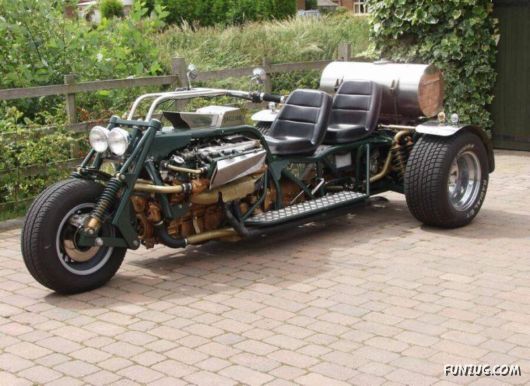
Customization culture played a pivotal role during this period as well. The early 2000s hosted an explosion of bespoke builds, where motorcycle aficionados poured resources and imagination into creating singular masterpieces. Bike builders ventured into rebellious combinations, mixing elements from choppers, sportbikes, and cruisers to forge hybrids that defied neat categorization. This cross-pollination of styles birthed machines that carried their own narratives—a fusion of personal identity, mechanical prowess, and artistic expression.
One cannot discuss the craziest motorcycles of 2003–2004 without acknowledging the influx of concept bikes that gauged public reaction and showcased future possibilities. These concept motorcycles often leveraged avant-garde technology, such as early electronic dashboards with LCD displays, integrated GPS systems, and variable geometry suspensions. While few of these prototypes ever transitioned into mass production, their role was vital in expanding the dialogue on what could be feasibly achieved in motorcycle design and rider experience.
Despite the excitement and innovation, such eccentric motorcycles also posed significant challenges—for manufacturers, riders, and safety regulators alike. Handling peculiarities born of extreme designs often demanded advanced riding skills, raising the bar for accessibility. Safety concerns surfaced particularly around non-traditional frame structures and novel materials whose real-world durability was yet to be fully vetted. Consequently, some radical models found their niche solely among enthusiasts willing to embrace risk and idiosyncrasy.
So, what does the legacy of these outrageous motorcycles tell us? They serve as trophies of human creativity and audacity, pushing mechanical boundaries and challenging preconceived notions of motorcycling. They highlight a period when passion and experimentation were fuelled by the dual engines of technology and design bravado. While many of these machines were impractical or exclusive, the ideas seeded during 2003 and 2004 rippled into subsequent generations of motorcycles, influencing everything from aerodynamic shapes to electronic integration and customization culture.
In retrospect, the motorcycles of this era invite us to reflect on a compelling question: How much strangeness and innovation can be packed into a two-wheeled vehicle before it ceases to be a motorcycle and becomes something else entirely? The answer is not definitive—it fluctuates with tastes, technologies, and the evolving spirit of motorcycling. What’s indisputable, however, is that the craziest motorcycles of 2003–2004 dared to imagine the unimaginable, inviting riders to embrace not just the road ahead, but the thrill of breaking conventions.