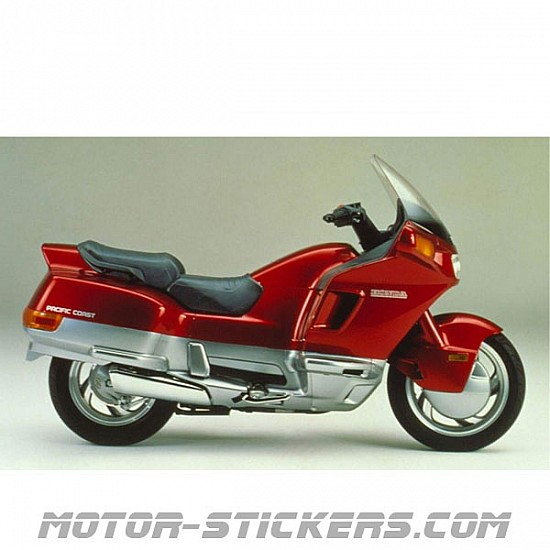
When examining the landscape of motorcycle design, few models provoke as much curiosity and vigorous debate as the 1989 Honda Pacific Coast. To some, it is a bewildering enigma—a baggy, bulbous machine that diverges so sharply from conventional motorcycle aesthetics that it borders on the uncanny. To others, it represents a masterstroke of innovation, a prescient vision of practicality and rider comfort that challenges ingrained perceptions. This dichotomy of opinion—a blend of intrigue and perplexity—raises the enduring question: is the 1989 Honda Pacific Coast a weird outlier, or a genius design ahead of its time?
The initial impression upon viewing the Pacific Coast is decidedly polarizing. Its full fairing, enveloping the entire chassis including the wheels, creates an almost pod-like silhouette that defies the aggressive, muscular lines typical of sportbikes and the exposed mechanical ethos of cruisers. The integrated hard saddlebags, seamlessly molded into the rear fairing, contribute to this monolithic presence, subverting traditional compartmentalization in motorcycle design. Some skeptics label the bike as ungainly or clumsy—a suggestion that its form compromises function or style. Yet, what may appear idiosyncratic upon first sight is in fact the result of carefully considered engineering decisions targeted at a specific cohort of riders.
One must consider the context of late 1980s motorcycle culture to fully appreciate the Pacific Coast’s conception. During an era dominated by raw power and minimalist chassis exposition, Honda embarked on a bold experiment: blending the protective virtues of full fairings with the convenience features typically reserved for touring motorcycles. The Pacific Coast was crafted as a commuter-friendly machine that eschewed the abrasive wind buffeting commonly endured by urban riders. The comprehensive bodywork reduced noise, weather exposure, and grime—attributes that aligned perfectly with needs in congested cityscapes and variable climates.

This fully enclosed design also introduced a level of practicality rarely seen on motorcycles. The integrated storage solution was voluminous and weatherproof, surpassing aftermarket panniers or removable bags in security and convenience. The innovative latch mechanisms allowed access without the necessity of complicated tools or lengthy procedures. For riders seeking a motorcycle capable of daily errands, grocery runs, or quick errands without logistical hassle, the Pacific Coast was a compelling proposition. The design transcended mere aesthetics to prioritize the rider’s experience holistically.
Underneath the distinctive appearance lay a reliable 800cc V-twin engine, sourced from the Honda Shadow lineup. Its economic and tractable power delivery complemented the bike’s intended role as a practical, accessible machine rather than a high-performance sportbike. The smoothness of the powertrain paired with the damping provided by the fairing offered an unexpectedly serene riding experience. In terms of ergonomics, the Pacific Coast employed a comfortable, upright seating position, favoring rider endurance over aggressive posture. It anticipated modern trends toward loaded commuting motorcycles that balance performance and comfort.
What further sets the 1989 Honda Pacific Coast apart is its prescient anticipation of contemporary motorcycle design paradigms. Today, motorcycles with fully integrated bodywork and permanent storage compartments are no longer the anomaly they once were. The rise of sport-touring and adventure-touring models has mainstreamed an approach to multifaceted motorcycle usage, blending long-distance comfort with the practicality required for everyday transport. In this light, the Pacific Coast emerges as a forerunner—one that dared to synthesize diverse design elements into a cohesive whole decades in advance.
The controversial styling may have contributed to its limited production run and modest sales. In a market that often prioritizes charisma and aggressive lines, a motorcycle that appeared overly utilitarian struggled to find an audience. However, this very divergence from convention is what nurtures its cult status today. The Pacific Coast occupies a unique niche where design eccentricity meets utilitarian ingenuity. It symbolizes a philosophy that values functional innovation over aesthetic conformity, challenging enthusiasts to reconsider entrenched biases about what a motorcycle should be.
As motorcycling culture evolves to embrace sustainability, commuting efficiency, and urban mobility, the 1989 Honda Pacific Coast gains renewed relevance. Its integrated storage and weather protection can be seen as precursors to modern electric motorcycles that prioritize rider comfort and versatility. The model’s willingness to break away from aggressive visual norms aligns well with diversifying rider demographics seeking approachable yet capable rides.
Intriguingly, the fascination with the Pacific Coast extends beyond its design specifications, touching on psychological and cultural dimensions. It embodies an archetype of the “otherness” within a community often deeply attached to tradition and image. The bike’s oddity engenders curiosity and conversation, compelling enthusiasts and casual observers alike to engage in dialogues about innovation, identity, and the balance between form and function. Its enduring presence in motorcycle lore demonstrates how objects that defy easy classification often become emblematic of creative thinking and the courage to be different.
In summary, the 1989 Honda Pacific Coast is neither merely weird nor outright genius—it is a nuanced amalgam of both. Its idiosyncratic design stems from a deliberate convergence of functionality, rider comfort, and futurism. While it confounds aesthetic expectations, it addresses tangible rider needs with ingenuous solutions that prefigured shifts in motorcycle design philosophy. This machine exemplifies the complex interplay between innovation and acceptance, reminding us that progress in transportation design is often accompanied by initial bewilderment before eventual appreciation.
The Pacific Coast asks us to look beyond surface appearances and question our assumptions about what qualities a motorcycle must possess. It invites us to honor not only the sleek and the fast but also the practical and the thoughtful. In doing so, it underscores a timeless truth of design: sometimes, genius masquerades as weirdness until time reveals its wisdom.