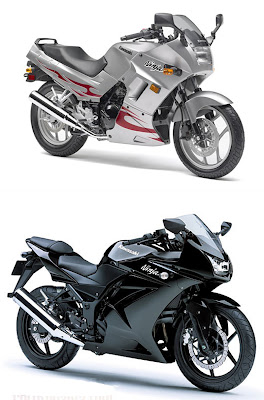
The perpetual debate between the Kawasaki Ninja 300 and Ninja 400 often circles around their respective performance capabilities, especially in terms of acceleration from 0 to 60 miles per hour. These two motorcycles, while closely related, exhibit distinctive characteristics that influence their sprinting prowess in surprising ways. Examining this head-to-head matchup unearths nuances not immediately apparent from mere specifications or cursory overviews.
The Kawasaki Ninja 300, introduced as a beginner-friendly sportbike, garnered acclaim for its nimble handling and manageable power delivery. Equipped with a 296cc parallel-twin engine, the Ninja 300 is praised for its spirited acceleration and light chassis. However, the arrival of the Ninja 400, sporting a larger 399cc engine and an array of refinements, beckoned enthusiasts with promises of enhanced performance and greater versatility. At first glance, the numbers suggest a clear advantage for the Ninja 400, but the reality involves a more intricate tapestry of dynamics.
A critical exploration of the 0–60 mph acceleration times reveals subtle yet impactful differentiators between the two. The Ninja 300 typically registers times in the vicinity of 5.5 to 6 seconds, a respectable figure for a lightweight sports motorcycle. The Ninja 400, by contrast, generally clocks in closer to the 4.5 to 5-second range, underscoring its more potent powertrain and torque delivery. Nevertheless, the difference, while tangible, is not as stark as one might expect given the displacement increase. This highlights how factors beyond raw engine capacity shape acceleration performance.
One pivotal aspect is the weight-to-power ratio. Despite the Ninja 400 boasting a larger engine, it also carries a marginally increased curb weight, often about 15 to 20 pounds heavier than its 300cc predecessor. This additional mass slightly mitigates the advantage gained from the extra displacement, resulting in acceleration figures that are impressive yet closely contested. Moreover, the Ninja 400’s revised chassis and ergonomics contribute to a more efficient power transfer, allowing riders to exploit its power more effectively and translate it into brisk acceleration.
Another dimension to consider lies in the transmission and gearing. Both models employ a six-speed gearbox, but the Ninja 400’s gear ratios are optimized differently to enhance mid-range thrust and overall rideability. This optimization lends itself to stronger roll-on acceleration, making it particularly adept during spirited riding beyond the initial launch. Conversely, the Ninja 300’s gearing is tailored towards smoothness and accessibility, prioritizing an approachable power curve for new riders.
Tire technology and contact patch also play subtle roles. The Ninja 400 often comes equipped with wider front and rear tires compared to the Ninja 300, which contributes to improved grip and traction during hard acceleration. These enhancements reduce wheel spin and slippage off the line, permitting more consistent and reliable launches in a variety of surface conditions. Consequently, the Ninja 400 can more readily maximize its power output, especially under aggressive throttle application.
The ergonomic differences extend beyond performance into rider confidence and control. The Ninja 400’s slightly more aggressive riding position encourages a forward-leaning stance that can aid in weight distribution during rapid acceleration. This, combined with improved suspension components and chassis rigidity, affords the rider greater assurance and stability at launch. Although the Ninja 300 maintains an accommodating posture conducive to commuting and casual rides, its setup inherently sacrifices some of the precision that benefits explosive off-the-line performance.
Environmental conditions and rider technique further complicate direct comparisons. Factors such as ambient temperature, road surface texture, and rider proficiency dramatically affect 0–60 times. For instance, a rider adept at clutch modulation and throttle control can extract surprisingly intense bursts of acceleration from either machine. Smooth launches mitigate wheel spin and enable the bike’s power to propel it forward more efficiently. Thus, published acceleration benchmarks should be viewed as indicative rather than absolute.
It is also insightful to consider how electronics and rider aids influence acceleration. The Ninja 400 often includes more sophisticated features such as traction control systems, which, when activated, prevent excessive tire slippage at launch. While these can slightly blunt raw acceleration figures, they enhance overall safety and confidence, especially for less experienced riders. The Ninja 300, depending on model year and variant, generally offers fewer electronic aids, potentially allowing for marginally quicker times in skilled hands but at an increased risk of loss of control.
In terms of real-world implications, the acceleration advantage of the Ninja 400 translates into a more exhilarating riding experience, especially when navigating city traffic or engaging in spirited backroad runs. The extra grunt provides a cushion of power readily accessible at mid-range RPMs, allowing riders to overtake with authority and merge confidently. The Ninja 300, while less quick in absolute terms, remains an excellent urban companion, offering a blend of agility and manageable performance that is especially suited for newcomers and those prioritizing economy.
Ultimately, the “surprising results” in the 0–60 comparison stem from the realization that the Ninja 400, though predictably faster, does not obliterate the Ninja 300 in acceleration as much as raw numbers might suggest. This parity invites deeper reflection on how motorcycle design philosophy balances displacement, weight, ergonomics, and rider aids to craft distinct yet closely matched performance envelopes. Both motorcycles represent the pinnacle of their respective niches, catering to a spectrum of rider preferences and skill levels.
In summary, the Ninja 300 versus Ninja 400 0–60 mph competition unveils a nuanced narrative of performance, rider engagement, and mechanical craftsmanship. While the Ninja 400 enjoys a tangible edge in acceleration due to its larger engine and refined dynamics, the Ninja 300 holds its ground impressively through lighter weight and approachable design. The interplay of factors such as gearing, traction, rider position, and electronics culminates in a contest where each contender excels in its own right. Whether prioritizing raw speed or accessible thrill, riders find compelling reasons to embrace either bike.