What truly transforms a motorcycle from mere machine to timeless icon? Is it the raw horsepower, the cutting-edge technology, or the irresistible charisma it exudes on the asphalt? For enthusiasts and casual observers alike, the 1995 Kawasaki ZX-6R challenges each of these concepts, embodying a confluence of factors that not only defined a generation of supersport motorcycles but also set a benchmark that reverberates through two-wheeled lore even today.
Unveiled at the cusp of a burgeoning era for sportbikes, the 1995 Kawasaki ZX-6R was more than just an addition to the Kawasaki lineup—it was a statement. At a time when the competition was fierce and the demand for nimble, high-performance machines was skyrocketing, Kawasaki engineered the ZX-6R to capture the hearts and minds of riders seeking the perfect balance between street-savvy agility and track-ready ferocity.
What makes the 1995 ZX-6R so captivating isn’t merely its allure, but the intricate layers of innovation packed beneath its sculpted fairings. At its core lies a 599cc liquid-cooled, inline-four engine, finely tuned to deliver a harmonious blend of peak power and accessible torque. Unlike its bigger siblings, the ZX-6R carved out a unique niche, offering exhilarating performance without the intimidating nature often associated with larger displacement bikes.

The cunningly designed engine revved eagerly to a redline of over 13,000 RPM, illustrating Kawasaki’s dedication to high-revving prowess. This wasn’t just raw energy but a symphony of mechanical precision, where each piston stroke translated to thrilling acceleration. The bike effortlessly demonstrated that power need not be brutish but could be wielded with grace and precision.
Complementing this powertrain was a sophisticated chassis that redefined agility. Constructed from lightweight aluminum, the perimeter frame offered exceptional rigidity and balance—an avant-garde approach that enhanced handling characteristics dramatically. This was no mere stunt; it was Kawasaki’s answer to the eternal challenge of crafting a bike that could carve corners with surgical accuracy, yet remain stable at warp speeds.
Suspension elements, including a fully adjustable front fork and rear shock absorber, invited riders to tailor the experience, accommodating diverse riding styles and conditions. Whether threading through sinuous mountain roads or ripping down a racetrack, the ZX-6R showcased an uncanny ability to instill confidence. Could a 600cc motorcycle really offer such poise and control?
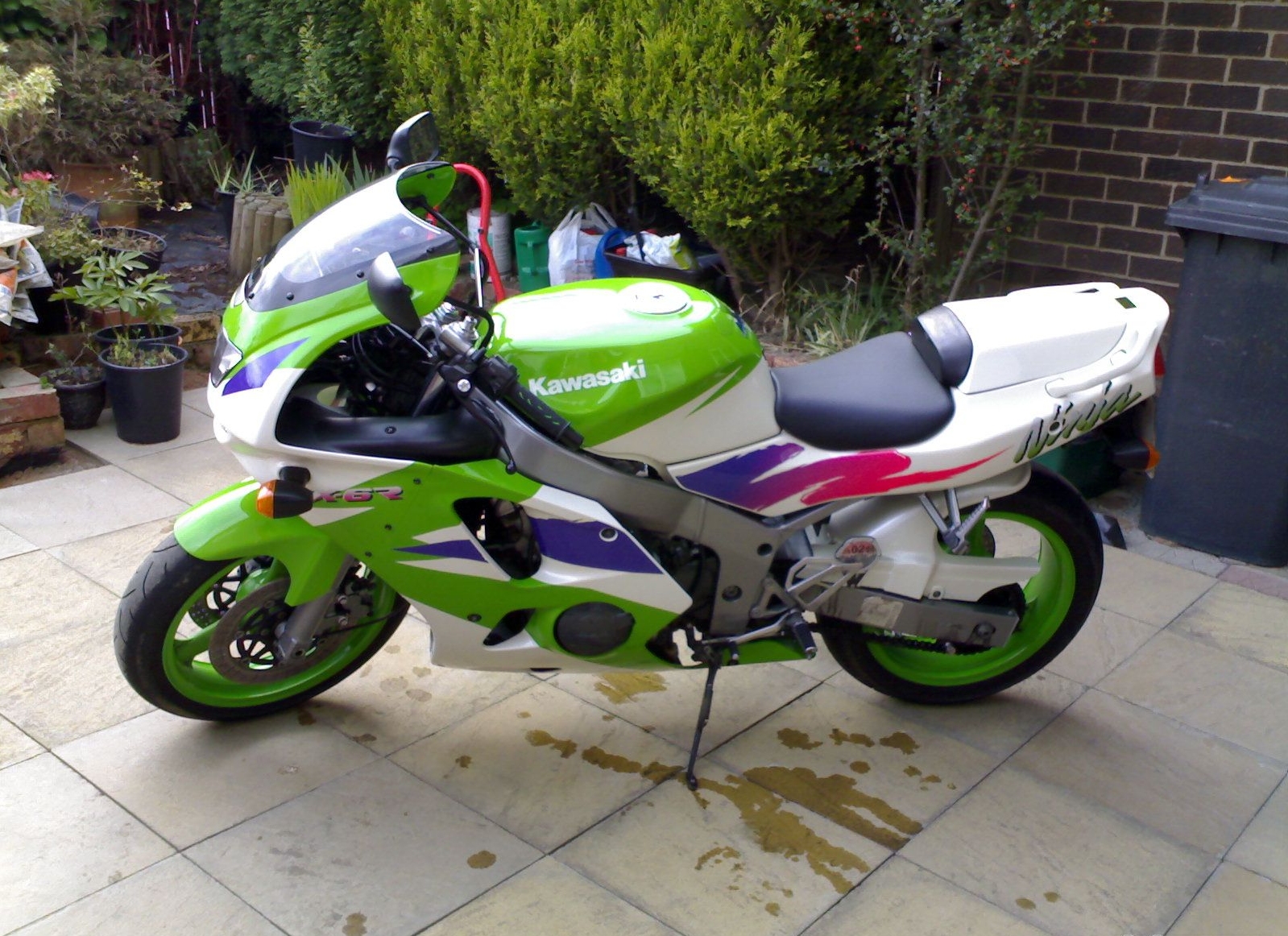
One cannot overlook the distinct aesthetics that contributed to the ZX-6R’s legendary status. Its aggressive silhouette, adorned with sharp lines and aerodynamic fairings, spoke volumes about its intent. Far from just a utilitarian shell, the bodywork was engineered to optimize airflow, reduce drag, and instill a sense of speed—even when stationary. Its visual presence demanded attention, challenging onlookers to reconcile its compact frame with its bold personality.
The riding ergonomics were thoughtfully calibrated. Clip-on handlebars positioned the rider forward, fostering an engaged and sporty posture without veering into uncomfortable extremity. Footpegs were strategically placed to facilitate spirited cornering and weight shifts, providing a tactile connection between rider and machine. This balance of comfort and aggression made the ZX-6R an inviting prospect for both newcomers and seasoned riders alike.
But what about the challenge posed by its competitiveness in a crowded market? The mid-1990s witnessed an explosion of 600cc sportbikes from manufacturers worldwide. Each claimed to offer the definitive all-rounder for street and track. Kawasaki’s response was to underpin the ZX-6R with a philosophy that combined innovation with refinement. It championed a package that was approachable yet thrilling — a motorcycle that encouraged a range of riders to push their limits.
Technological advancements on the 1995 ZX-6R included the incorporation of Kawasaki’s renowned ram-air intake system. This innovation amplified engine breathing at high speeds, a subtle but vital element that boosted horsepower and throttle response without sacrificing reliability. In an era prior to widespread electronic aids, such mechanical ingenuity was essential in extracting every ounce of performance.
Braking power, a crucial aspect often overshadowed by engine specifications, was addressed through high-quality disc brakes paired with effective calipers. This combination offered consistent stopping power and modulation, indispensable when venturing into the territory of high-speed cornering and quick deceleration. The careful attention to braking dynamics lent further confidence to riders intent on exploring the ZX-6R’s sporty limits.
In many ways, the 1995 Kawasaki ZX-6R was a harbinger of the supersport genre’s evolution. It embraced the philosophy of “more with less” — more performance, more agility, more excitement, all condensed into a motorcycle that remained accessible and practical. This ethos attracted a dedicated following, inspiring countless riders to embrace sport-riding culture and pushing other manufacturers to evolve their offerings.
Over two decades later, the ZX-6R’s legacy persists not as a relic but as a benchmark. Enthusiasts debate whether any subsequent model has truly captured the same blend of raw excitement and everyday usability. The 1995 model’s influence is etched into the lineage of middleweight sportbikes, a testament to Kawasaki’s ability to blend engineering prowess with rider-centric design.
So, what defines a motorcycle that transcends its era? Is it simply innovation and speed, or is it something more elusive — a spirit that invites riders to challenge themselves, to revel in the dance between man and machine? The 1995 Kawasaki ZX-6R poses this question with every twist of the throttle, daring riders to embrace the exhilarating interplay between control and power.
In the final analysis, the 1995 Kawasaki ZX-6R was more than just the sum of its parts. It was a manifestation of a moment in time when passion, engineering genius, and rider ambition converged to create something extraordinary. It challenged conventions and set new standards, all while inviting riders to ask: how far can you really push yourself—and your machine—before the line between challenge and mastery blurs into exhilarating freedom?