In the pantheon of 1990s supersport motorcycles, the 1998 Honda CBR600 F3 emerges not merely as a machine but as an artifact of engineering philosophy, merging artistry with raw performance. Far beyond the overtly aggressive forms or the blazing speed charts, this motorcycle promises to challenge conventional notions—revealing that a supersport need not sacrifice finesse at the altar of frenzy. It beckons riders to reconsider what performance means, marrying precision and practicality in a way that still resonates decades after its debut.
At first glance, the 1998 Honda CBR600 F3 captivates with its sleek, aerodynamic silhouette. Yet, it is the intricacies beneath its fairings that intrigue the discerning enthusiast. Honda’s mastery is evident in the harmonious balance between form and function. Unlike the bombastic and sometimes unwieldy supersports of its era, the F3 emphasizes controllability and rider confidence. This is a machine engineered not just to be fast, but to be mastered, rewarding skill and finesse rather than brute force and recklessness.
Central to its allure is the liquid-cooled, inline four-cylinder 599cc engine. This powerhouse, lauded for its smoothness and responsiveness, offers a precise delivery of power across the rev range. Its performance is not characterized by explosive bursts alone but by a consistent, tractable pull that encourages aggressive yet measured riding. The engine’s broad torque curve and rev-friendly nature redefine the riding experience, promising exhilarating acceleration without abandoning everyday usability. It’s a symphony of mechanical efficiency, where engineering finesse meets pragmatism.
Yet, the 1998 CBR600 F3’s promise extends beyond raw engine specifications. The chassis and suspension setup demonstrate a thoughtful approach to dynamics. Honda outfitted the F3 with a lightweight twin-spar aluminum frame that not only contributes to structural rigidity but enhances agility. This design permits confident cornering and razor-sharp handling, placing a premium on rider feedback and tactile connection to the road. Paired expertly with adjustable front forks and a responsive rear shock absorber, the suspension strikes a delicate equilibrium—absorbing imperfections while preserving incisive feedback.
Riders will find that the F3’s braking system mirrors the motorcycle’s overarching philosophy. Equipped with dual front disc brakes and a single rear disc, the system exemplifies predictability and control. It avoids the abruptness sometimes found in the era’s machines, allowing riders to modulate stopping power with confidence. The synergy between brakes, chassis, and suspension culminates in a riding experience that is as composed on a sweep through mountain bends as it is assertive on a track day.
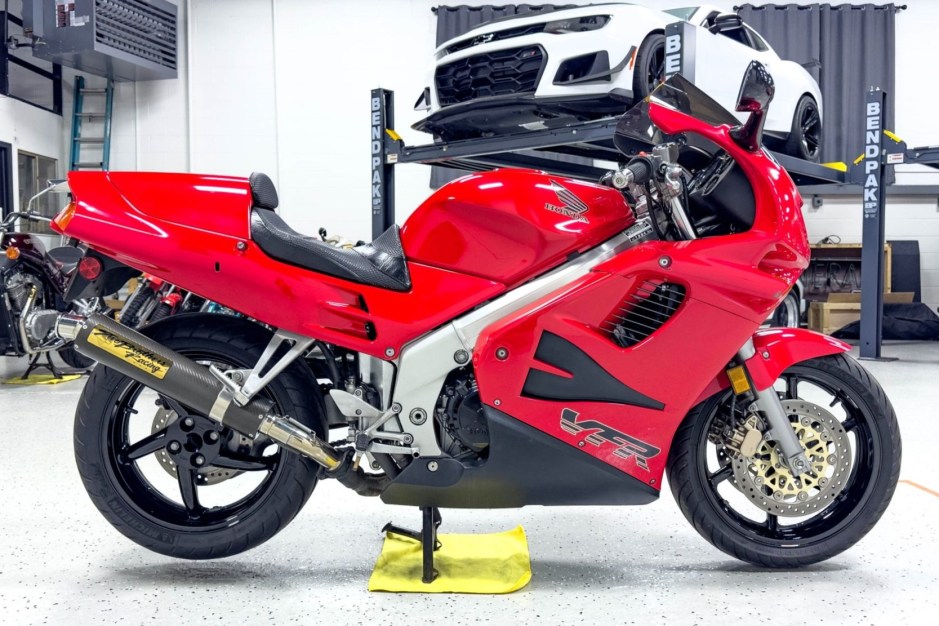
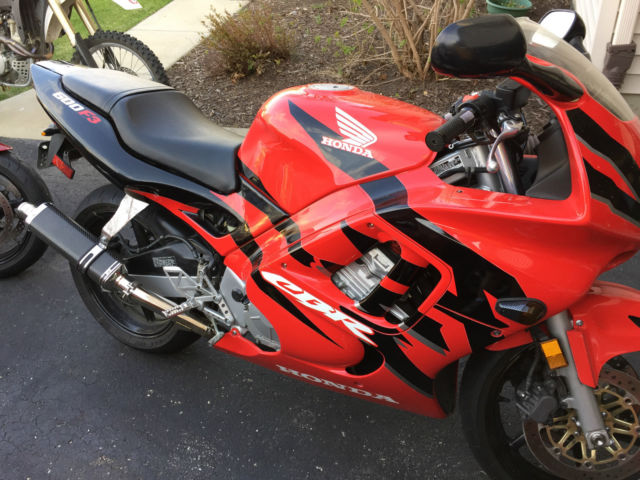
The visual identity of the 1998 Honda CBR600 F3 carries a distinct narrative across the supersport lineage. Its fairings, meticulously sculpted, provide not only aerodynamic efficiency but a signature sculptural elegance—an object lesson in purposeful design. Sharp lines converge with subtle contours, providing a sense of controlled aggression without succumbing to overt flashiness. The vibrant color schemes of the era—often punctuated with bold graphics—reflect a zeitgeist of experimentation, yet the F3 maintains an overall timelessness that defies passing fashion.
Annotation of its ergonomics further deepens the impression of a rider-centric machine. The seating position negotiates the tightrope between sportiness and comfort, providing an aggressive posture suitable for spirited rides without alienating everyday usability. Handlebars, footpegs, and seat geometry collaborate to reduce rider fatigue over extended periods—a vital characteristic often overlooked in aggressive supersports. This balance makes the F3 not merely an adrenaline device but a versatile companion.
Technological nuances amplify the 1998 CBR600 F3’s stature within its class. From the sophisticated carburetion system to the precise ignition timing, every component was optimized for performance, economy, and reliability. These elements converge to create a machine that is both approachable and exhilarating—a stalwart amidst an era of rapid mechanical evolution. Its maintenance simplicity and parts availability contributed to its broad appeal, ushering in an era where high performance began to align more closely with everyday practicality.
Examining the cultural and historical context reveals further depth. During the late 1990s, the supersport segment burgeoned with competition, pushing manufacturers toward evermore radical designs and uncompromising power outputs. Amid this crescendo, Honda’s CBR600 F3 asserted a different precedent. It was not about who could produce the most extreme machine on paper but who could deliver balanced excellence, combining innovation and real-world usability. Motorcyclists who embraced the F3 discovered a weapon of precision—one that encouraged skill development rather than intimidation.
Its legacy endures not only in collector circles but in the DNA of subsequent Honda models. The design philosophies, engineering insights, and user-centric values that permeated the F3 have echoed through generations of motorcycles. Enthusiasts frequently cite the 1998 CBR600 F3 as a formative example—proof that a supersport motorcycle can be refined and responsive without sacrificing the essential thrill of speed. The respect it commands today is a testament to its intrinsic qualities rather than nostalgia alone.
In summation, the 1998 Honda CBR600 F3 embodies a compelling contradiction. It is at once a purist’s supersport—demanding skill and rewarding precision—and an accessible machine well-suited to everyday adventures. Its presence compels a reassessment of the supersport ethos, inviting riders to appreciate nuances beyond horsepower and lap times. This motorcycle isn’t just a relic of the 1990s; it is a living lesson in balanced engineering, a narrative of purposeful design, and an enduring symbol of how performance can transcend mere speed.