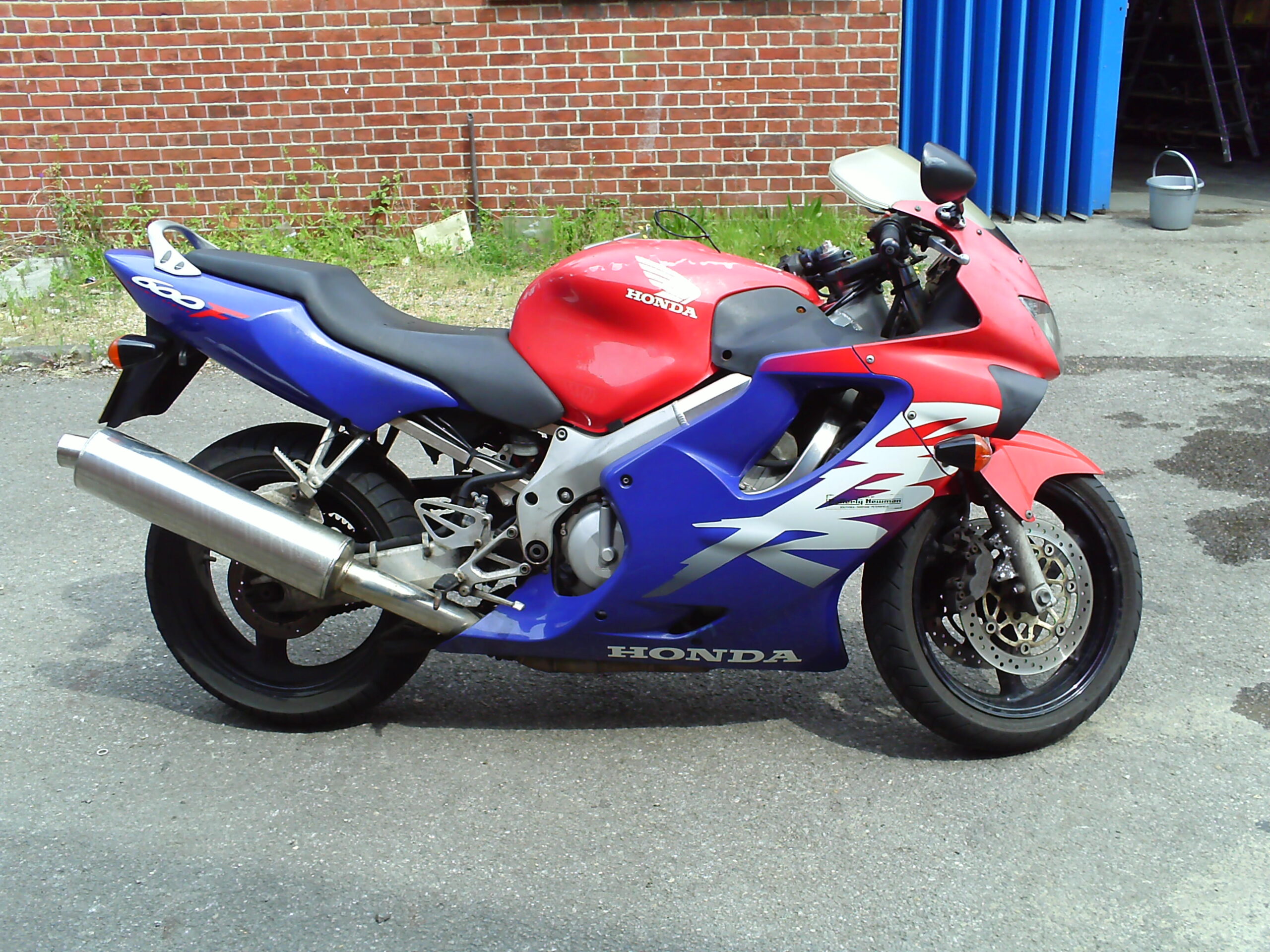
Is the 1999 Honda CBR600 F4 truly the quintessential sportbike of the 1990s—a golden standard in a decade teeming with iconic motorcycles—or does it simply flirt with greatness without fully sealing the deal? This question lingers in the minds of enthusiasts and collectors alike, prompting an exploration deep into the heart of what made this machine both celebrated and, at times, debated. To understand whether the CBR600 F4 is the paragon of 90s sportbikes, one must dissect the intricate tapestry of its design, performance, and cultural imprint.
The late 1990s were a crucible of motorcycle innovation. Manufacturers were locked in fierce rivalry to blend speed, agility, and aesthetics into machines that could satisfy riders’ increasing appetite for both track-worthy execution and street-ready poise. Among these contenders, the Honda CBR600 F4 emerged in 1999 as a notable contender, and for good reason. It was not merely a continuation of its F3 predecessor; it came with substantive upgrades that underscored Honda’s commitment to engineering excellence.
At the core of the CBR600 F4 lies its powerplant—a 599cc, inline-four, liquid-cooled engine designed for high-revving excitement. Capable of delivering approximately 100 horsepower at close to 13,500 rpm, it balanced ferocity and finesse. Unlike the blunt-force torque of larger machines, the F4’s engine rewards riders who revel in precision and rpm mastery, pushing the boundaries of what mid-sized sportbikes could offer. The engine note itself is a symphony of mechanical refinement, teasing riders with an eager crescendo as the tachometer needle climbs.
However, the engine’s capabilities are only one facet of the F4’s allure. Honda’s prowess extended into chassis dynamics, where the F4’s aluminum twin-spar frame delivered remarkable rigidity without succumbing to weight penalties. At approximately 410 pounds dry, the bike proved nimble enough to carve through twisty backroads while maintaining stability at higher speeds. One could argue that this balance was crucial, enabling both weekend warriors and seasoned riders to exploit the bike’s full potential without feeling overwhelmed.
Yet, is this equilibrium between power and handling enough to crown the F4 the perfect 90s sportbike? Perhaps not without considering the accompanying ergonomic and technological elements that defined the riding experience. The CBR600 F4 eschewed overly aggressive body positioning for a rider-friendly posture, blending sportiness with comfort. This allowed for longer rides without the debilitating fatigue often associated with supersport motorcycles. The dual halo headlights and aerodynamic fairings, sleek in their execution, contributed to both style and function, reducing drag while amplifying the bike’s aerodynamic presence.
Technologically, the 1999 model incorporated innovations such as inverted front forks—an advanced suspension choice at the time—increasing front-end stiffness and enhancing feedback. The inclusion of a 6-speed gearbox with tall gearing facilitated spirited runs on open highways and responsive gear transitions in urban environments. The braking system, comprising twin 296mm discs upfront with Nissin calipers, instilled confidence under hard braking, reinforcing safety without compromising sportiness. It was this holistic approach that suggested Honda was not merely chasing peak power but cultivating an integrated riding ecosystem.
However, no machine is without its critics or limitations. Some detractors pointed to the CBR600 F4’s conservative styling when juxtaposed against flashier rivals that pushed more avant-garde designs. While the F4 favored subtlety and classic lines, this sometimes translated into a perceived lack of street presence. Moreover, its suspension—though advanced—was occasionally dubbed less forgiving on rougher pavements, hinting at the compromises inherent in tuning a bike that straddles sporty intent and usability.
Furthermore, the potential challenge to the F4’s “perfect” status comes from its contemporaries. The Yamaha YZF-R6, introduced shortly after, was celebrated for a lighter chassis and razor-sharp handling, quickly becoming a darling of sportbike aficionados. Similarly, the Suzuki GSX-R600 pushed boundaries of performance and weight reduction. Compared to these rivals, the Honda tended to be seen as a dependable, balanced machine rather than a radical game-changer. This raises the provocative notion: perfection in a sportbike might not solely reside in raw metrics but in how a machine resonates with its audience.
An often-understated facet of the 1999 Honda CBR600 F4 is its cultural and community impact. It was a bike accessible to a wide spectrum of riders, from novices aspiring to own a credible sportbike to seasoned track-day participants. This eclectic appeal created a loyal following—a testament to its versatility and reliable engineering. As a result, the F4 occupies a cherished place in many garages and club gatherings, cherished for its dependable nature and the rich riding experiences it provided.
In retrospect, the 1999 Honda CBR600 F4 embodies the ethos of the 90s sportbike era: a harmonious blend of mechanical craftsmanship, balanced performance, and approachable design. It challenges the notion that perfection must be synonymous with extremity or flashiness. Instead, it proposes a compelling narrative where refinement, consistency, and rider-centric philosophy shape a machine worthy of admiration.
So, can the 1999 Honda CBR600 F4 truly stake a claim as the ultimate 90s sportbike? The answer depends on one’s criteria for perfection. If it’s raw aggression and pioneering design, the F4 may fall short. But if the measure is an enduring balance between power, handling, comfort, and timelessness, the F4 delivers with quiet confidence. Perhaps the real challenge is recognizing that perfection in motorcycling is as diverse and subjective as the riders themselves, and in that spectrum, the Honda CBR600 F4 holds a distinguished, if nuanced, place.