When it comes to the intricate world of engines, a perennial question tantalizes enthusiasts and engineers alike: which is superior, the 2-stroke or the 4-stroke engine? At first glance, the answer might appear straightforward. Yet, beneath the surface lies a fascinating complexity filled with trade-offs, nuances, and specialized applications. Each engine type brings its own symphony of mechanical design, efficiency, and environmental implications, making the choice far from trivial. So, what engine truly reigns supreme, or is the answer more situational—a challenge that demands a deeper dive into their inner workings?
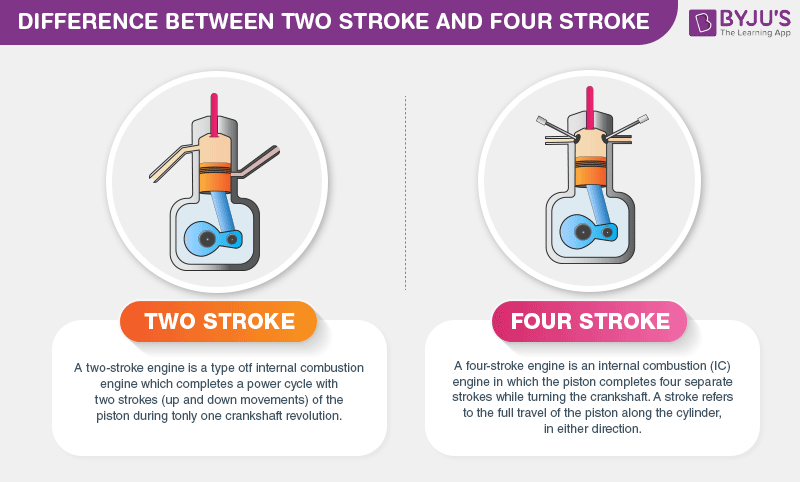
To embark on this journey, it’s crucial to understand the fundamental operational distinctions between the two. The 2-stroke engine completes a power cycle in just two strokes of the piston during a single revolution of the crankshaft. By contrast, the 4-stroke engine achieves the power cycle over four distinct strokes spanning two revolutions. This fundamental divergence influences nearly every aspect of their functionality and application. The brevity of the 2-stroke’s cycle facilitates a more immediate, aggressive power delivery, whereas the 4-stroke’s longer cycle lends itself toward smoother and steadier performance.
Performance is often the battleground where these engines stake their claims. The 2-stroke engine boasts an impressive power-to-weight ratio. Since it produces a power stroke every revolution, its capability to deliver rapid bursts of power makes it a favorite in high-revving applications such as motocross bikes, chainsaws, and outboard motors. This immediacy in power translates into nimble responsiveness and thrilling acceleration, often appealing to sport and utility settings demanding agility and lightness.
Conversely, the 4-stroke engine tends to prize refinement and endurance over raw shove. Its two crankshaft revolutions per power cycle might sound sluggish in comparison, but the resulting combustion process is more controlled and complete. This equates to increased fuel efficiency, lower emissions, and a generally more durable engine architecture. These factors align perfectly with automobiles, motorcycles, and lawnmowers where reliability, economy, and environmental compliance are paramount.
One of the quintessential challenges separating these technologies is their environmental impact. The 2-stroke’s design inherently mixes lubricating oil with fuel, leading to a less complete combustion process and higher emission of unburned hydrocarbons. These pollutants contribute to air quality degradation and have made 2-stroke engines the subject of increasing regulatory scrutiny. Advances such as direct fuel injection and improved scavenging systems have mitigated some of these concerns, but environmental advocates often view 4-stroke engines as the cleaner alternative.
Efficiency also plays a pivotal role in this comparison. While 2-stroke engines capitalize on their rapid power cycles for explosive output, they do so often at the cost of fuel economy. The overlapping intake and exhaust phases can cause fuel to escape unused, a phenomenon known as scavenging loss. Meanwhile, the 4-stroke’s meticulous separation of intake, compression, power, and exhaust strokes results in more complete combustion. This delineation ensures better fuel utilization, allowing 4-stroke engines to punch above their weight in economy.
Maintenance and longevity add another dimension to this spirited debate. Typically, 2-stroke engines run hotter and endure greater mechanical stress due to their rapid cycling and fouling tendencies. Their simplicity, however, makes them relatively easy to repair and lighter to carry around. Replacement of parts is generally straightforward, but the frequency of maintenance is noticeably higher. On the other hand, 4-stroke engines, with their more complex valve systems and components, require a different maintenance regimen. Their robustness and smoother operation often translate to longer service intervals and extended engine life, which many users find to be economically advantageous over time.
Sound and vibration patterns should not be neglected either when selecting an engine. The raucous burble of a 2-stroke engine evokes a visceral connection to raw power and excitement, often tantalizing riders and users seeking an emotive mechanical experience. However, this noise level can be a double-edged sword, potentially limiting use in noise-sensitive environments. The 4-stroke engine, by virtue of its balanced cycles, produces a more subdued, mellifluous tone, often described as “smoother” and more refined—qualities prized in passenger vehicles and light machinery.
One must also consider versatility and application when determining which engine is ‘better.’ The adaptability of 2-stroke engines to function optimally in environments where weight and rapid power delivery are critical continues to maintain their stronghold in niche markets. In contrast, 4-stroke engines dominate sectors requiring longevity, efficiency, and strict compliance with regulatory norms—be it on highways, farms, or recreational terrains.
In the realm of innovation, both engine types are undergoing evolutionary strides. Emerging technologies are pushing the boundaries of traditional designs. Fuel injection systems, improved materials, and electronic controls have minimized emissions and boosted efficiencies across the board. Hybrid approaches and alternative fuels promise further reinvention of these engine archetypes, perhaps blurring the lines of the 2-stroke versus 4-stroke dichotomy even more in the future.
Ultimately, the question of which engine type is better does not yield a one-size-fits-all answer. Instead, it presents a multifaceted puzzle where performance, efficiency, environmental impact, maintenance, sound, and contextual usage all weigh heavily. For adrenaline-fueled, lightweight power, the 2-stroke engine remains compelling. For consistent reliability, cleaner operation, and enduring service, the 4-stroke engine stands as a formidable choice.
Perhaps the real challenge lies not in declaring a victor but in understanding where each engine excels and embracing their complementary roles. After all, mechanical ingenuity thrives not in absolutes but in the artful balance of competing priorities. So, when faced with the question of which engine is better, consider not just the horsepower and strokes, but the broader narrative each tells—a story of invention, adaptation, and purpose tailored to the diverse tapestry of human endeavor.