When the early 2000s heralded a new era for liter-class sportbikes, a triumvirate emerged that continues to captivate enthusiasts and collectors alike: the 2001 Suzuki GSX-R1000, the Yamaha YZF-R1, and the Honda CBR929RR. These machines weren’t just motorcycles; they were manifestations of innovation, engineering prowess, and the relentless pursuit of speed. To the casual observer, comparing these three titans might seem straightforward — straightforward lines on a spec sheet, numerical horsepower, or top speed figures. Yet, this common observation belies a much deeper fascination that lies beneath: why do these specific models command such enduring respect and fascination even decades after their release? Unpacking their performance nuances offers insight not just into raw metrics but into the intricate dance of design philosophy and rider experience.
The 2001 Suzuki GSX-R1000 arrived as a game-changer, thrusting Suzuki back into the sportbike limelight with vigor. It bore a robust 999cc inline-four engine, showcasing Suzuki’s innovative approach toward balancing power and manageability. Producing just over 150 horsepower in a relatively slim chassis, the GSX-R1000 was all about delivering explosive acceleration combined with striking agility. Beneath the surface, its engine utilized a blend of lightweight components and a refined DOHC configuration to maintain high revs without sacrificing reliability—a quintessential trait that distinguished it from many contemporaries who prioritized outright power at the expense of drivability.
Speed, however, cannot live in isolation. The GSX-R1000’s chassis was furnished with Suzuki’s dual-spar aluminum frame, an engineering marvel that optimized rigidity while maintaining featherlight handling characteristics. The bike felt surgical on corners, allowing riders to carve through sweeping bends with precision. This combination of brawn and finesse epitomized Suzuki’s philosophy: delivering a motorcycle that was not just fast in a straight line but dynamic and communicative through every twist of asphalt.
Crossing the garage into Yamaha’s camp, the 2001 YZF-R1 carved out its own slice of the limelight with a revolutionary approach. Unlike its contemporaries, the R1 was compact and notably lightweight, with a displacement of 998cc that delivered a slightly lower horsepower than the Suzuki yet compensated with an emphasis on chassis balance and mass centralization. Yamaha’s engineers employed a new, compact crossplane crankshaft design—a nuance that fostered a unique torque delivery pattern and elevated rider feel significantly. The inherent smoothness of power and linear acceleration made the R1 one of the most approachable liter-class motorcycles in raw performance terms.
The R1’s chassis innovation was equally remarkable. Its aluminum twin-spar frame was meticulously designed to centralize weight, allowing the rider to feel as if part of the machine rather than atop it. This synergy resulted in razor-sharp steering feedback and an uncanny ability to maintain stability under demanding cornering forces. Beyond raw numbers, the R1’s brilliance lay in its harmonization of engine character and chassis dynamics, melding speed with rider confidence and control.
Meanwhile, Honda’s CBR929RR was often overshadowed in mainstream discussion but arguably shared the intimacy of engineering finesse with the best of them. Released in 2000, the CBR929RR carried over and improved upon the legendary lineage of Honda’s Fireblade series. Powered by a 929cc inline-four, it produced slightly less horsepower than the GSX-R1000 and R1 but focused intensely on balance and real-world usability. It featured a compact, highly rigid frame and a low center of gravity that fostered stability while allowing the rider to execute quick direction changes with fluidity.
Honda’s hallmark in this motorcycle was the seamless integration of its engine and chassis, paired with sophisticated suspension components. The CBR929RR was often considered the “rider’s bike,” in that it placed a premium on delivering accessible power that could be exploited fully by skilled riders in both everyday street riding and the racetrack environment. Its less aggressive approach to outright horsepower paradoxically enriched the riding experience by harmonizing with Honda’s “Total Control” philosophy that emphasized predictability, safety, and confidence.
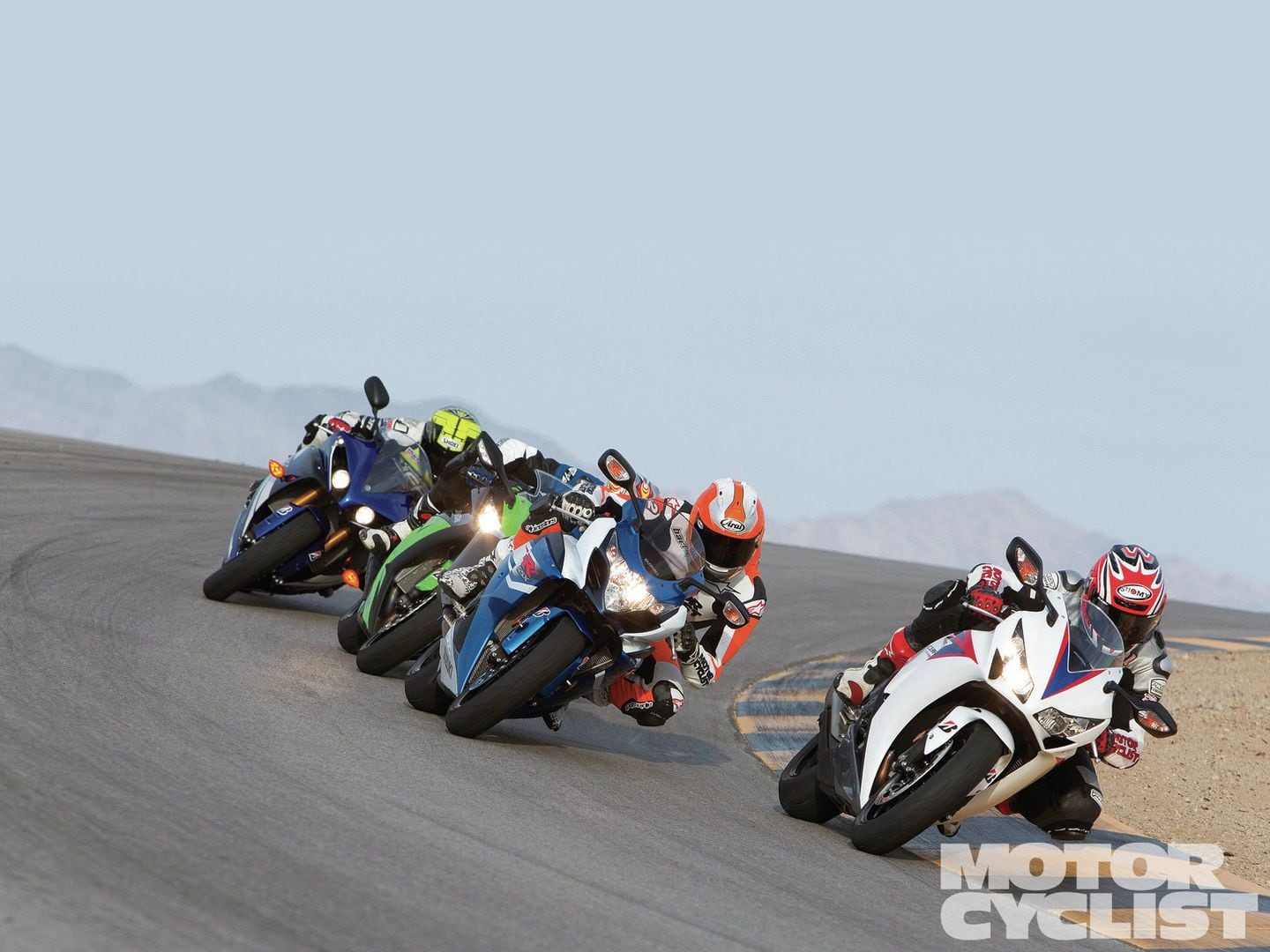
When juxtaposed, the question of “Which is fastest?” transcends simple numerical rivalry. On paper, the 2001 GSX-R1000 might seem to lead with its peak horsepower, boasting an advantage in raw acceleration and top-end speed. However, the Yamaha R1’s lighter weight and superior chassis balance often result in quicker lap times on tight, technical circuits, as it capitalizes on cornering speed and stability rather than brute force. The Honda CBR929RR, despite a slight deficit in outright power, often matches or exceeds its rivals in real-world spirited riding environments due to its composure and usable power band without inducing rider fatigue.
Indeed, the fascination with these motorcycles is wrapped in the subtext of their different approaches to speed. The GSX-R1000 is a raw, visceral beast that rewards aggressive riding styles, appealing to those who seek to master its potent engine. The R1 embodies a synthesis of precision engineering and rider feedback, alluring aficionados who prize harmony over sheer force. The CBR929RR offers a compelling package for those who value balance, finesse, and confidence above all. These distinctions hint at a broader narrative: speed is not merely a measure of acceleration or top velocity but a complex interplay of human-machine interaction, engineering philosophies, and even psychological engagement.
Such models also embody a period when motorcycle manufacturers were rapidly evolving, experimenting with materials, electronics, and aerodynamics, all in pursuit of the ever-elusive perfect race bike that could be ridden legally on public roads. These machines crystallize the spirit of that era, where performance was no longer just a metric but an art form.
In considering these iconic 2001 sportbikes, it becomes clear that their enduring appeal stems from more than empirical speed comparisons. They challenge riders to appreciate subtle differences and celebrate the diversity of engineering genius. Whether hacking through a tight carousel on a racetrack or roaring down an open stretch of highway, each bike offers a unique dialogue between man and machine.
Ultimately, the debate over which motorcycle is the fastest in the 2001 GSX-R1000, R1, and CBR929RR trio serves as a prism through which to explore deeper truths about speed, control, and rider affinity. It reminds us that fascination with motorcycles is never solely about statistics but about the intoxicating, ineffable thrill of mastery and freedom they impart. For many, this fascination endures not due to a definitive winner but because each bike tells a different story—one of ambition, innovation, and the eternal quest for speed refined by skill.