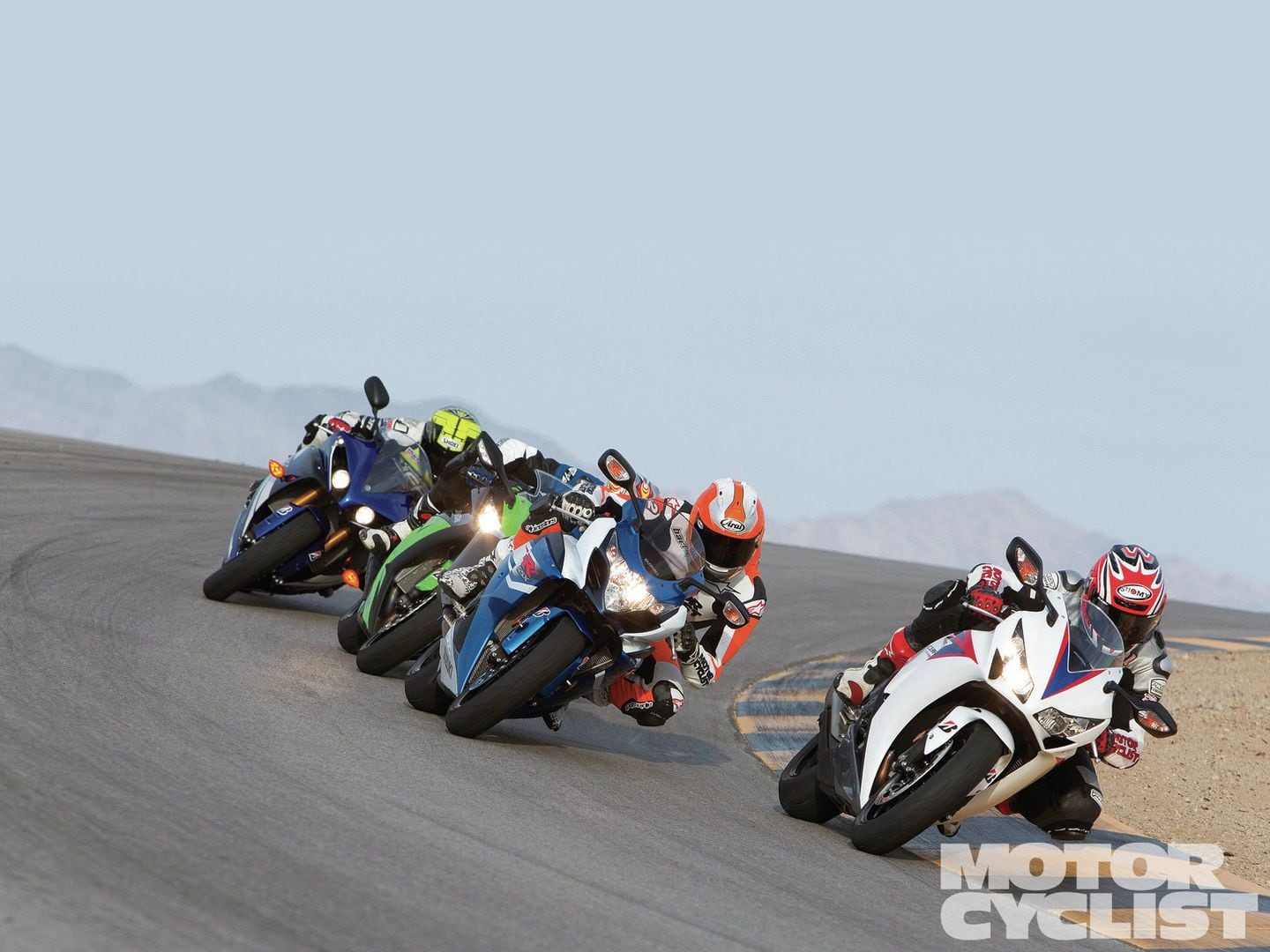
The year 2006 marked a pivotal moment in the realm of superbikes—a year where engineering brilliance clashed headlong with raw mechanical prowess. Among the titans of this era stood three iconic motorcycles: the Honda CBR1000RR, the Suzuki GSX-R1000, and the Yamaha YZF-R1. Each machine, a marvel of design and power, vied not only for supremacy on the tarmac but also for the hearts of enthusiasts longing for that perfect synthesis of speed, agility, and technological innovation. This enthralling trio redefined the very essence of superbike competition, promising a shift in how performance was perceived and delivered.
At first glance, the Honda CBR1000RR could be mistaken for just another superbike; however, its essence was far more profound. Honda embarked on a quest to fuse lightweight construction with razor-sharp handling. Their mantra—”Total Control”—was realized through a chassis that balanced rigidity and suppleness in a way that invited riders to push boundaries without hesitation. The 2006 iteration housed a 998cc inline-four engine, boasting a smooth power delivery that eschewed brute force in favor of a refined yet potent rush. Its horsepower, hovering around 164 hp, was complemented by an engineering focus on mid-range torque and stability, rather than peak output alone.
Conversely, the Suzuki GSX-R1000 entered the fray as a gauntlet thrown down to its rivals. Known affectionately as the “Gixxer,” this machine was a celebration of aggression and technological daring. The 2006 model embraced Suzuki’s latest innovations, featuring titanium valves and a lightweight frame that shaved precious pounds from the overall mass. With approximately 166 hp unleashed from its 999cc engine, the GSX-R1000 was a powerhouse molded for the racetrack. What truly distinguished it was its razor-edge agility and track-focused suspension setup, creating a steely nerve capable of precise cornering and explosive acceleration. The GSX-R was a clarion call to riders seeking a no-compromise superbike that thrived on commitment and sporty bravado.
The Yamaha YZF-R1, often regarded as the wildcard among this trinity, brought something altogether different to the contest. Its engine, similar in displacement at 998cc, was celebrated for its high-revving character and unique crossplane crankshaft design—a feature that bestowed it with a distinctive torque delivery and an addictive exhaust note. Producing around 174 hp, it was the most powerful of the three, enticing thrill-seekers with sheer velocity and a visceral connection to the road. The R1’s chassis and ergonomics co-opted a race-derived mindset but maintained a surprising level of everyday rideability. This duality made it enigmatic—a superbike that could dominate on the track yet remain approachable on the street, challenging preconceived notions of what a liter-class machine could embody.
Beyond raw specifications, these motorcycles embodied divergent philosophies in engineering and rider engagement. The Honda CBR1000RR represented harmonic balance, where the sum exceeded its parts through immaculate control and a rider-centric design. The Suzuki GSX-R1000 was unyielding, a lean and aggressive force that rewarded boldness with uncompromised performance. Meanwhile, the Yamaha YZF-R1 was an auteur’s canvas, blending cutting-edge technology with an emotional resonance that transcended pure mechanics.
One could argue that the 2006 superbike showdown was not just a technical race but a battle of riding experiences. The CBR’s smoothness and stability beckoned those whose aspirations centered around mastery and finesse. In contrast, the GSX-R’s ferocity demanded a rider’s full commitment, offering thrilling rewards to those willing to dance on the edge of control. The YZF-R1’s intoxicating power delivery and sonic insinuation invited an intimacy rare in motorcycles, crafting a unique dialogue between man and machine.
Handling dynamics further deepened this trilogy’s complexity. The Honda employed a meticulously engineered aluminum frame and Pro-Link rear suspension, achieving a balance that made it both agile and planted. The Suzuki utilized an updated twin-spar frame with an aggressive rake and trail geometry favoring rapid turn-in and precision. Yamaha’s innovative Deltabox frame resisted flex while the suspension tuned the chassis to accommodate both aggressive cornering and stable high-speed runs. Each superbike’s solution underscored a distinct approach to the eternal quest for the perfect corner, revealing subtle nuances in rider feedback and confidence.
Technological advancements also played a decisive role in shaping the 2006 landscape. Honda’s commitment to electronic fuel injection and enhanced ignition control allowed the CBR to harness its power cleanly, optimizing throttle response and fuel efficiency. Suzuki integrated lightweight materials in vital components, pushing the envelope in weight reduction and structural integrity. Yamaha’s implementation of the crossplane crankshaft was revolutionary—a design that mimicked the firing order of a V4 engine, which reduced inertial torque fluctuations and improved traction. These innovations did more than improve numbers on paper; they altered the tactile experience of riding, creating machines that felt more alive, more communicative, and more connected.
Examining the broader impact, this superbike confrontation in 2006 influenced subsequent motorcycle development. Manufacturers worldwide took note of the virtues celebrated by their rivals—balancing power with control, integrating advanced materials and electronics, and crafting distinctive riding experiences. This triad of motorcycles, each with its champions and critics, collectively pushed the superlative standards that would define superbikes for years to come.
The legacy of the 2006 battle remains potent for aficionados and casual riders alike. It challenges enthusiasts to reconsider what defines the ultimate superbike—not merely raw power or top speed, but a confluence of engineering ingenuity, rider interaction, and emotional engagement. The Honda CBR1000RR, Suzuki GSX-R1000, and Yamaha YZF-R1 are not merely motorcycles; they are embodiments of divergent paths toward a common pinnacle of motorcycling excellence.
In an age where hyper-advanced electronics and towering horsepower dominate headlines, recalling this seminal confrontation offers a grounding perspective. It invites curiosity and admiration for a time when mechanical character, dynamic charisma, and thoughtful design coalesced into unforgettable machines. The 2006 superbike battle endures not just as a contest of metal and speed, but as a testament to the enduring quest for perfection on two wheels.