The gleam of a mirror-finished aluminum chopper is not merely a reflection—it is a declaration. It whispers tales of meticulous craftsmanship, of countless hours spent coaxing light into submission, of a surface so smooth it seems to defy the very laws of physics. To transform raw aluminum into a mirror is to sculpt silence into brilliance, to turn the mundane into the extraordinary. This is not just polishing; it is alchemy. And when applied to a custom chopper, it becomes a statement—a rolling testament to the marriage of artistry and engineering.
The Allure of the Mirror: Why a Mirror Finish Elevates Your Chopper
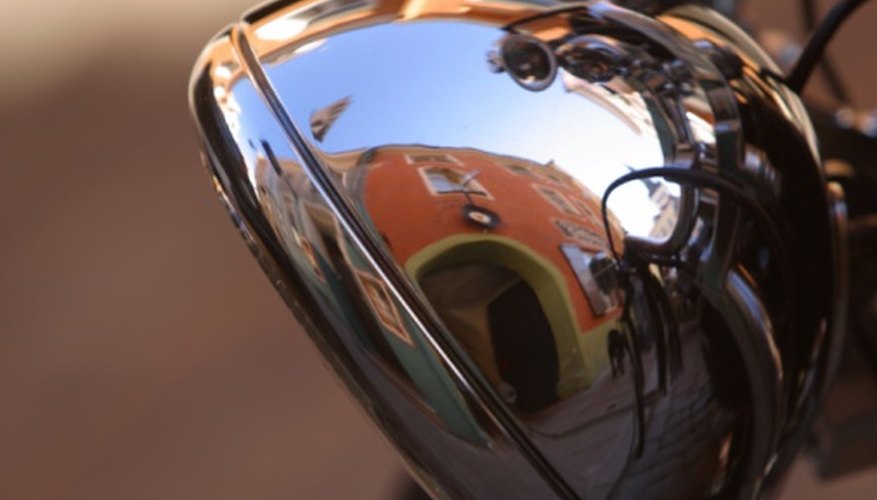
Imagine a chopper that doesn’t just move through space but seems to dissolve into it, its aluminum surfaces so reflective they act as portals to another world. A mirror finish does more than catch the eye; it ensnares the soul. It transforms a machine into a moving sculpture, a kinetic marvel that reflects not just the world around it but the very essence of speed and freedom. The appeal lies in its paradox: a surface so flawless it appears untouchable, yet so inviting it begs to be admired from every angle.
Consider the way light dances across a mirror-polished rim or frame. It doesn’t just bounce—it pirouettes, scattering in a thousand crystalline shards that play across the metal like a symphony. This is the magic of a mirror finish: it turns a chopper into a canvas for light itself, a rolling kaleidoscope that shifts with every movement. For the rider, it’s a silent applause, a nod to the craftsmanship that went into creating something so breathtaking.
The Alchemy of Aluminum: Understanding the Metal’s Secret Soul
Aluminum is a metal of contradictions. Lightweight yet strong, soft yet resilient, it bends to the will of the polisher with a malleability that feels almost alive. Its surface, when untouched, is a blank slate—a dull, unassuming canvas waiting for transformation. But beneath that unpretentious exterior lies a secret: aluminum is a metal that remembers. It retains the scars of its creation, the microscopic imperfections that, when polished to a mirror, become invisible, erased by the relentless friction of abrasives and the patient hand of the artist.
To work with aluminum is to engage in a dialogue. The metal responds to pressure, to heat, to the delicate touch of a cloth or the abrasive grit of sandpaper. It yields, but only to those who understand its language. A mirror finish is not achieved by force alone; it is coaxed, nurtured, and polished into existence through a dance of patience and precision. The result? A surface that doesn’t just reflect light—it becomes a mirror to the soul of the chopper itself.
The Tools of the Trade: Equipping Yourself for the Quest
Before the first stroke is made, the workshop must be a temple of readiness. The tools you choose are not mere instruments; they are extensions of your intent. A dual-action polisher, for instance, is not just a machine—it is a conductor, orchestrating the symphony of abrasives and compounds to coax the aluminum into submission. Choose wisely: a tool that is too aggressive will mar the surface; one that is too gentle will leave the job half-done.
Gather your arsenal: microfiber cloths that feel like clouds against the metal, polishing compounds that range from coarse to jeweler-like fineness, and sandpaper that starts rough but ends as smooth as a whisper. Don’t forget the safety gear—a respirator to ward off the metallic dust, gloves to protect your hands from the relentless grind, and goggles to shield your vision from stray particles. This is not a task for the half-hearted; it is a ritual, and every tool has its place in the pantheon of preparation.

The Ritual of Roughing: Sanding Down the Canvas
The journey to a mirror finish begins not with polish, but with erasure. Every imperfection, every scratch, every blemish must be sanded away until the aluminum surrenders its rough edges. Start with coarse-grit sandpaper—80 or 120 grit—to level the playing field. The goal here is not finesse, but brute force. Sand in straight lines, then diagonally, then straight again, ensuring you cover every inch of the surface. The metal will resist at first, but with each pass, it will yield, its surface growing smoother, more compliant.
Progress to finer grits—220, then 400, then 600—each step a refinement, a peeling back of layers to reveal the true nature of the aluminum beneath. The sandpaper becomes a scalpel, slicing away the old to make way for the new. By the time you reach 1000 grit, the surface should feel silky to the touch, a precursor to the mirror that awaits. This is where the real work begins: the transition from rough to refined, from dull to dazzling.
The Dance of Compounds: Polishing to Perfection
Now, the stage is set. The aluminum is smooth, but not yet reflective. Enter the compounds: the coarse compound to level, the medium to refine, the fine to dazzle. Apply the coarse compound with a dual-action polisher, letting the machine do the work. The pad should glide effortlessly, the compound spreading like butter over warm toast. Watch as the surface begins to glow, the scratches fading into oblivion. This is the moment where the chopper starts to come alive, its aluminum skin beginning to shimmer with potential.
Switch to the medium compound, reducing the speed of the polisher. The goal here is to refine the sheen, to coax out a luster that is almost there but not quite. The aluminum should now reflect light in a way that is soft, almost ethereal. Finally, the fine compound—a jeweler’s touch. This is where the magic happens. The polisher moves in slow, deliberate circles, the compound melting into the metal, the surface transforming from lustrous to luminous. The reflection sharpens. The chopper is no longer just a machine; it is a mirror.
The Final Flourish: Sealing the Brilliance
A mirror finish is not static; it is a fleeting moment of perfection that must be preserved. Without protection, the aluminum will tarnish, its brilliance dulled by the elements. Enter the sealant—a guardian of the gleam. Choose a high-quality carnauba wax or a synthetic sealant, and apply it with the same reverence you gave to the polishing. The wax should be buffed to a haze, then polished to a shine, creating a barrier that guards against oxidation and grime.
For those seeking the ultimate in durability, consider a ceramic coating. This is not just a sealant; it is an armor, a molecular shield that repels water, dirt, and the ravages of time. The application is meticulous, the curing process patient, but the result is worth the wait: a surface so resilient it seems invincible, a mirror finish that endures as long as the chopper itself.
The Symphony of Reflection: Admiring Your Masterpiece
Stand back. Breathe. The chopper is no longer just a machine; it is a mirror to your skill, your patience, your passion. Run your fingers over the surface—it should feel like glass, cool and unyielding. Look at it from every angle, watching as the reflections shift and dance. This is the moment of truth: the aluminum has been transformed, not just polished, but reborn. It is a testament to what happens when art and engineering collide.
And then, the ride. The first time you take the chopper out, the world will see it too. The sunlight will catch the polished surfaces, scattering prisms of light across the pavement. Other riders will slow down, eyes widening in admiration. Strangers will pause, drawn in by the gleam. This is the power of a mirror finish—not just to reflect the world, but to command it. Your chopper is no longer just a mode of transport; it is a rolling masterpiece, a beacon of brilliance on two wheels.