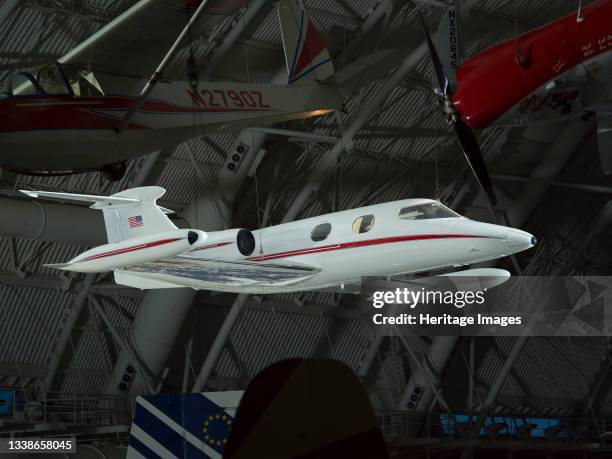
In the annals of aviation lore, few stories captivate the imagination quite like the audacious tale of Lear OCC’s jet-powered motorcycle—a fusion of raw power and mechanical ingenuity that defied convention. This wasn’t just another engineering marvel; it was a rebellion against the static, a testament to the unbridled spirit of innovation. Picture, if you will, the thunderous roar of a jet engine strapped to a two-wheeled chassis, hurtling down a runway at speeds that blur the line between motorcycle and aircraft. The Lear OCC episode isn’t merely a footnote in history; it’s a symphony of chaos and precision, where every bolt, every turbine blade, and every daring test pilot’s heartbeat played a role in rewriting the rules of what was possible.
The Genesis: A Maverick’s Vision Takes Flight
The story begins in the late 20th century, when the Learjet brand was already synonymous with speed and luxury in the skies. Yet, within the halls of Lear OCC—a division of Learjet dedicated to experimental projects—engineers and designers harbored a different obsession. They weren’t content with dominating the stratosphere; they wanted to conquer the asphalt jungle. The idea of a jet-powered motorcycle emerged from a cocktail of ambition and frustration, a desire to push the boundaries of vehicular performance beyond the confines of traditional engineering. This was no mere hobbyist’s dream; it was a full-throttle assault on the status quo, where the only limit was the speed of sound.
The team at Lear OCC faced skepticism at every turn. Critics dismissed the project as a stunt, a reckless dalliance with physics that would likely end in disaster. But the engineers were undeterred. They saw potential in the chaos—a motorcycle that could outrun a fighter jet on the ground, a machine that blurred the line between land and sky. The project was christened with a name that echoed its dual nature: the Learjet OCC Rocket Bike.

Designing the Unthinkable: Engineering a Beast
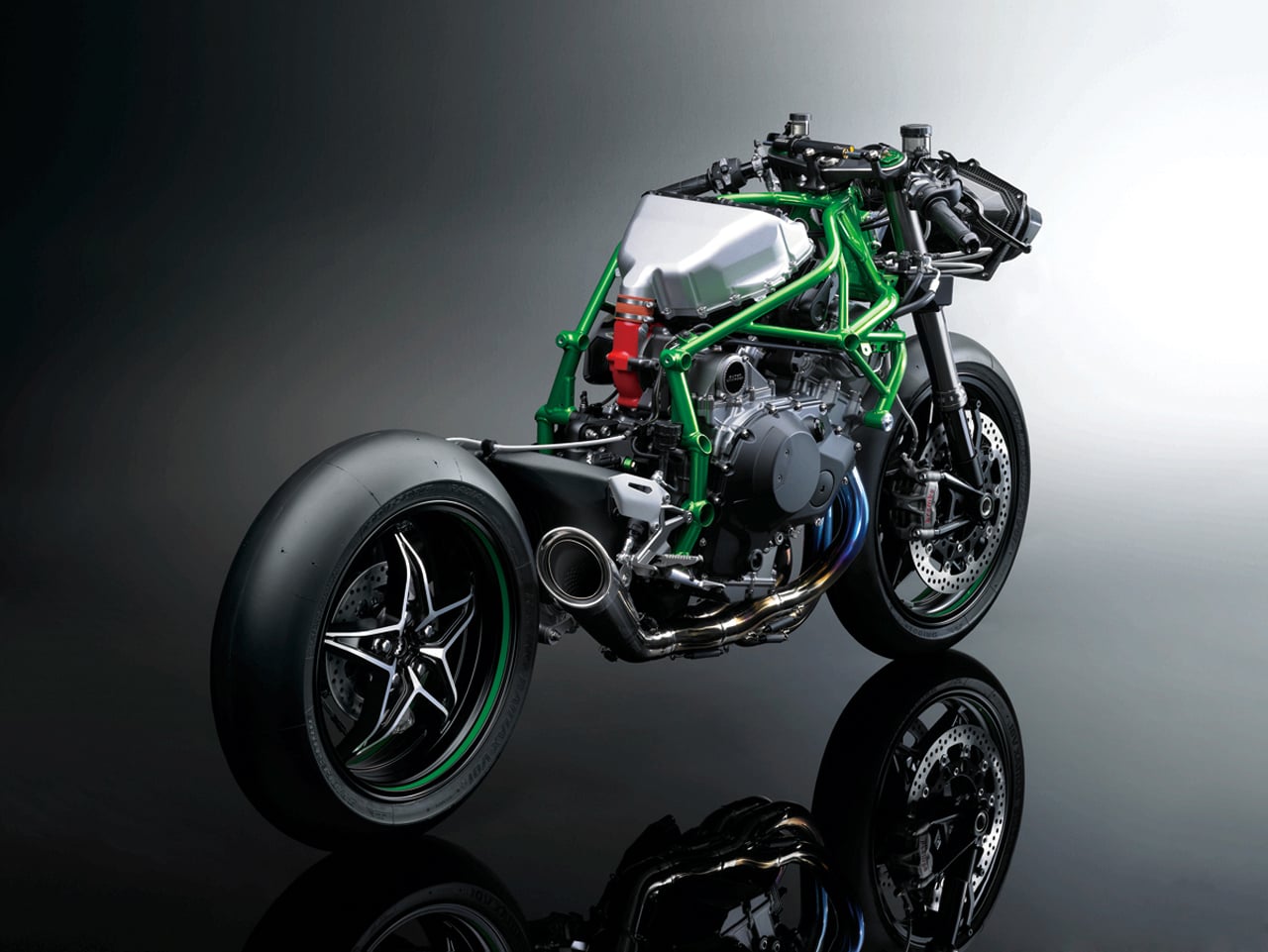
Building a jet-powered motorcycle required more than just bolting a turbine to a frame. It demanded a radical reimagining of every component, from the aerodynamics to the fuel delivery system. The team started with a modified motorcycle chassis, reinforced to withstand the immense forces of a jet engine. The engine itself was a marvel—a compact, afterburner-equipped turbine repurposed from an aircraft, capable of generating thrust that dwarfed even the most powerful piston engines of the era.
But the challenges didn’t end there. The motorcycle’s frame had to be lightweight yet indestructible, its suspension tuned to handle the violent vibrations of a jet engine at full throttle. The fuel system was a labyrinth of high-pressure lines, meticulously engineered to feed the voracious appetite of the turbine without starving it mid-acceleration. Even the rider’s position was rethought—a reclined, aerodynamic stance to minimize drag and maximize control as the bike hurtled toward terminal velocity.
The result was a machine that looked like it had been plucked from the pages of a science fiction novel. Sleek, menacing, and utterly unhinged, the Learjet OCC Rocket Bike was a rolling testament to what happens when engineers refuse to play by the rules. Its design wasn’t just functional; it was a statement—a declaration that innovation thrives at the intersection of madness and method.
The Test Pilots: Daredevils at the Edge of Physics
No project of this magnitude could succeed without a team of fearless test pilots willing to tame the beast. The Lear OCC Rocket Bike demanded pilots who were part daredevil, part engineer, and entirely fearless. These weren’t your average motorcycle racers; they were adrenaline junkies with a deep understanding of aerodynamics and a tolerance for risk that bordered on the supernatural.
The first test runs were conducted in secrecy, away from prying eyes and regulatory scrutiny. The pilots would rev the engine to full power, feeling the raw energy surge through the frame as the bike trembled beneath them. The initial acceleration was like being catapulted forward by an invisible force, the world blurring into streaks of color as the speedometer needle climbed past 200 mph. But with great power came great danger. The bike’s handling was erratic at best, its rear wheel prone to lifting off the ground as the thrust overpowered the chassis. The pilots had to develop an almost symbiotic relationship with the machine, anticipating its every twitch and adjusting their body weight in real-time to maintain control.
One of the most harrowing moments came during a high-speed run when the bike’s front wheel began to oscillate violently—a phenomenon known as “speed wobble.” The pilot fought to stabilize the machine, his hands and feet working in perfect harmony to counteract the oscillations. It was a dance with death, a ballet of reflexes and instinct that ended with the bike skidding to a halt, the pilot’s heart pounding in his chest. The incident underscored the precarious balance between triumph and tragedy that defined every test run.
Breaking Records and Shattering Expectations
Despite the risks, the Learjet OCC Rocket Bike soon became a legend in the world of high-speed land vehicles. In 1994, it shattered the land speed record for a jet-powered motorcycle, clocking an astonishing 303 mph on a dry lake bed in Nevada. The achievement wasn’t just a victory for the team; it was a middle finger to the naysayers who had dismissed the project as folly. The bike’s record stood unchallenged for years, a testament to the power of unbridled innovation.
But the Rocket Bike’s legacy extended beyond mere speed. It inspired a generation of engineers and designers to think outside the box, to question the limitations of conventional vehicles. The project proved that the line between land and air was not as rigid as it seemed, that a machine could be both a motorcycle and an aircraft in spirit. It also sparked a wave of interest in alternative propulsion systems, paving the way for electric and hybrid vehicles that would dominate the automotive landscape decades later.
The Rocket Bike’s record-breaking run wasn’t just a moment of triumph; it was a cultural phenomenon. It captured the imagination of the public, appearing in magazines, documentaries, and even video games. The bike became a symbol of what happens when you dare to dream big, when you refuse to accept the world as it is and instead strive to reshape it in your image.
The Aftermath: A Legacy of Innovation and Inspiration
Though the Learjet OCC Rocket Bike’s active life was relatively short, its impact was anything but. The project served as a catalyst for future innovations, proving that the boundaries of engineering were not fixed but fluid. The lessons learned from the Rocket Bike’s development informed subsequent projects, from high-speed trains to electric hypercars. The team’s willingness to embrace risk and chaos ultimately led to safer, more efficient designs in other fields.
Today, the Rocket Bike resides in a museum, a relic of a time when engineers were unshackled by bureaucracy and driven by pure, unadulterated ambition. It’s a reminder that progress often comes from those who are willing to defy convention, to build machines that don’t just push the envelope but tear it to shreds. The Lear OCC episode is more than a story of speed; it’s a story of human ingenuity, of the relentless pursuit of the impossible.
For those who gaze upon the Rocket Bike today, it’s impossible not to feel a surge of inspiration. It’s a call to arms for the dreamers, the tinkerers, the rebels who refuse to accept the world as it is. The Learjet OCC Rocket Bike wasn’t just a motorcycle; it was a manifesto—a declaration that the future belongs to those who are brave enough to chase it.