Picture this: You’re revving the throttle of your chopper, the engine growling in anticipation, only to be met with a disheartening click—and then, silence. The beast refuses to roar to life. What do you do when your mechanical steed stubbornly refuses to turn over? Before you surrender to the frustration of a dead battery or a faulty solenoid, let’s embark on a diagnostic adventure to uncover the culprit behind your chopper’s stubborn silence.
The Ominous Click: Is It the Solenoid or Something Worse?
The dreaded click is often the first clue that something’s amiss. But is it the solenoid playing tricks, or is there a deeper electrical gremlin lurking in the shadows? Solenoids, those unsung heroes of ignition systems, act as the bridge between your battery’s power and the starter motor’s hunger for energy. When they fail, they either stay silent or protest with a feeble click. But here’s the twist: a clicking solenoid doesn’t always mean it’s the villain. Sometimes, it’s just the messenger of bad news, like a dead battery or corroded connections masquerading as the culprit.
Before you dive into the solenoid’s domain, check the battery’s voltage. A healthy battery should read around 12.6 volts when resting and 13.5–14.5 volts under load. If your multimeter tells a different story, the solenoid’s click might just be the sound of your battery begging for mercy.
The Battery’s Betrayal: A Silent Saboteur
Batteries are the lifeblood of your chopper, but they’re also notorious for fading into oblivion without warning. A weak or dying battery can mimic solenoid failure, leaving you chasing ghosts. Corrosion on the terminals? That’s another silent killer, gnawing away at conductivity like a termite infestation in a wooden fence. Clean those terminals with a wire brush and baking soda solution, then tighten the connections until they’re snug as a bug in a rug.
Still no joy? Try jump-starting your chopper. If it roars to life, you’ve just uncovered the battery as the prime suspect. If not, the mystery deepens, and we must venture further into the electrical underworld.
Wiring Woes: The Tangled Web of Doom
Wiring harnesses are the nervous system of your chopper, transmitting signals with the precision of a Swiss watch. But when wires fray, connectors corrode, or insulation cracks, chaos ensues. A loose or damaged wire can disrupt the solenoid’s signal, leaving you with nothing but a click and a prayer. Trace the wiring from the battery to the solenoid, inspecting each connection for signs of wear or damage. Look for melted insulation, frayed strands, or the telltale greenish corrosion of a neglected terminal.
Pro tip: Use dielectric grease on connections to ward off moisture and corrosion. It’s like giving your wiring a suit of armor against the elements.

The Starter’s Secret Struggle: When the Motor Won’t Play Ball
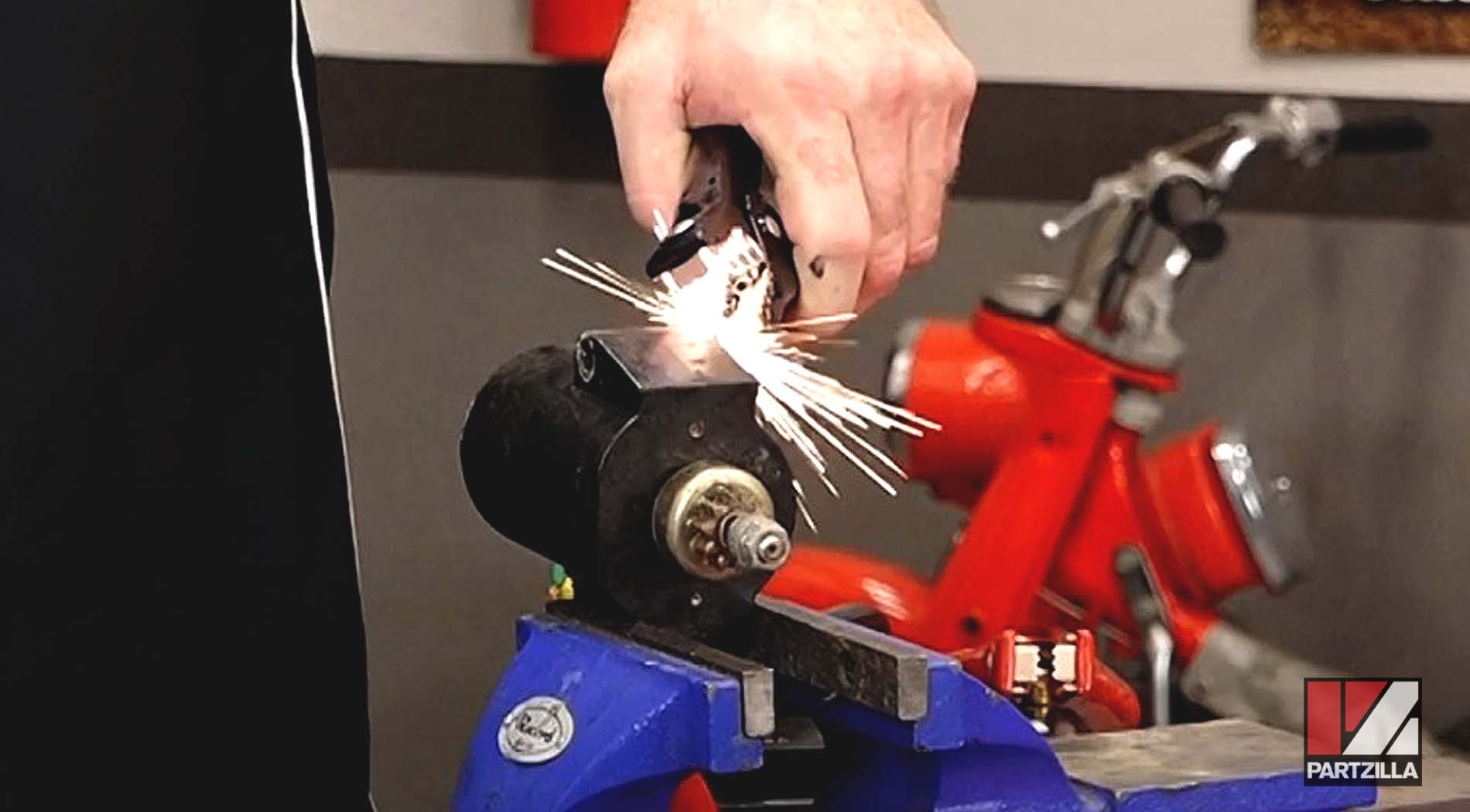
If the solenoid is clicking but the starter motor remains stubbornly silent, the starter itself might be the culprit. Over time, starter motors can wear out, their brushes or windings degrading like an old leather jacket. A quick test? Tap the starter motor lightly with a tool while someone cranks the engine. If it suddenly springs to life, the brushes are likely worn, and replacement is in order. No luck? It’s time to consider a full starter replacement—or perhaps a more sinister electrical gremlin.
Don’t forget to check the starter’s ground connection. A poor ground can starve the motor of the power it needs to turn the engine over. Tighten the ground cable and ensure it’s making solid contact with the frame.
Fuses and Relays: The Gatekeepers of Power
In the labyrinth of your chopper’s electrical system, fuses and relays act as gatekeepers, allowing power to flow only when conditions are right. A blown fuse or a faulty relay can mimic solenoid failure, leaving you scratching your head. Locate the fuse box and inspect the fuses related to the ignition system. Replace any that look burnt or broken. Relays, those small but mighty components, can also fail silently. Swap the suspect relay with a known-good one to see if the problem resolves. If your chopper springs to life, you’ve just dodged a bullet.
The Final Frontier: When All Else Fails
If you’ve checked the battery, wiring, solenoid, starter, and fuses with no resolution, it’s time to consider the unthinkable: a faulty ignition switch or a deeper electrical issue. Ignition switches can wear out over time, their contacts becoming intermittent or failing outright. Test the switch by bypassing it temporarily with a jumper wire. If the chopper starts, the switch is the culprit. If not, you may be facing a more complex issue, like a short circuit or a failing voltage regulator.
At this stage, it’s wise to consult a professional mechanic or dive into the chopper’s service manual for advanced diagnostics. Sometimes, the answer lies in the fine print of electrical schematics, where the devil truly hides in the details.
Troubleshooting a chopper that won’t turn over is a journey of patience and persistence. The click of the solenoid is just the beginning of the story—a story that might lead you through the battery’s betrayal, the wiring’s tangled web, or the starter’s secret struggle. But with a methodical approach and a keen eye for detail, you’ll uncover the culprit and restore your chopper’s roar. So grab your tools, channel your inner detective, and let the diagnostic adventure begin. Your mechanical steed is waiting.