Imagine a chameleon in the realm of motorcycle gear—adaptive, versatile, and ready to transform at a moment’s notice. Modular helmets, sometimes heralded as the Swiss Army knives of head protection, epitomize this very essence of adaptability. The term “180° modular” evokes an image of a helmet that doesn’t simply open, but unfolds, pivoting to reveal an innovative junction where convenience meets safety. But the real question lingers: are modular helmets truly worth embracing, or merely a compromise in the dichotomy between full-face security and the open-air freedom of a flip-up? Exploring this intricate apparatus unveils not only the technology and design behind such helmets but also their unique appeal to the modern rider.
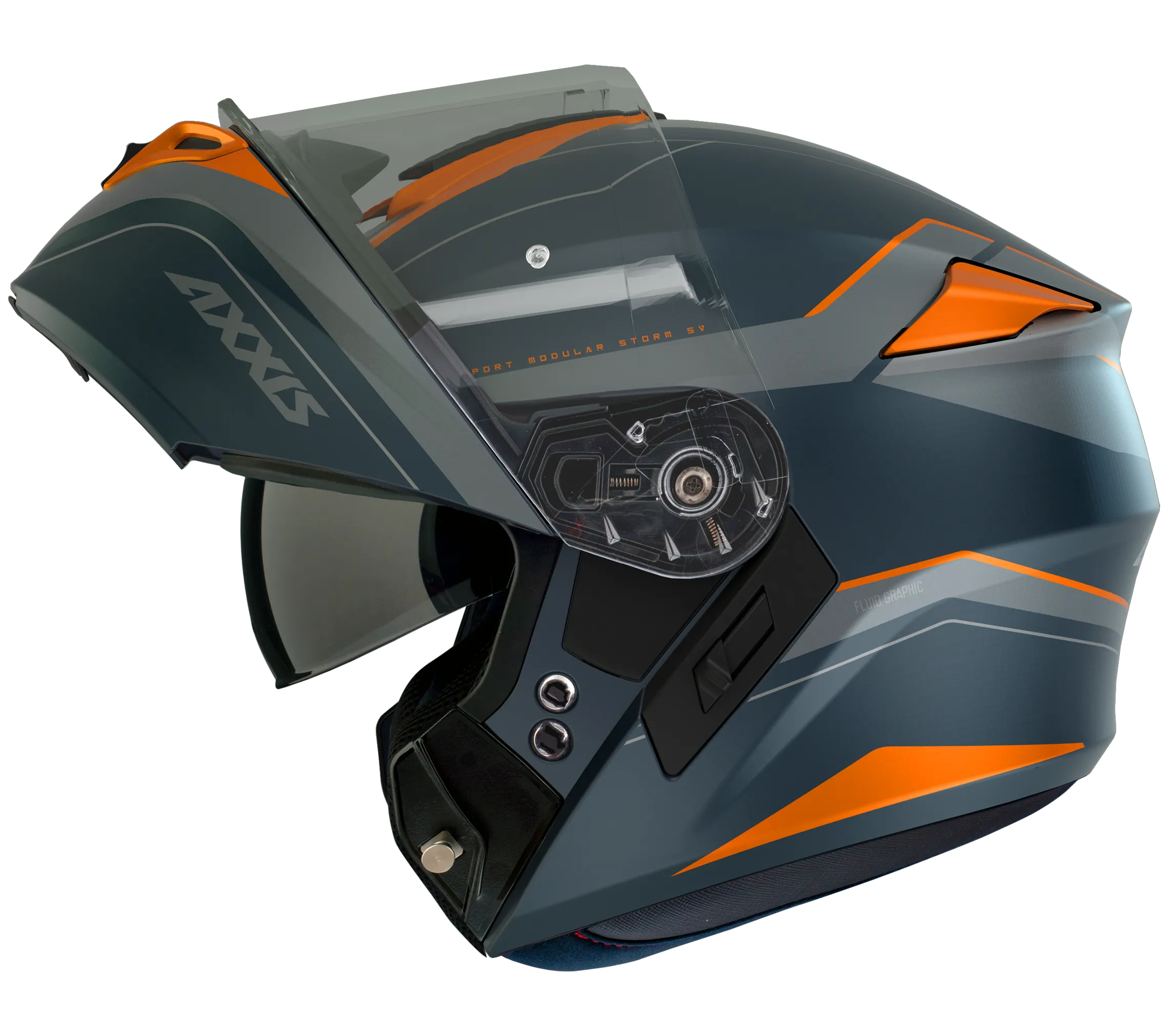
At first glance, a modular helmet may seem like a paradox—a hybrid straddling two worlds. With a hinge mechanism located typically on either side, the front chin bar and visor lift upward, allowing a seamless transition from protective cocoon to open-face accessibility. This 180-degree rotation isn’t a mere gimmick; it’s a manifestation of thoughtful engineering aimed at enhancing ergonomic fluidity. For the urban commuter weaving through traffic or the weekend adventurer pausing at scenic overlooks, the ability to instantly switch helmet configurations is no trivial convenience. It suggests an intimate dialogue between rider and gear, fostering a bond that traditional rigid helmets rarely offer.
Beyond the fold lies an intricate ballet of materials and safety technology. Modern modular helmets are far removed from their earlier iterations, shedding the stereotype of fragility or compromised integrity. Construction often involves advanced composites such as carbon fiber, fiberglass, or polycarbonate blends that strike a delicate equilibrium between robust impact resistance and lightweight comfort. Padding systems further augment protection, employing multi-density foam layers calibrated to absorb and distribute energy with precision. These myriad components coalesce to form a helmet that meets stringent safety certifications, dispelling the myth that modularity entails safety trade-offs.
Yet, the allure of modular helmets transcends their mechanical elegance. Their distinctive appeal is rooted deeply in their chameleonic nature—adapting not only to the physical demands of riding but also to the rider’s lifestyle rhythms. Consider a motorcyclist who navigates long stretches of highway yet frequently makes stops at bustling urban cafes or gas stations. The 180° flip-up front transforms the helmet from a full barrier to a conversational facilitator. Without removing the helmet entirely, the motorcyclist can greet fellow riders, quench thirst, or catch a breath of fresh air, all while maintaining a semblance of security.
This unique appeal extends into notions of personalization and expression. Modular helmets often come adorned with visually striking designs and customizable features such as internal sun visors, ventilation adjustments, and Bluetooth integration. The fusion of form and functionality invites riders to view their helmets not merely as protective apparatuses but as extensions of their persona. The act of flipping up the chin bar is akin to unveiling a mask—revealing individuality beneath the armor.
However, practicality intertwines with the poetic in the modular helmet’s performance dimensions. Ventilation, a critical parameter influencing comfort and rider alertness, is markedly enhanced in modular designs. The ability to open the chin bar invites airflow in a manner unavailable to traditional full-face helmets, mitigating heat buildup during slow rides or stifling summer days. This airflow metamorphosis can invigorate the rider, reducing fatigue and enhancing concentration on the road.
Moreover, the modular helmet’s utility shines in scenarios demanding communication or quick interaction. Emergency responders, tour guides, and riders who frequently engage in conversations find the quick flip-up action invaluable. It eliminates fumbling with straps or the need for complete helmet removal, streamlining exchanges without compromising protection once the helmet is re-secured. This blend of convenience and security often proves decisive in scenarios where split-second timing is pivotal.
Nevertheless, it is essential to articulate potential caveats. The complex hinge mechanisms, while marvels of micro-engineering, introduce points of vulnerability. Repeated use could gradually wear these joints, demanding diligent maintenance and occasional part replacement. Additionally, modular helmets generally carry a slight weight penalty compared to basic full-face helmets, owing to the added hardware. Some riders may perceive this as a minor encumbrance, particularly during aggressive or high-speed riding where every ounce counts.
Noise intrusion is another factor that warrants consideration. The seals around hinge areas can sometimes permit more wind noise to penetrate, which may detract from the riding experience over long durations. However, advancements in sealing technology and materials are steadily narrowing this gap, with many modern modular helmets rivaling full-face helmets in quietness.
Evaluating whether a modular helmet is worth it ultimately distills into a nexus of rider priorities: convenience versus pure performance, versatility versus uncompromising protection, and adaptability versus specialization. For commuters and travelers who prize ease of use and multi-functionality, the modular helmet represents an elegant solution, a tactile expression of flexibility harnessed in a protective shell. Conversely, for riders whose terrain is exclusively high-performance circuits or who demand the unyielding composure of minimalist designs, traditional helmets may still hold sway.
In conclusion, modular helmets with their captivating 180-degree flip mechanism embody more than just innovation; they capture the spirit of modern motorcycling itself—a dance between freedom and safety, individualism and community, pragmatism and style. These helmets offer an intriguing compromise that marries the best aspects of full-face protection with the liberating openness of modular engineering. Like an adaptable companion on the journey, they invite riders to experience the road with newfound ease and interaction, signaling that versatility and security can indeed coexist beneath a single, rotating visor.