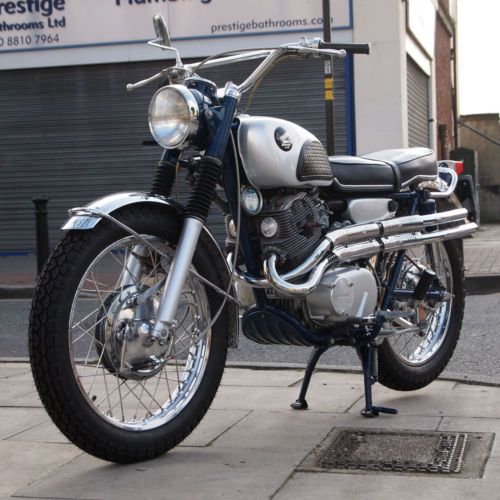
The 1966 Honda Scrambler 305 stands as an iconic testament to a pivotal era in motorcycling, epitomizing a blend of rugged utility and refined engineering. This machine, often celebrated among aficionados of vintage motorcycles, is more than just a retro bike; it is a pioneering artifact that forged the path for dual-sport and off-road motorcycles as we know them today. Its unique mix of functionality, aesthetics, and mechanical ingenuity provides a captivating narrative for enthusiasts and historians alike.
At first glance, the 1966 Honda Scrambler 305 mesmerizes with its classic styling — a robust frame complemented by high-mounted exhaust pipes, knobby tires, and a minimalist yet purposeful design. This design wasn’t mere aesthetics but a conscious effort to craft a motorbike capable of versatile terrain mastery. The Scrambler 305 was Honda’s answer to riders who demanded performance on both asphalt and dirt, a hallmark of the emerging scrambler category that came to define a new riding culture.
The heart of the Scrambler 305 is its air-cooled, four-stroke, parallel-twin engine, which displaces 305cc to deliver a harmonious balance of power and durability. This engine configuration provided smooth throttle response and reliable torque, ideal for the stop-and-go demands of off-road escapades. The twin-cylinder powerplant was meticulously engineered to maintain a lower center of gravity, contributing to enhanced handling especially on rugged trails. Its carbureted induction, combined with a robust dual overhead camshaft design, marked an impressive technological feat for its time, ensuring optimal combustion efficiency and dependable performance.
Suspension technology on the 1966 model embraced a dual-shock rear setup with telescopic front forks, which was revolutionary in incorporating comfort with trail-readiness. These components absorbed the shocks from uneven ground with commendable efficacy, allowing riders to maintain traction and control through rough, unpredictable landscapes. The overall chassis design was lightweight yet sturdy, crafted from high-tensile steel tubing, forging a robust skeleton that could endure the demands of off-road wilderness while maintaining agility on paved roads.
One cannot overlook the Scrambler 305’s innovative approach to braking and wheel construction. Equipped with drum brakes on both the front and rear wheels, it employed a braking system that prioritized reliability and ease of maintenance over the then less-common disc brakes. Its wire-spoked wheels, traditionally favored for their strength and flexible resilience, supported wide trail tires designed for maximum grip across varied surfaces. This combination signified Honda’s deep understanding of the off-road environment, delivering confidence to riders traversing slippery mud, loose gravel, and rocky passages.
The ergonomics of the 1966 Honda Scrambler 305 further stamped its legacy in off-road motorcycling. Designed to accommodate a variety of rider sizes comfortably, it featured an upright riding posture conducive to long rides and improved visibility. The high-mounted handlebars and wide seating position minimized rider fatigue, an important consideration for explorers venturing beyond urban confines. The lightweight yet durable seat, positioned higher than typical road bikes of the era, enhanced maneuverability and control over unpredictable terrains.
In terms of aesthetics, the Scrambler 305 offered an unpretentious charm. The oft-admired color schemes included striking metallic reds, forest greens, and reflective chrome finishes that resisted the dullness of daily use and demanded attention wherever they roamed. The neatly integrated Honda badges symbolized not only the manufacturer’s branding but embodied a promise of quality and innovation—a hallmark that is fervently respected even decades later.
The significance of the 1966 Honda Scrambler 305 extends beyond its mechanical prowess; it cultivated a culture of adventure and freedom, ushering in a new demographic of motorcyclists eager to explore beyond the confines of street riding. As one of the earliest purpose-built scramblers, it laid down a blueprint for the proliferation of versatile motorcycles capable of dual-sport functionality. Its influence permeates through generations, inspiring contemporary scramblers and dual-sport motorcycles from multiple manufacturers.
Maintenance and restorability also add layers to the Scrambler 305’s appeal. Thanks to Honda’s modular design philosophy and widespread parts availability—both then and now—enthusiasts find a relatively accessible pathway to keeping these vintage machines operational. This accessibility, paired with the bike’s straightforward mechanical architecture, continues to make it a favored collector’s item and a staple at vintage motorcycling rallies worldwide.
For anyone delving into the history of motorcycling or simply appreciating the art of design and engineering from the mid-20th century, the 1966 Honda Scrambler 305 offers a rich, immersive experience. It reflects a time when the boundaries between sport, utility, and lifestyle were fluid, and manufacturers were emboldened to innovate boldly. This motorbike is not merely a relic but a vibrant chapter in the evolving narrative of two-wheeled exploration.
Ultimately, the 1966 Honda Scrambler 305 embodies an extraordinary fusion of technological innovation, practical design, and aesthetic appeal. It represents a seminal moment in motorcycling history that championed versatility and ruggedness at a time when such attributes were becoming increasingly essential. Appreciating this machine means embracing a heritage of adventure, engineering excellence, and a pioneering spirit that continues to inspire riders to venture beyond the road less traveled.