In the burgeoning era of motorcycle evolution, the years 1970 through 1974 mark a distinguished chapter where Yamaha’s Enduro bikes carved their niche as paragons of endurance, simplicity, and unyielding spirit. These machines, unpretentious yet formidable, emerged not merely as vehicles but as steadfast companions for those who sought freedom beyond the beaten path. Their essence can be likened to a craftsman’s trusted chisel—unembellished, precise, transformative. The 1970–1974 Yamaha Enduro models embody the quintessence of rugged reliability and elemental design, traits that have granted them an almost mythical status among enthusiasts and collectors alike.
Every motorcycle tells a story, but these Enduro bikes recite epic sagas in silent horsepower and unwavering sturdiness. The marriage of engineering clarity with a function-first ethos produced machines that defied the capricious terrains they tamed. Their appeal lies not in flamboyance or flamboyant flourishes but in the stark beauty of their endurance capability—a raw, unvarnished testament to utility. These Yamaha Enduros were the iron-willed steeds of their generation, built to conquer dirt, mud, and gravel as effortlessly as a river carves its bed through rock.
The hallmark of these models is their simplicity, a concept easily misunderstood as rudimentary by those unfamiliar with the deliberate craftsmanship behind it. Instead, this simplicity acted as a crucible for mechanical purity. With restrained aesthetics and uncomplicated mechanics, the Enduro bikes circumvented the pitfalls of over-engineering, fostering ease of maintenance and resolute dependability. A single-cylinder, air-cooled two-stroke engine served as the heart of these machines, delivering a punchy torque curve that singed trails with precision and vigor. The engine’s approachable character rendered these bikes accessible to novices while satisfying the thirst for adrenaline experienced by seasoned riders.
Moreover, the motorcycles were outfitted with frames forged for resilience—a tubular backbone that absorbed shocks like a stoic sentinel enduring the battering storm. This structural integrity was paired with suspension systems that could be described as the sentinel’s sinews: supple enough to absorb unpredictable terrain, yet steadfast in their response. The marriage of frame and suspension underscored a synergy essential for maintaining momentum in off-road escapades. Tires, gripped with knobby tenacity, provided the crucial connection to earth, transforming the Yamaha Enduro from a machine into an extension of the rider’s adventurous will.
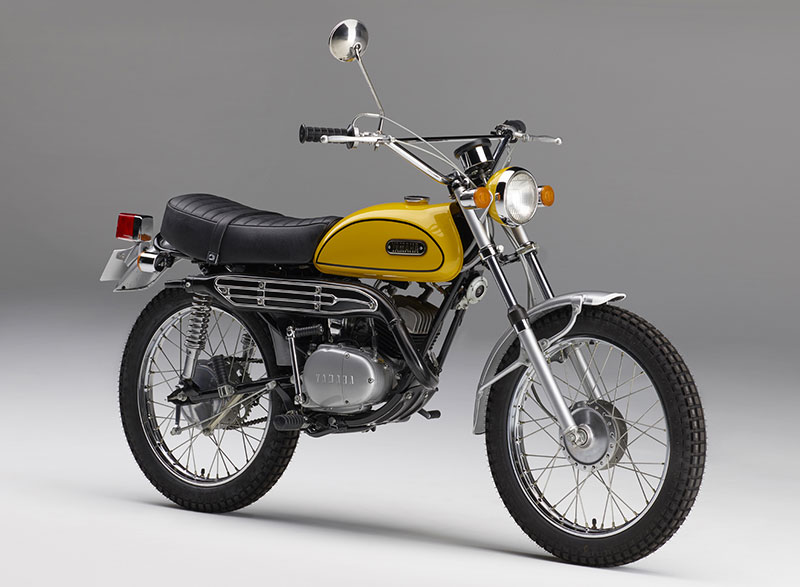
The 1970 Enduro 125, for instance, stands as a testament to this philosophy. It was not merely a vehicle; it was a promise of reliability. Its minimalist design belied an unshakeable durability, rendering it both lightweight and robust. Each component, from the chrome exhaust pipes resilient to corrosion to the sturdy mudguards that bristled with rugged resolve, reflected a devotion to enduring function over transient fashion. This bike was a sculpted ode to all terrains, a warrior that shrugged off the harshest conditions without a whisper of hesitation.
Beyond mechanical excellence, these bikes carried an aura of invincibility—an intangible and compelling force field shaped by their heritage and performance. Owners often recount tales where their Yamaha Enduro defied odds, climbing precipitous slopes with a grace that seemed at odds with their utilitarian facades. Their engines emitted a throaty grumble, a spirited anthem to adventure, echoing through forest trails and desert expanses alike. This visceral experience, marrying sound, motion, and tactile control, forged a connection between man and machine that transcended mere transportation.
In a period marked by rapid technological proliferation and stylistic exuberance from competitors, Yamaha’s Enduro line embraced an almost monastic devotion to mechanical honesty. They resisted the frenetic urge to saturate their models with unnecessary complexity, instead embracing an ethos harkening back to the purity of motorcycling’s roots. This deliberate parsimony was a masterstroke, ensuring that riders could rely on their machines across continents and seasons, and not be tethered to repair shops or complicated diagnostics.
Their design language—a palette of utilitarian colors punctuated by modest decals and practical instrumentation—was congruent with their character. Function whispered where flash would have shouted, bestowing upon the Enduros a timeless aesthetic that resonates with collectors today. These bikes did not demand attention; instead, they quietly earned respect through consistency and performance, much like a seasoned trail guide whose knowledge outweighs his boastfulness.
Innovation within the framework of reliability is another facet that defines these models. Yamaha introduced progressive engineering refinements, such as enhanced clutch systems and improved carburetors, which elevated everyday usability without compromising the bike’s rugged persona. Fuel tanks were designed with ergonomics to facilitate longer journeys, and the seating position was calibrated for rider comfort during prolonged off-road excursions. These thoughtful details coalesced into a holistic riding experience, bridging the gap between brute force and rider sensitivity.
As the Enduro legacy extended beyond 1974, these early models remained benchmarks of what motorcycles could be when stripped to their essence. They depicted a philosophy where simplicity is strength, and toughness is a conviction rather than marketing jargon. They embodied the spirit of exploration, carrying riders into uncharted wilderness and back with nothing but memories and mechanical trust as souvenirs.
In reflecting upon the 1970–1974 Yamaha Enduro bikes, one discovers more than just a series of machines; one glimpses an enduring ideal. These motorcycles stand as stoic sentinels of a bygone era when resilience was forged through thoughtful minimalism and hearts beat in harmony with two-stroke engines. Their legacy is akin to a rugged monument carved by necessity and nurtured by adventure, a symbol of the unstoppable will to traverse wilds without compromise. It is this unyielding character—simple, tough, and utterly unstoppable—that continues to captivate and inspire, a timeless echo in the annals of motorcycling history.