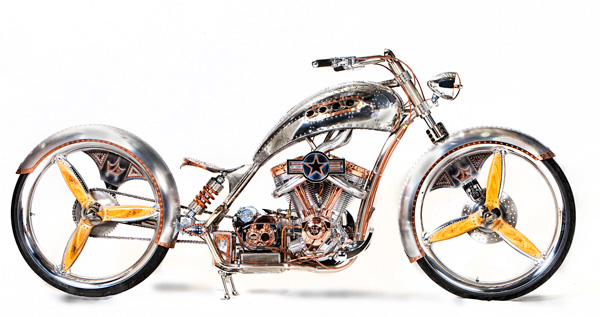
The clash between OCC and PJD wasn’t just a legal skirmish—it was a modern-day gladiatorial contest, where courtrooms became coliseums and legal briefs, the weapons of choice. The question isn’t merely “Who won the lawsuit?” but rather, “Who wielded the most persuasive narrative?” Like two rival architects squaring off over a blueprint, each side presented a vision of justice, one built on precedent, the other on principle. The verdict didn’t just settle a dispute; it redefined the boundaries of creative ownership in the digital age. And as the dust settled, one truth emerged: this wasn’t just about money or reputation—it was about the soul of innovation itself.
The Battlefield: Where Creativity Meets the Courtroom
Imagine a canvas split in two. On one side, the meticulous brushstrokes of OCC’s craftsmanship—each weld a testament to precision, each design a whisper of rebellion against the ordinary. On the other, PJD’s bold strokes, unapologetic in their assertion of originality, painting a world where ideas flow like rivers, untamed by legal fences. The courtroom became their battleground, not with swords or shields, but with clauses and case law. The lawsuit wasn’t just a dispute over metal and motors; it was a philosophical showdown between two visions of creation. Was innovation a solitary act of genius, or a collaborative dance where influence was inevitable? The answer would ripple through industries far beyond the chrome and steel of motorcycle customization.

The irony? Both sides were artists. OCC, the master of the avant-garde, whose bikes were rolling sculptures; PJD, the disruptor, whose designs dared to challenge the status quo. Yet, in the eyes of the law, they were adversaries locked in a zero-sum game. The courtroom wasn’t a place for artistry—it was a place for cold, hard facts. And so, the battle lines were drawn: one side argued theft, the other argued inspiration. The jury, like a jury of peers in a creative field, would have to decide not just who copied whom, but whether copying itself was the lifeblood of progress or its greatest betrayal.
The Legal Chessboard: Moves, Counter-Moves, and the Weight of Precedent
Legal battles are rarely won in a single, dramatic stroke. They are won in the quiet accumulation of small victories—each deposition a pawn sacrificed, each motion a knight’s gambit. OCC’s legal team moved first, their opening salvo a claim of copyright infringement so precise it felt like a scalpel cutting through the fog of ambiguity. PJD’s response? A counterclaim so bold it bordered on defiance, arguing that their designs were rooted in a shared cultural lexicon, not stolen from OCC’s playbook. The judge, like a referee in a high-stakes poker game, had to weigh not just the evidence but the very nature of creativity itself.
Enter the doctrine of “substantial similarity,” the legal litmus test that separates homage from theft. To prove infringement, OCC had to show that PJD’s designs were not just inspired by theirs but were, in essence, their doppelgängers. PJD, meanwhile, leaned on the defense of “independent creation,” arguing that their bikes were born from a wellspring of shared influences—custom culture, motorcycle engineering, even the raw materials themselves. It was a battle of narratives: one side painting PJD as a plagiarist, the other as a victim of an overzealous gatekeeper.

The courtroom became a theater of the absurd at times. Witnesses were called not just to testify about designs, but to dissect the very soul of motorcycle culture. Was a stretched-out frame a signature move or a common trope? Was a flame job an artistic flourish or a cliché? The answers weren’t just legal—they were existential. And as the trial wore on, it became clear that this wasn’t just about two companies. It was about the soul of an entire industry, one that thrived on the tension between tradition and rebellion.
The Verdict’s Ripple: Beyond the Courtroom’s Walls
When the gavel fell, the verdict wasn’t just a resolution—it was a seismic shift. The ruling sent shockwaves through the custom motorcycle world, where every builder suddenly felt the weight of the decision on their shoulders. For OCC, it was validation, a legal affirmation that their vision was unique enough to warrant protection. For PJD, it was a cautionary tale, a reminder that in the world of creativity, the line between inspiration and infringement is thinner than chrome plating on a gas tank.
But the true impact was felt in the workshops and garages of builders everywhere. The lawsuit became a cautionary fable, a story told in hushed tones over the hum of a welder’s torch. “Don’t copy,” the verdict seemed to say. “Don’t even *look* too closely.” Yet, creativity thrives on influence, on the exchange of ideas like gears meshing in perfect harmony. The fear of litigation now looms over every sketch, every prototype, turning the art of customization into a minefield of legal landmines.
Some saw the ruling as a necessary safeguard, a way to protect the pioneers who dared to dream in metal and paint. Others viewed it as a chilling effect, a bureaucratic overreach that stifled the very innovation it claimed to protect. The debate raged on: Was this a win for artists, or a blow to the collaborative spirit that fuels creativity? The answer, as always, lay somewhere in the gray area between black and white.
The Unseen Legacy: How the Lawsuit Redefined Custom Culture
Years after the verdict, the echoes of the OCC vs. PJD lawsuit still reverberate. It wasn’t just a legal battle—it was a cultural inflection point. Custom builders now approach their work with a newfound wariness, their designs vetted not just for style, but for legal defensibility. The lawsuit became a rite of passage, a test of mettle for anyone daring to put their vision on two wheels. And in the process, it exposed a paradox: the more an artist protects their work, the more they risk suffocating the very culture that nurtured it.
Yet, from the ashes of the controversy, something beautiful emerged. A renewed emphasis on originality, a celebration of the mavericks who refuse to play by the rules. The lawsuit didn’t kill creativity—it forced it to evolve. Builders began to experiment with new materials, new techniques, new ways of thinking. The chrome and steel of the past gave way to carbon fiber and 3D-printed parts, a testament to an industry that refused to be cowed by legal threats.
And so, the legacy of OCC vs. PJD isn’t just a footnote in legal history. It’s a story of resilience, of artists who refused to let the courts dictate their dreams. It’s a reminder that creativity is a wild, untamed force—and no amount of legal paperwork can ever truly cage it.