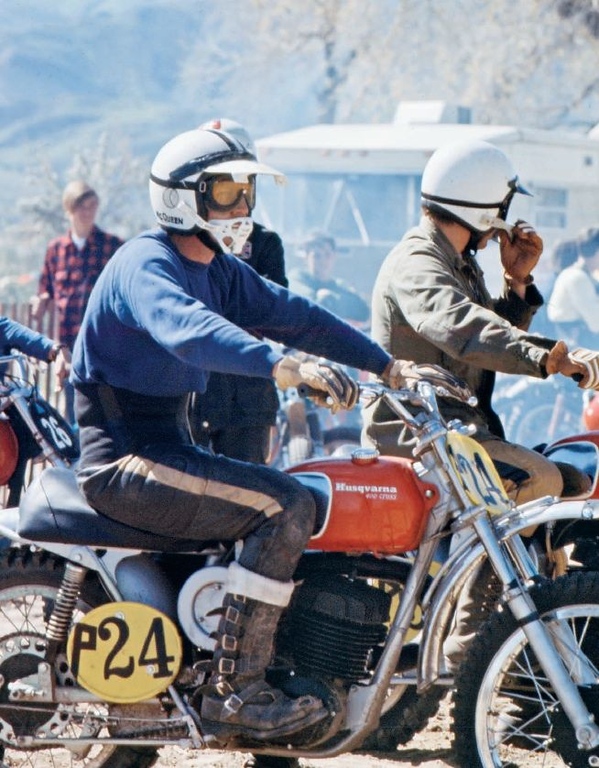
The 1970 Husqvarna 400 Cross represents an epoch in motorcycle history, one that intertwines the raw essence of motocross engineering with the allure of Hollywood legend. Often whispered among aficionados is the intriguing question: was this rugged machine truly Steve McQueen’s favorite ride? While definitive confirmation remains elusive, the association between McQueen—a paragon of rebellious cool—and the Husqvarna 400 Cross is more than mere happenstance. It signals a deeper fascination that transcends the bike’s mechanical prowess and dips into the realm of cultural iconography and personal expression.
Emerging at the crescendo of motocross evolution, the 1970 Husqvarna 400 Cross was engineered for purity in off-road performance. It was a machine stripped of superfluous frills and imbued with unwavering robustness. Its single-cylinder, two-stroke engine delivered a potent blend of power and torque that was both manageable and exhilarating for riders navigating treacherous terrains. This engine was not merely an ensemble of metal and spark. It embodied an ethos—a raw, tactile connection between man and machine. The Husqvarna 400 Cross was a testament to engineering austerity, precision-crafted to endure the grueling demands of competitive racing.
What distinguished the Husqvarna 400 Cross in an era teeming with competitor machines was its distinctive Scandinavian design philosophy. Husqvarna motorcycles were renowned not only for their rugged durability but also for their lightweight frames and exceptional handling characteristics. These attributes lent riders a newfound confidence, enabling nimble maneuverability across dirt tracks, rugged trails, and unpredictable landscapes. Every component championed functional elegance: from its slender chassis to the minimalist seat, the bike embodied the principle that less is indeed more when performance is paramount.
It was amid this milieu that Steve McQueen, an actor celebrated for his daredevil stunts and an unapologetic passion for motorsports, found an affinity with the Husqvarna 400 Cross. McQueen, often dubbed the “King of Cool,” was no stranger to off-road racing, having participated in numerous events himself. His persona was a fusion of rugged individualism and relentless pursuit of adrenaline—a perfect match for the intrinsically visceral experience offered by the Husqvarna 400. In contrast to the theatrical, glossy Hollywood motorcycles often seen on screen, the Husqvarna 400 Cross delivered uncompromising authenticity that resonated profoundly with McQueen’s own ethos.
This intersection of machine and man, however, is no mere footnote in celebrity lore. It reveals layers of cultural significance embedded within the 400 Cross’s narrative. The motorcycle represented a conduit for self-expression, a tangible manifestation of freedom and rebellion during a period marked by social upheaval. Riding the Husqvarna 400 Cross paralleled a rejection of conventional norms, embracing instead an audacious spirit of exploration both on and off the track. The bike became more than transportation; it evolved into a symbol—a statement of identity for those like McQueen who sought liberation in speed and terrain.
Moreover, the Husqvarna 400 Cross was reflective of a broader shift in motocross’s global footprint during the late 1960s and early 1970s. Scandinavian ingenuity challenged the dominance of British and Italian manufacturers, introducing innovations that elevated both functionality and style. The 400 Cross encapsulated these advances, marking a transition toward motorcycles that were lighter yet more powerful, competitive yet approachable. Husqvarna’s influence extended well beyond the dirt track, inspiring a generation of riders who perceived motorcycling not merely as sport, but as a vehicle for personal philosophy and adventure.
The seductive appeal of the 1970 Husqvarna 400 Cross, in connection with Steve McQueen, also underscores a psychological dimension rarely articulated. It evokes the perennial human yearning for mastery over unruly forces—whether nature or self. The bike’s unpretentious design and demanding mechanics served as a crucible, forging an intimate dialogue between rider skill and machine capability. This intrinsic challenge mirrored McQueen’s own quest for excellence, risk, and control. In essence, the Husqvarna 400 Cross was an extension of his persona, an emblematic thread woven into the fabric of his legend.
For collectors and enthusiasts today, the Husqvarna 400 Cross remains a coveted artifact, revered not only for its performance but for its storied provenance. Its aesthetic, emblematic of an era unburdened by excess but rich in authenticity, continues to captivate those who appreciate the synthesis of form and function. This fascination is further intensified by the bike’s association with a cultural icon whose life and career embodied the very principles the motorcycle upheld.
Ultimately, the question of whether the 1970 Husqvarna 400 Cross was Steve McQueen’s unequivocal favorite ride serves as a gateway to appreciating the motorcycle’s enduring mystique. The intrigue lies not in the definitive answer but in what the bike represents: the convergence of rugged engineering, cultural symbolism, and personal identity. It is a testament to the enduring power of machines to transcend their mechanical origins and become vessels of human aspiration and mythos.
In contemplating the legacy of the 1970 Husqvarna 400 Cross, one must recognize it as more than a historic motocross motorcycle. It is a narrative artifact, capturing the zeitgeist of a transformative era in motorcycling and popular culture. Its connection to Steve McQueen magnifies this significance, lending a charismatic luster that continues to inspire admiration and reverence. The bike endures—its legacy etched deeply into the annals of motorcycling lore—as a symbol of an unyielding spirit and an icon of adventurous freedom that forges an eternal bond between rider and machine.