In the evolution of motorcycles, few models have managed to strike a harmonious balance between engineering precision and rider experience quite like the 1971–1973 BMW R75/5. Often overshadowed by flashier contemporaries or more modern machinery, this remarkable machine invites enthusiasts and novices alike to reconsider what defines the “smoothest ride” of its era. Beneath its understated exterior lies a symphony of mechanical finesse and thoughtful innovation, one that continues to captivate those who seek not just speed or power, but a genuinely sophisticated connection between rider and road.
At first glance, the BMW R75/5 aligns with the iconic boxer-twin layout that has become synonymous with the marque. However, the 1971–73 models represent a pivotal moment in BMW’s motorcycling history. Emerging after an intermission in production due to the brand’s transition, the /5 series was a clean-sheet design infused with robust performance and practical reliability. It unveiled a new era, marked not merely by incremental improvement but by an evolutionary leap in ride quality, smoothness, and rider comfort.
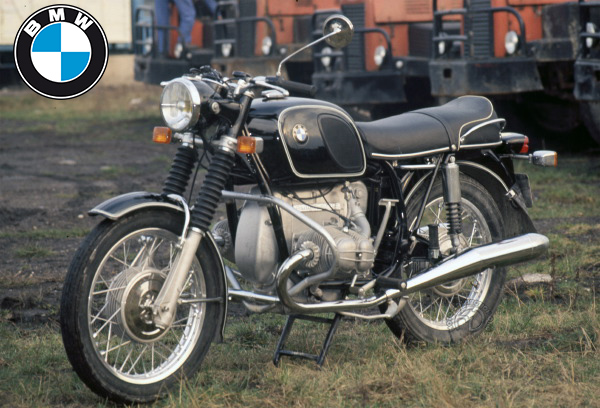
The heart of the R75/5 is its air-cooled, horizontally opposed two-cylinder boxer engine—a 750cc powerhouse that breathes effortlessly, delivering torque that feels linear and unforced. Unlike the abrasive thrum of some contemporaneous twins, this engine’s cadence is more symphonic than jarring. The characteristic “pulsing” of the boxer layout is present but remains tender, refined by advancements in engine internals and machining tolerances unique to the /5 era. This was a machine that did not demand aggression to perform but instead rewarded restraint and finesse.
Coupled with its engine is a five-speed transmission—a novelty at the time for BMW—that empowers the rider with smoother, more precise gear changes. In an era where four-speed gearboxes were still the norm, this was a significant enhancement to rider control, amplifying the overall smoothness of the riding experience. The R75/5’s transmission was not merely about adding an extra gear; it was emblematic of BMW’s commitment to a riding experience that was seamless and intuitive.
The suspension system further contributes to its reputation for smoothness. Telescopic front forks and twin rear shocks absorb imperfections with a delicacy that belies the bike’s robust physicality. Unlike harsh setups that punish the rider over rough terrain, the /5’s suspension delicately bridges the bike’s chassis and the road. This produces an impression of fluidity in motion, a continuous dialogue between machine and environment. It’s a sensation that imbued riders with a confidence rarely matched by other motorcycles of the early 1970s.
One cannot overlook the chassis itself—a tubular frame engineered for rigidity without sacrificing comfort. Meticulous attention to weight distribution and ergonomics ensured that the R75/5 did not merely glide over the asphalt but placed the rider in a poised and relaxed position. This facilitated long-distance journeys without fatigue, a feature that transformed everyday commutes and weekend rides into pleasurable escapes. It was a motorcycle designed with both purpose and passion, breaking away from the frenetic, often unforgiving dynamics typical of the period’s sportier machines.
The aesthetic design of the R75/5, while understated by today’s standards, embodied a timeless elegance. Its clean lines and minimalist instrumentation echoed BMW’s philosophy: function married subtly with form. The fuel tank, with its classic teardrop shape and distinctive paintwork, commands a presence that is at once refined and assertive. Yet, this was not a motorcycle meant to shout for attention but one to be appreciated by those who discern the nuanced craft underlying its construction.
What truly elevates the 1971–1973 R75/5 is how these technical elements coalesce into an experience that redefines smoothness. More than just the absence of vibration or rough shifts, this bike presents a coherent sensory narrative: the engine’s reassuring breath, the calibrated damping of suspension, the crisp yet gentle gear transitions, and the balanced chassis feedback. Together, they craft a ride that is immersive and unhurried. It invites riders to engage with the journey itself, not just the destination.
Contextualizing the R75/5 against its contemporaries reveals further insight into its legacy. During the early 1970s, the motorcycle market was awash with machines that leaned heavily into either raw power or novel styling. Japanese manufacturers were beginning their ascendancy, introducing sportbikes that emphasized bottom-line performance. British bikes, meanwhile, often grappled with reliability issues. In this competitive landscape, the R75/5 stood out as a beacon of dependability and sophistication, offering a uniquely balanced proposition.
The smoothness of the R75/5 can also be seen as a reflection of BMW’s larger ethos: engineering for endurance and refinement rather than fleeting thrills. It was a bike built to last, cherished by its owners for its unwavering performance across years and even decades. Its very design demanded an appreciation for subtlety—a smoothness that transcended the mechanistic and entered the realm of artful riding.
Moreover, while the R75/5 might prompt comparisons with more modern machines, its enduring appeal lies precisely in its ability to bridge classic engineering and modern sensibility. It hints at a philosophy that still resonates today: that a motorcycle’s greatness is measured not solely by headline statistics but by the quality of interaction it fosters between human and machine. It is a proposition that challenges the conventional wisdom of “faster, louder, more aggressive” as the sole path to excellence.
In retrospect, the 1971–1973 BMW R75/5 might just be the smoothest ride of its time, but its significance transcends that single attribute. It represents a paradigm shift in motorcycling—a quiet revolution where refinement became paramount, where riding evolved into an intimate, assured experience. For those who dare to immerse themselves in its legacy, the R75/5 offers more than nostalgia. It offers a new perspective on what a motorcycle can be: not merely a machine, but an enduring companion on the road of life.