The 1971 Moto Guzzi Ambassador stands as an enduring symbol of Italian craftsmanship and engineering excellence, embodying an era when motorcycles were not merely vehicles but expressions of style, culture, and innovation. Revered for its unique blend of European flair and practical performance, the Ambassador represents a pivotal moment in the evolution of cruiser motorcycles, appealing to enthusiasts who appreciate both form and function. This detailed exploration delves into the multifaceted allure of the 1971 Moto Guzzi Ambassador, illuminating its design, mechanical prowess, historical significance, and the timeless charm that continues to captivate collectors and riders alike.
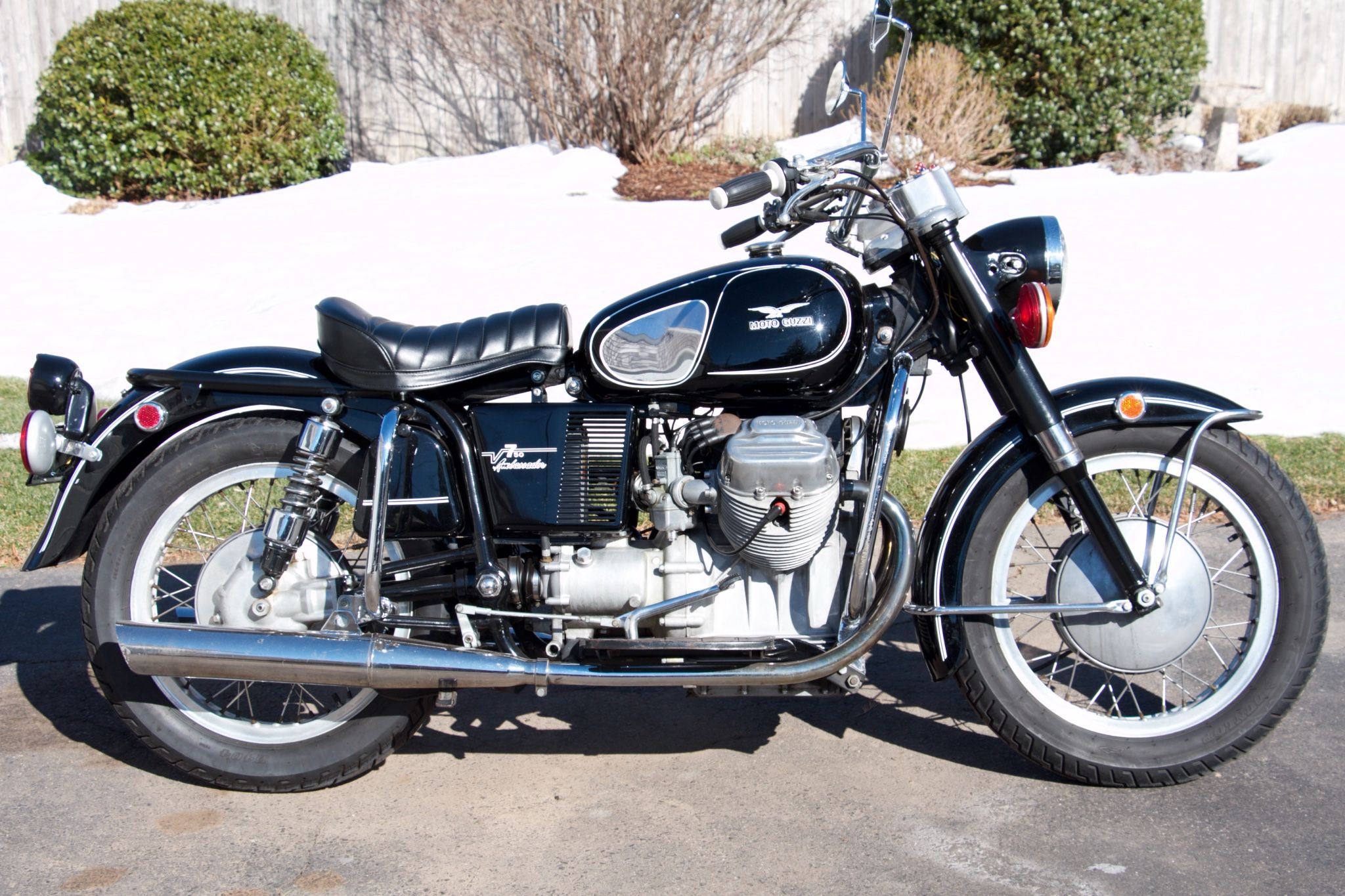
At first glance, the essence of the 1971 Ambassador is unmistakably Italian, with a distinct aesthetic that merges elegance with robust construction. The motorcycle’s design language is both deliberate and evocative, characterized by a broad, comfortable seat designed for long-distance cruising and a signature transverse V-twin engine that lies prominently across the frame. This engine configuration is not only a hallmark of Moto Guzzi but also a defining feature that distinguishes the Ambassador from American and Japanese cruisers of its era. The shiny chrome accents and meticulously crafted metalwork provide a sense of sophistication, while the deep, lustrous paint schemes often showcased Italian flair — ranging from bold reds to classic blacks — accentuating its cruiser pedigree.
Delving deeper into its mechanical specifications reveals the engineering virtues that set the 1971 Ambassador apart. The heart of the motorcycle is its 844cc air-cooled V-twin engine, renowned for its reliability and distinctive thrum. Unlike the typical American V-twins which run longitudinally, Moto Guzzi designed their engines transversely across the frame, creating a unique cooling dynamic that also contributed to its unmistakable aesthetic. The power output, measured at a steady yet manageable level, was optimized for torque and smooth delivery, making it ideal for the cruiser’s leisurely yet commanding riding experience. This mechanical arrangement provides an enchanting combination of simplicity and sophistication, eschewing overcomplication for a faithful commitment to performance and durability.
Complementing the engine is a chassis meticulously engineered to provide stability and comfort during extended rides. The frame geometry, suspension components, and braking system were all designed with the rider’s experience in mind. Twin shock absorbers at the rear and telescopic forks up front assured a supple ride over uneven road surfaces, while drum brakes, though modest by modern standards, offered reliable stopping power consistent with the norms of the early 1970s. The wide handlebars and forward-set footpegs foster an upright and relaxed posture, making the Ambassador inherently suited for cruising across highways and through winding backroads alike.
Historically, the 1971 Moto Guzzi Ambassador arrived during a period of significant transformation within the motorcycle industry. European manufacturers were facing increasing competition from Japanese companies that emphasized lighter, faster, and often more affordable machines. Nevertheless, the Ambassador carved out a niche by embracing its unique heritage, appealing to riders who valued the Italian ethos of artful design fused with uncompromising reliability. It was the embodiment of a distinct philosophy — not just to build a motorcycle, but to craft an emblem of freedom and style that was as much a statement as it was a mode of transport.
Beyond its mechanical attributes and historical context, the 1971 Ambassador offers an immersive ownership experience punctuated by its unmistakable character. The sound alone is an auditory signature, with the engine’s deep, throaty exhaust note resonating with immediacy and warmth. This sound is an integral part of riding the Ambassador—a constant reminder of its mechanical heartbeat. The tactile feedback from the machine, the precisely weighted clutch, and the smooth gear changes accentuate the connection between rider and machine, fostering a riding experience that prioritizes engagement over mere utility.
For collectors and restorers, the 1971 Moto Guzzi Ambassador represents a canvas of potential. Its robust construction allows for restoration that is both faithful to the original and adaptable to modern standards. The availability of parts, though more scarce than contemporary models, is bolstered by a passionate community dedicated to preserving Moto Guzzi’s legacy. Restoring an Ambassador is an exercise in patience and precision, rewarding enthusiasts with a motorcycle that is both a triumph of design and engineering.
From a cultural perspective, the Ambassador functions as an enduring icon of Italian craftsmanship intersecting with the cruiser tradition. This intersection manifests in the motorcycle’s ability to simultaneously evoke nostalgia and inspire contemporary admiration. It can be witnessed at vintage motorcycle shows, in cinematic portrayals of classic motoring, and among the ranks of dedicated Moto Guzzi aficionados. Owning or even admiring an Ambassador is an act of participation in a lineage that transcends mere transportation—it is an homage to an era when motorcycles were celebrated as much for their artistic merit as for their mechanical ingenuity.
The distinctiveness of the Ambassador extends to its usability in modern contexts. While it may not compete with the technological advancements of today’s motorcycles, its simplicity, character, and ease of maintenance present a refreshing alternative to the complexity of modern machines. It invites riders to slow down, appreciate the mechanical symphony beneath their hands, and engage with the road in a tactile and meaningful way. For many, this old-world charm is precisely what makes the Ambassador enduringly relevant.
In summation, the 1971 Moto Guzzi Ambassador exemplifies an extraordinary chapter in motorcycle history—one where Italian elegance met rugged performance to produce a cruiser unlike any other. Its meticulous design, robust engineering, and cultural resonance create a motorcycle that stands the test of time. The Ambassador is more than a machine; it is a narrative of passion, innovation, and enduring style. For anyone seeking to immerse themselves in the world of classic motorcycles, the Ambassador beckons with open arms, promising an experience steeped in tradition and timeless allure.