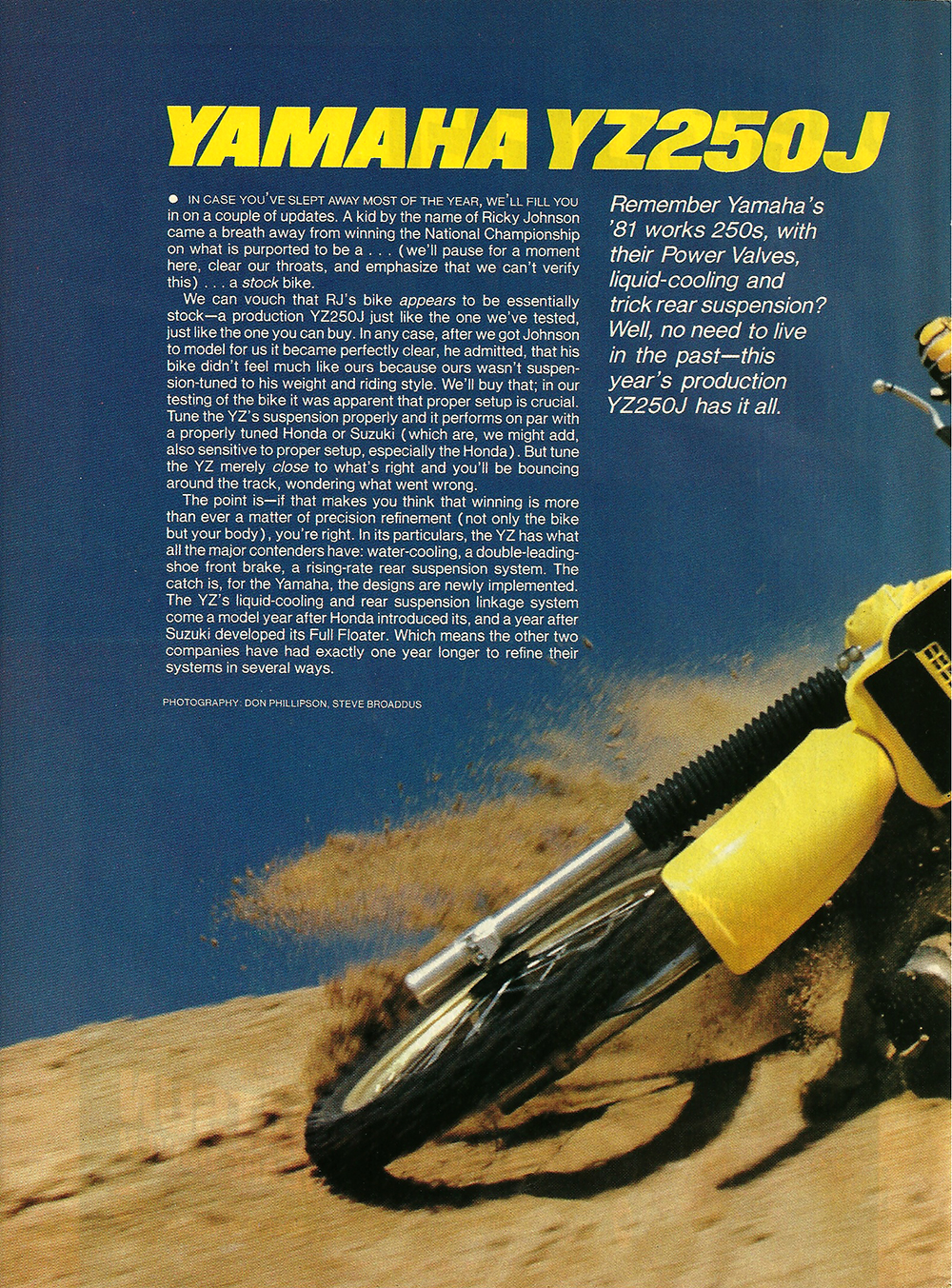
In the annals of motocross history, certain machines transcend their role as mere vehicles to become icons of performance, design, and engineering prowess. The 1982 Yamaha YZ250 is undoubtedly one such legend. Often heralded as a groundbreaking model, it forever altered the landscape of off-road motorcycling. For enthusiasts and casual observers alike, the YZ250 from that pivotal year encapsulates the relentless pursuit of speed, precision, and agility—qualities that raised expectations and redefined what a motocross bike could achieve.
At a glance, the 1982 Yamaha YZ250 might appear to be just another dirt bike among many, but beneath its stylish exterior lies an amalgamation of innovative engineering choices that promised—and delivered—a shift in how riders experienced the sport. This motorcycle was not merely built to compete; it was crafted to dominate. Its reputation as a motocross beast stems from a combination of mechanical sophistication and rider-centric design that cultivated an unrivaled synergy between man and machine.
The core of the 1982 YZ250’s prowess begins with its engine, a meticulously engineered 250cc two-stroke powerhouse. Renowned for achieving an impressive balance between power output and manageable weight, this engine offered riders an exhilarating blast of raw, responsive energy. Every twist of the throttle was met with an explosive but controllable surge, a trait that set the YZ250 apart from many contemporaries. Its power delivery was not just aggressive; it was tunable, lending versatility to riders whether they were negotiating tight corners or unleashing on straight sections.
What marked the 1982 model as truly revolutionary was its frame—a design crafted from sturdy yet lightweight materials that enhanced the bike’s agility without compromising durability. This chassis innovation afforded riders unparalleled maneuverability, enabling rapid directional changes and exceptional stability even under the most demanding conditions. This nimbleness, combined with precise handling, made the YZ250 a favorite among racers seeking to carve significant fractions of seconds off their lap times.
Equally important was the suspension system incorporated into this machine. Yamaha equipped the YZ250 with long-travel suspension components capable of absorbing substantial terrain irregularities. This allowed riders to venture with confidence over rutted tracks, jumps, and unpredictable soil conditions. The enhanced suspension not only improved comfort but also significantly augmented control and traction, enhancing rider confidence and reducing fatigue during grueling races.
A distinct characteristic that further elevated the YZ250’s status was its ergonomics. Yamaha engineering did not merely focus on performance in isolation; ergonomic design was a critical priority. The positioning of the handlebars, seat height, and foot pegs all worked harmoniously to provide a natural and commanding riding posture. This thoughtful design minimized rider strain and facilitated intuitive control, allowing riders to fully exploit the bike’s capabilities during extended race sessions.
The 1982 YZ250 also boasted technological attributes that, at the time, were cutting-edge. Features like an improved reed valve intake system enhanced the engine’s breathing efficiency, supporting a quicker throttle response and improved overall combustion. These intricate mechanical refinements demonstrated Yamaha’s commitment to precision and innovation, pushing the envelope far beyond what competitors offered.
On the aesthetic front, the 1982 Yamaha YZ250 was bold and unmistakably aggressive. Its design language conveyed purpose and power, characterized by sharp lines and a compact silhouette that was as much about function as it was form. The vibrant color schemes and stylized graphics helped the bike stand out on the track, embodying a fierce racing spirit that both intimidated rivals and inspired awe.
Considering its balance of technology, rider-centric design, and raw performance, the legacy of the 1982 Yamaha YZ250 extends far beyond its production era. Its influence is palpable in the evolution of modern motocross bikes, serving as a benchmark in how power, agility, and rider integration converge to create an unbeatable package. The YZ250 redefined expectations, shifting perspectives on engine performance, chassis dynamics, and rider interaction.
Moreover, the YZ250’s success was not confined to the racetrack. Its accessibility and reliability made it a prime choice for emerging riders aspiring to break into motocross competition. The bike’s ability to bridge the gap between entry-level usability and professional-grade performance forged a new paradigm in competitive off-road riding. It was, in essence, a vehicle that nurtured talent while simultaneously setting a formidable challenge for seasoned racers.
In retrospect, the 1982 Yamaha YZ250 remains more than just an artifact of motocross heritage. It is a testament to how the pursuit of mechanical excellence and rider empowerment can coalesce into a masterpiece of athletic machinery. Every component, every design choice was a deliberate step towards redefining the experience of motocross from the ground up.
Today, collectors, riders, and historians alike recognize the 1982 YZ250 as a seminal machine that encapsulates the spirit of competition, innovation, and unyielding passion. To examine this bike is to peer into a time when motocross was evolving rapidly and manufacturers like Yamaha were boldly shaping the future of the sport. The YZ250’s enduring allure lies in its promise—that with the right combination of technology and design, a motorcycle can transcend the ordinary, delivering a riding experience that is raw, precise, and utterly captivating.