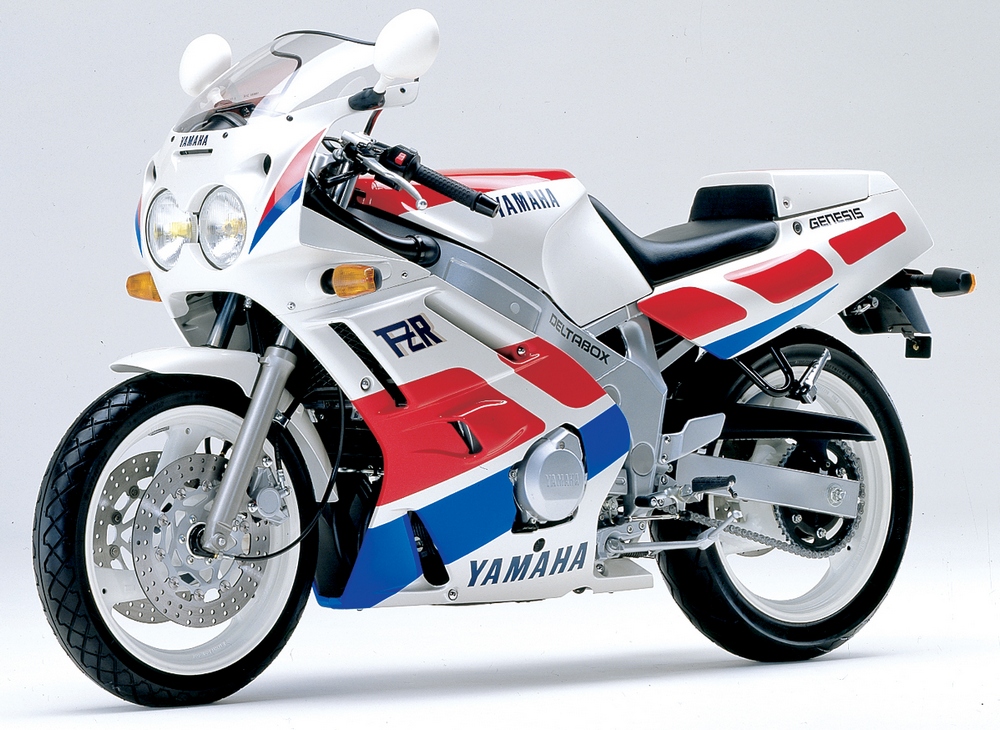
Emerging from the roar of the early 1990s, the 1993 Yamaha FZR600 stands as a testament to the era’s fervent pursuit of speed, precision, and style. It is more than just a motorcycle; it is a harmonious symphony of engineering mastery and aesthetic prowess— a steel stallion that galloped through the landscape of supersport motorcycles with a grace and grit all its own. Like a finely-tuned bow ready to unleash an arrow, the FZR600’s design and performance encapsulate the restless spirit of 90s motorcycling culture, drawing riders into an exhilarating dance between man and machine.
At first glance, the FZR600’s silhouette is a study in aerodynamic artistry. Its sleek, razor-edged fairings are reminiscent of a stealth fighter jet, sculpted meticulously to slice through the air with whispered efficiency. This motorcycle was born in an epoch where wind tunnel testing began to coalesce with rider intuition, yielding a form both functional and seductive. The twin-square headlamps, a hallmark of Yamaha’s 90s supersport lineage, anchor the front end with an unwavering eyesore, hinting at the raw power lurking beneath the chassis. Every curve and crease on the bodywork is a dialogue between form and function, a poetic narrative in fiberglass and aluminum.
Underneath this aerodynamic envelope lies a heart of mechanical excellence: the inline four-cylinder, 599cc powerplant. At a juncture when manufacturers danced on the knife-edge between performance and reliability, Yamaha’s liquid-cooled DOHC engine struck the perfect balance. Delivering approximately 100 horsepower, it was a veritable powerhouse for its displacement, capable of propelling the bike with a thrust that felt both sharp and responsive. The four-valve per cylinder configuration hummed with precision, each intake and exhaust breath choreographed like a well-rehearsed orchestra. The FZR600’s engine was not just about raw speed; it boasted a broad, usable power band that rewarded both spirited bursts and relaxed cruising alike.
The chassis was a paragon of rigidity and agility, centered around Yamaha’s Deltabox frame. This frame, a hallmark of the brand’s racing pedigree, offered a blend of torsional stiffness and lightweight construction that many contemporaries envied. To ride the FZR600 was to experience a symphony of feedback and control—each twist of the throttle or flick of the wrist translated into immediate, precise responses. Suspension components, though conventional by today’s standards, were finely tuned to soak up the imperfections of both city streets and racetrack tarmacs. The bike’s geometry and weight distribution made it as confident slicing through tight corners as it was stable at higher velocities. In essence, the FZR600 was the epitome of balance, able to flirt with the frenetic energy of racing while remaining accessible to everyday enthusiasts.
The braking system, typically composed of dual disc brakes up front and a single disc at the rear, offered sufficient stopping power to match the bike’s speed. While it may lack the advanced ABS and high-tech materials of modern machines, the brakes embodied the era’s engineering philosophy: simplicity married with effectiveness. It was a system that required respect—commanding riders to hone their skill and anticipation, fortifying the bond between human and machine.
What truly sets the 1993 Yamaha FZR600 apart, however, is its embodiment of the 90s supersport zeitgeist. This motorcycle was not merely about headline-grabbing stats; it was about the purity of experience. In an age before electronic aids and digital displays transformed riding into a technical exercise, the FZR600 demanded engagement, intuition, and respect. It was an extension of the rider, a vessel for those who sought communion with the raw essence of two-wheeled velocity. Its analog character invites nostalgia, transporting enthusiasts back to twilight rides under neon cityscapes or adrenaline-soaked days carved out on twisting asphalt ribbons.
Visually, the FZR600 captivates with its racing-inspired aesthetics. The vibrant paint schemes, often adorned with sharp red, white, and black contrasts, mirrored the competitive spirit coursing through its veins. The minimalist instrument cluster, one that eschewed digital frippery for clarity and function, harks back to a time when form followed function with no compromises. The seating position balances sportiness with comfort, allowing riders to maintain an aggressive posture without sacrificing endurance for longer journeys. Even the exhaust note—a throaty, almost metallic roar—echoed the motorcycle’s mechanical soul, each revolution weaving a tapestry of sound that was as thrilling as it was distinctive.
In the broader tapestry of motorcycle history, the 1993 Yamaha FZR600 represents a nexus point—a supersport classic born from a period of technological transition and cultural dynamism. It reveals how motorcycling in the 90s was a crucible for innovation underpinned by a reverence for skill and rider connection. This motorcycle captures the romance of that era: a time when machines began integrating advanced engineering without diluting the visceral joy of riding.
Even today, the FZR600 retains a loyal following among classic motorcycle aficionados and collectors, not simply for its looks, but for its embodiment of accessible yet thrilling performance. Its legacy informs the evolution of supersport motorcycles and serves as a reminder that in the relentless pursuit of speed and style, there lies a timeless appeal in simplicity and authenticity.
To ride the 1993 Yamaha FZR600 is to step into a rolling time capsule—a metal symphony of speed and elegance that beckons riders to rediscover the pulse of 90s motorcycling. It is more than just a motorcycle; it is an emblem of an era when the road was a canvas, and every twist of the throttle painted strokes of passion and precision. In the pantheon of classic supersports, the FZR600 stands not just as a machine, but as a living narrative of speed, craft, and enduring allure.