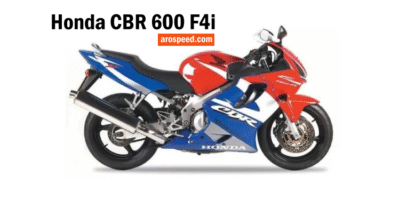
Have you ever wondered whether a motorcycle from the early 2000s still holds the prowess to outpace modern machines on an open road? The 2001 Honda CBR600 F4i, a revered icon in the sportbike arena, dares you to reconsider preconceptions about age and performance. This masterpiece from Honda’s engineering vault continues to fascinate riders due to its blend of aggressiveness, reliability, and undeniable versatility. But what exactly is the top speed of this legendary bike, and how does its real-world performance measure up beyond just the numbers on a speedometer? Let us embark on a detailed exploration of this motorcycle’s capabilities to uncover what makes the 2001 CBR600 F4i a persistent challenge to even contemporary sportbikes.
When assessing the top speed of any sport motorcycle, one might be tempted to focus solely on the numerical figure—how fast can it truly go? The 2001 Honda CBR600 F4i confidently claims a top speed hovering around 155 to 160 miles per hour, contingent upon rider weight, weather conditions, and slight variations in tuning. This is no trivial feat; even by modern standards, hitting the mid-150 range evokes respect. However, the F4i is not merely a raw speed machine; it amalgamates a sophisticated balance of power delivery, handling precision, and aerodynamic efficiency that ensures these high speeds feel remarkably controllable and intuitive.
Under the sculpted fairings lies a 599cc inline-four engine, renowned for its precise engineering and smooth delivery. Unlike its predecessor, the F4 model, the F4i marked a significant evolution. Honda implemented electronic fuel injection—a groundbreaking innovation for this class at the time—which enhanced throttle response, fuel efficiency, and emissions without sacrificing the relentless power these motorcycles are known for. The engine churns out approximately 120 horsepower at 13,500 rpm, accompanied by a peaky but thrilling powerband that begs the rider to stay within its adrenaline-inducing rev range.
The challenge for many would-be riders is taming this potent powerplant, especially given the F4i’s chassis dynamics. However, Honda’s utilization of an aluminum twin-spar frame bestowed the bike with a balance of rigidity and lightness—a bona fide platform for razor-sharp handling. The bike’s curb weight is modest, around 410 pounds wet, allowing for nimble maneuvering through tight corners and rapid directional changes. This makes the 2001 CBR600 F4i not only a top-speed contender but also a formidable opponent on twisty roads and racetracks alike.
Analyzing real-world performance necessitates more than just sprint speeds on a straightaway. The F4i excels in acceleration, reportedly reaching 0 to 60 miles per hour in roughly 3.5 seconds, a testament to its tractable yet rapid power delivery. The six-speed transmission offers crisp shifts, enabling riders to exploit every bit of power across varying terrains. Meanwhile, suspension components including an inverted telescopic front fork and a Pro-Link rear mono-shock facilitate an agile and composed ride, mitigating chassis flex under hard braking or aggressive cornering.
But what about rider ergonomics amid these violent bursts of speed? Unlike more aggressive, track-focused counterparts, the 2001 CBR600 F4i strikes a somewhat rider-friendly pose. The seating position leans towards sporty yet comfortable, balancing the necessity for aerodynamic efficiency with the need to endure longer rides without excessive fatigue. The handlebar and footpeg placement allow riders to maintain control without feeling overly cramped, while the windscreen adequately deflects air blast during high-speed runs, enhancing overall comfort.
Handling such speed requires excellent braking capability, and here the F4i impresses as well. Equipped with dual 296mm front discs paired with two-piston calipers along with a single 220mm rear disc, braking performance is confident and progressive. This setup not only inspires trust when decelerating from highway velocities but also aids in modulation during aggressive riding, reducing the risk of wheel lockup without the aid of modern ABS—a technology that was still in its infancy for many sportbikes at the time.
What, then, elevates the 2001 Honda CBR600 F4i beyond just a statistical curiosity in motorcycling history? It is its enviable combination of agility, balanced aggression, and mechanical dependability. Riders who embrace the machine discover a thrilling paradox: that raw power need not come at the cost of accessibility. The F4i presents itself as a sophisticated weapon for riders willing to master its nuances, rewarding skillful inputs with exhilarating acceleration, razor-edge cornering, and a visceral connection to the machine and road.
Moreover, the F4i cultivates a profound sense of mechanical intimacy, courtesy of its rev-happy engine and distinct intake and exhaust melodies. These sensory elements elevate the riding experience, transforming each journey into an orchestration of speed and control. It is not merely about how fast the bike can go, but how thrillingly and confidently the rider can harness and modulate that velocity.
In conclusion, the 2001 Honda CBR600 F4i is far more than a relic of the past; it remains a benchmark in middleweight sportbikes, blending a top speed that rivals many modern counterparts with an overall package that prioritizes rider engagement and balanced performance. Whether on a racetrack or a winding country road, it compels riders to push boundaries, challenging their skills and daring them to match their tempo to its potent heart. The question persists: can a rider truly extract and command all the performance latent in this early-2000s marvel? For those who dare to take on the challenge, the 2001 CBR600 F4i promises an unforgettable journey through speed, precision, and spirited motorcycling excellence.