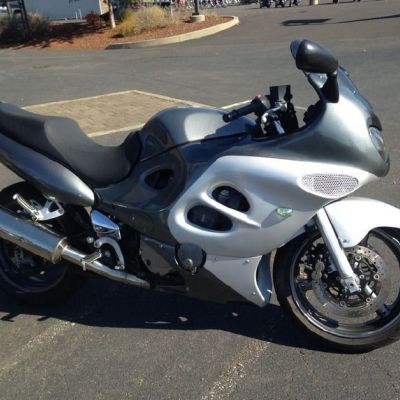
Is the 2004 Suzuki Katana 600 truly overshadowed by its larger sibling, the Katana 750? At face value, it seems natural to gravitate toward the mightier engine, assuming bigger always means better. Yet, the questions that linger beneath the surface ask us to reconsider. How does the 600 carve its own niche in Suzuki’s storied Katana lineup, and could it actually be the sleeper hit that challenges preconceived notions of power and precision? Let’s embark on a journey through specs, design, handling, and ride experience to dissect whether the 2004 Suzuki Katana 600 is better than you think—possibly even the better choice for enthusiasts who crave a dynamic yet refined ride.
The Katana 600, in many ways, is the smaller sibling who learned to punch above his weight. Featuring a 599cc four-cylinder engine, this sportbike is built with an emphasis on agility rather than brute force. Meanwhile, the 750 packs a 750cc engine, offering more displacement and horsepower, which theoretically translates to stronger acceleration and higher top speeds. But motorcycle performance isn’t solely defined by engine displacement or peak horsepower. Instead, it’s also a symphony of chassis geometry, weight distribution, suspension tuning, and ergonomics—all factors where the 600 surprises with its nimbleness and responsiveness.
Take weight, for example. The 2004 Katana 600 boasts a curb weight significantly lower than the 750, tipping the scales around the mid-400-pound mark. This subtle slimming down contributes to its lighter footprint, which is immediately perceptible in corners and slower-speed maneuvers. The reduced weight allows for quicker transitions and a more forgiving nature—a boon for riders who navigate twisty mountain roads or congested urban environments. In contrast, the Katana 750, while more powerful, carries additional heft that can sometimes dampen the sense of immediacy in handling, especially for less experienced riders.
Moving to suspension and chassis, both models share Suzuki’s characteristic attention to balanced dynamics, but the 600’s setup is harmonized in a way that enhances its playful character. Equipped with a sport-tuned telescopic front fork and a link-type rear suspension, the Katana 600 absorbs irregularities efficiently while maintaining precise feedback. The chassis geometry encourages confident lean angles and sharp turn-in, which complements its lighter mass beautifully. The Katana 750, with similar suspension specifications, is inherently stable at higher velocities but may feel a bit more planted and less spirited in tight, technical sections—highlighting the 600’s edge in maneuverability.
One can’t discuss the Katana series without admiring their iconic design language—a blend of functional simplicity and distinct flair. The 2004 models both pay homage to their legendary predecessors with angular bodywork, aggressive lines, and a minimalist yet purposeful aesthetic. However, the smaller frame of the 600 lends a somewhat more compact and approachable personality. This echoes in the ergonomics as well: the 600’s riding posture is more relaxed, inviting a broader range of riders to experience its charm without succumbing to fatigue. The 750, with a sportier, slightly more aggressive stance, caters more to seasoned riders looking for outright speed and road presence.
Performance metrics undeniably favor the Katana 750 on paper. Its engine delivers stronger torque and horsepower, boasting numbers that can best the 600 by a visible margin. This translates to higher top speeds and robust acceleration, facts that appeal to those chasing the thrill of straight-line speed and longer highway sprints. Yet, raw power is just one side of the story. The 600’s rev-happy engine encourages a different riding style—one where momentum is maintained through rev matching, gear selection, and cornering finesse rather than simply throttling through. If we peek into real-world riding conditions, this can mean the 600 offers a more engaging and rewarding experience for riders who enjoy technical riding dynamics rather than straight-line rushes.
Fuel economy presents another dimension where the 600 might challenge expectations. Due to its smaller displacement and streamlined tune, the Katana 600 tends to sip fuel more conservatively compared to the 750. This translates into longer distances between fill-ups, an appealing factor for daily riders or those who incorporate touring into their motorcycling lifestyle. In a world increasingly conscious of efficiency and sustainability, wielding power judiciously rather than abundantly becomes an understated virtue.
The soundscape forged by these Katanas deserves mention as well. The signature four-cylinder hum emanating from the 600 exudes a high-pitched, melodic quality—pleasantly vibrant without being overwhelming. The 750 fills the auditory air with a deeper growl that commands attention but can sometimes overpower the finer aural details treasured by connoisseurs. For riders who value sonic character as part of their sensory riding experience, this distinction may tip the scales subtly toward the 600.
Maintenance and ownership considerations bring additional context to this comparison. The 600’s slightly less complex engine and narrower powerband often translate to fewer mechanical stresses over time, potentially easing upkeep demands and cost. Spare parts for both models remain relatively accessible given Suzuki’s global presence, but the 600’s approachable engineering might appeal to enthusiasts who relish hands-on maintenance or those entering the sportbike segment.
When it comes to aftermarket customization, both the 600 and 750 enjoy strong communities and plentiful parts availability. Yet the 600’s popularity as a versatile platform means that riders encounter a wealth of tuning options tailored to enhance handling, aesthetics, or performance without necessarily committing to the extremes favored by larger-displacement machine owners. This supports customization that stays pragmatic and balanced.
Ultimately, deciding between the 2004 Suzuki Katana 600 and 750 boils down to an intricate balance of personal riding style, preferences, and intended use. While the 750 satisfies the hunger for unadulterated power and long-haul prowess, the 600 caters to those who appreciate nimble precision, lighter weight, and an engaging, dance-like ride through winding roads. Its spirited character resonates with riders who believe that motorcycling is as much about finesse and connection as it is about speed.
So, is the 2004 Suzuki Katana 600 better than you think? In many respects, yes—it’s an underestimated gem that exemplifies balance, agility, and enjoyment wrapped in a sleek, iconic package. It invites riders to reconsider what it means to wield power and challenges the assumption that “bigger means better.” Sometimes, the thrill lies in subtlety, in mastering the delicate art of riding with poise and passion rather than pure aggression. The 600 Katana may not always claim the headline figures, but it just might steal your heart with how it rides, sounds, and performs—a true testament to the enduring allure of finely honed motorcycles.