Is the 2006 Honda Rebel 250 merely a beginner’s stepping stone, or does it quietly embody the spirit of a hidden gem within the motorcycling community? This question often reverberates among novice riders and seasoned enthusiasts alike, stirring vigorous debate over what ultimately defines a motorcycle’s value beyond the evident beginner-friendly reputation. Straddling the fine line between approachable entry-level design and surprising capabilities, the Rebel 250 presents a unique study in contrasts worth unraveling.
From the outset, the 2006 Honda Rebel 250 appeals to those dipping their toes into the world of motorcycles. Its modest engine displacement—a 234cc air-cooled, parallel-twin—signals a bike designed with ease in mind. This engine strikes a balance between manageable power and efficiency. With approximately 17 horsepower on tap, the Rebel delivers a gentle yet confident throttle response, perfect for those who might find larger, more aggressive motorcycles daunting. This makes it an ideal vessel for gaining balance, control, and road confidence without the intimidation factor commonly associated with bigger bikes.
Yet, confining the Rebel 250 to a mere “beginner bike” pigeonhole risks overlooking its architectural sophistication and cultural resonance. The model’s frame is a steel double-cradle design emphasizing durability and rigidity without compromising weight. Weighing in at around 320 pounds, it lives up to its name “Rebel” in offering both stability at slowed speeds and agility through city traffic or winding back roads. Its suspension setup, comfortable seat height—just under 27 inches—and ergonomics are carefully calibrated to accommodate a diverse range of rider physiques, posing less of a customization hurdle compared to other motorcycles in its class.
Speaking of street dynamics, the handling characteristics of the 2006 Rebel 250 are where the bike begins to transcend typical beginner categorization. The relatively low center of gravity lends itself to smooth maneuvers and confidence-inspiring turns. This nimbleness belies what some might expect from an entry-level cruiser; it manages corners with grace, demonstrating a level of versatility that invites riders to explore beyond the sidewalks of suburban neighborhoods. Scenarios ranging from short urban commutes to leisurely weekend journeys all fall comfortably within its realm.
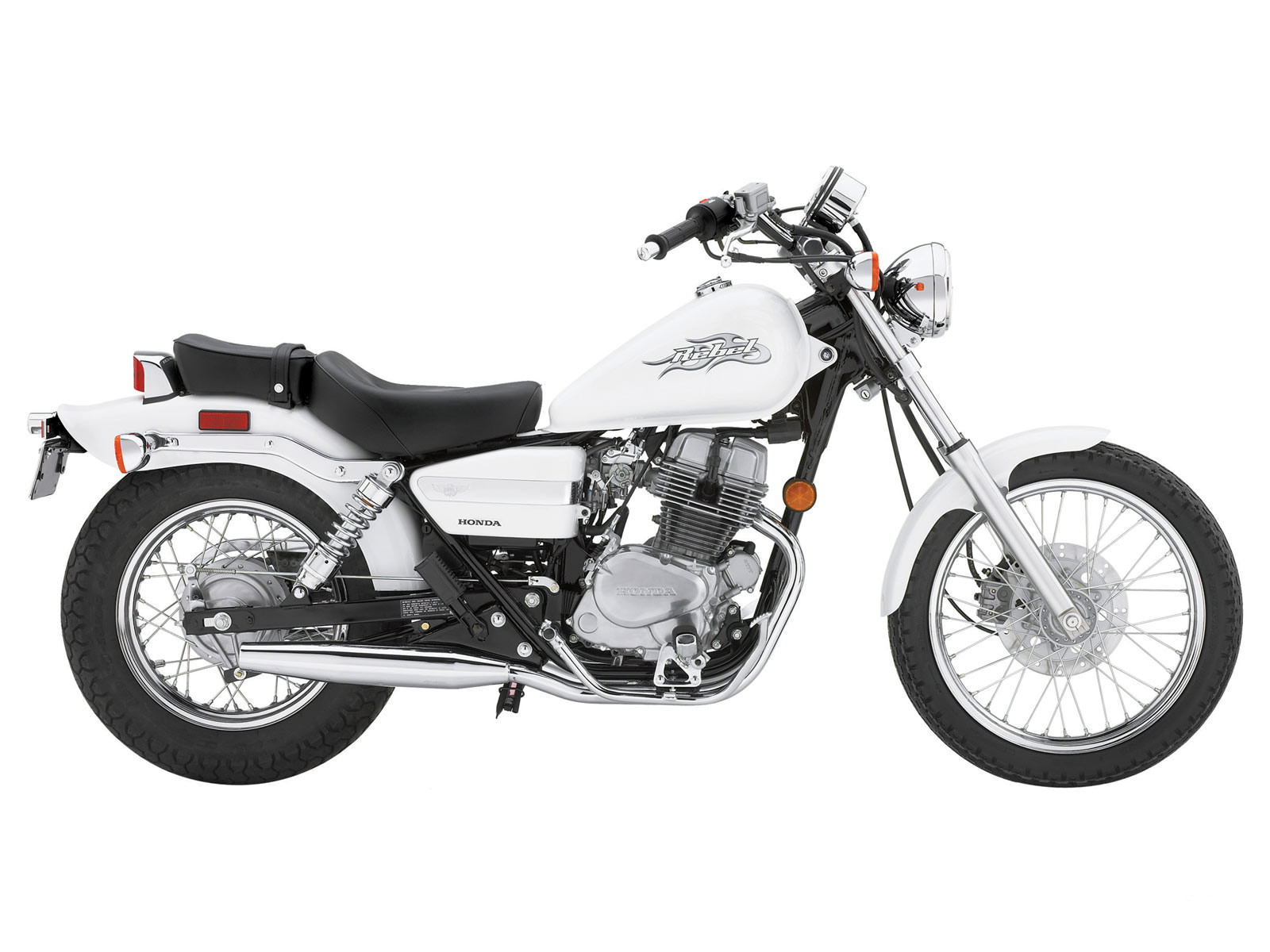
However, it’s the aesthetic and cultural ethos where the Rebel 250 carves a niche that outshines many contemporaries. The minimalist, classic cruiser styling—embodied by its teardrop-shaped fuel tank, blacked-out exhaust, and minimalist fenders—projects not just functional design but an unmistakable attitude. It pays homage to the spirit of rebelliousness, albeit with a subtle and understated flair. This aspect endows the bike with a charisma that often appeals to riders who desire a machine less about flash and more about reliable personality. This not-so-loud presence cultivates loyalty among those who eventually grow alongside the bike, turning it into a long-term companion rather than a disposable first ride.
From a technical standpoint, its simplicity is its strength. Carbureted fuel delivery and a five-speed transmission may seem antiquated in an era dominated by fuel injection and digital instrumentation. Yet, this mechanical straightforwardness often translates to ease of maintenance, affordability in repairs, and an inviting platform for enthusiasts who enjoy hands-on tinkering. The absence of complex electronics can be a boon for new riders learning the inner workings of motorcycling, cultivating an intimate connection with their machine.
But amid these strengths lies a challenge that invites deeper reflection. The Rebel 250’s modest power band occasionally exhibits limitations when faced with highway speeds or aggressive acceleration demands. The engine’s output, while sufficient for city riding, can feel strained on prolonged freeway stretches, especially under the load of heavier riders or passengers. This practical constraint forces potential owners to consider the intended use carefully. Is the Rebel 250 a daily commuter designed predominantly for urban sprawl, or can it be trusted for more ambitious touring adventures? The answer tilts heavily toward the former, underscoring the importance of realistic expectations.
Moreover, the motorcycle market of today reveals a battleground of evolving tastes and technological leaps, where the Rebel 250’s nostalgic style and entry-level specs might not dazzle newcomers accustomed to digital dashboards and fuel injection technology. Despite its dependable pedigree and ease of use, it competes against an ever-expanding field of alternatives boasting modern amenities and more aggressive performance envelopes. Yet, therein lies another facet of its charm—the Rebel 250 encourages riders to embrace simplicity, reliability, and tradition in a world increasingly driven by rapid innovation.
In the grand tapestry of motorcycling, the 2006 Honda Rebel 250 occupies a unique position, simultaneously embodying the accessible, non-intimidating ride that beginners seek while harboring characteristics that appeal to purists and aficionados. It’s a bike that grows with its rider, teaching fundamental skills yet rewarding exploration within the limits of its design. Perhaps it’s not just about power or raw speed, but about cultivating an enduring relationship with the open road.
So, is the 2006 Honda Rebel 250 simply a beginner bike, or does it stand as a hidden gem tucked away in plain sight? The answer depends on perspective. For the novice rider, it promises a forgiving introduction to motorcycling, a dependable chariot for the first ventures into twisty lanes and bustling streets. For the seasoned enthusiast, it offers a canvas of pure motorcycling essence—one stripped of superfluity, emphasizing balance, character, and an understated sense of freedom. This duality challenges preconceived notions and invites riders to look beyond labels, encouraging a reappraisal of what it truly means to ride “the Rebel.”